'%3e%3ccircle%20id='Ellipse_59'%20data-name='Ellipse%2059'%20cx='3'%20cy='3'%20r='3'%20transform='translate(11%208.786)'%20fill='none'%20stroke='%23f7941d'%20stroke-linecap='round'%20stroke-linejoin='round'%20stroke-width='2'/%3e%3cpath%20id='Path_82'%20data-name='Path%2082'%20d='M14,2A10,10,0,0,0,4,12a8.048,8.048,0,0,0,1.875,5.625L14,27l8.125-9.375A8.048,8.048,0,0,0,24,12,10,10,0,0,0,14,2'%20transform='translate(0%200)'%20fill='none'%20stroke='%23f7941d'%20stroke-linecap='round'%20stroke-linejoin='round'%20stroke-width='2'/%3e%3c/g%3e%3c/svg%3e)


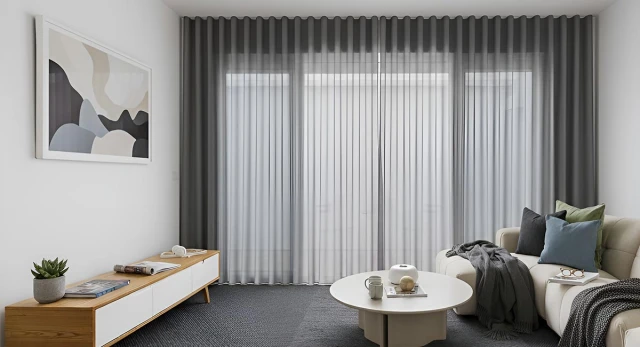
A practical Australian guide to choosing, styling and layering sheer curtains with confidence
There’s something special about the light sheer curtains create.
It is soft without feeling dull. Bright without feeling harsh. Private without closing the room in.
It’s no wonder sheer curtains have become such a favourite in Australian homes. They suit open-plan living, soften hard finishes, add movement to a room and make everyday spaces feel more considered.
But choosing the right sheer curtains isn’t just about picking a beautiful fabric.
You’ll want to think about privacy, light, fullness, colour, track type, drop length, stacking, measuring and whether you’d like to layer them with blockout curtains or blinds.
This complete guide to sheer curtains walks you through how to choose, style, measure and layer sheer curtains for Australian homes. By the end, you’ll know how to choose sheer curtains that suit your light, privacy needs, room style and DIY installation plans
What are Sheer Curtains?
Sheer curtains are lightweight curtains made from fine, translucent fabric.
Instead of blocking natural light, they gently filter it. This gives the room a soft glow while still allowing the space to feel open and airy.
Unlike blockout curtains, sheer curtains are not designed to make a room dark. Their role is softer. They help reduce glare, add texture, create daytime privacy and bring a relaxed, designer-style finish to your windows.
They’re a beautiful choice for living rooms, bedrooms, dining areas, apartments and open-plan spaces. They’re a beautiful choice for living rooms, bedrooms, dining areas, apartments and open-plan spaces.
At iSeekBlinds, our sheer curtains are custom made to suit your window, with a smooth S-Fold finish that creates even waves from top to bottom.
The result is simple, modern and relaxed.
It is the kind of window finish that makes a room feel complete without making it feel crowded.
Why Sheer Curtains are So Popular in Australian Homes
Australian homes often have strong natural light, large windows and open-plan layouts.
That is wonderful for lifestyle, but it can also create glare, heat and a feeling of being exposed.
Sheer curtains help solve that problem in a soft way.
They let daylight in while taking the edge off harsh sun. They give street-facing rooms more privacy during the day. They add movement to spaces with hard flooring, stone benchtops, glass and clean-lined furniture.
They also suit many interior styles.
In a coastal home, sheer curtains feel breezy and relaxed. In a modern apartment, they soften sharp lines. In a family home, they add warmth without taking up too much visual space.
This is why sheer curtains are more than a trend.
They support the way Australian homes are used every day.
Morning coffee near a sliding door. Afternoon light across the living room. A bedroom that feels calm before bedtime. An open-plan space that needs a little softness.
Sheer curtains bring all of that together.
From privacy to style, discover how sheer curtains can enhance every living space in your home.
The Main Benefits of Sheer Curtains
Sheer curtains are loved for their look, but their benefits are practical too.
They change the feeling of a room while still helping with light, privacy and comfort.
They soften natural light
Harsh sunlight can make a room feel uncomfortable.
It can bounce off screens, floors and benchtops. It can make a bright room feel too sharp.
Sheer curtains diffuse that light. Instead of direct sun entering the room, you get a softer wash of daylight.
This is especially helpful in living rooms, dining areas, bedrooms and home offices where you want brightness without glare.
They add daytime privacy
Sheer curtains help reduce visibility from outside during the day.
This is useful for homes on busy streets, apartments, front rooms and windows that face neighbours.
You can keep the room light and open while feeling less exposed.
It is important to understand that this is mainly daytime privacy. At night, when your lights are on inside, sheers will not give the same level of privacy.
For night privacy, pair them with blockout curtains or blockout roller blinds.
They make rooms feel softer and taller
Sheer curtains have a gentle vertical line.
When they are installed high and allowed to fall close to the floor, they can make windows feel taller and rooms feel more elegant.
They are especially helpful in spaces that have hard surfaces, such as tiles, timber floors, stone, glass or metal finishes.
The fabric brings balance.
It softens the room without making it feel old-fashioned.
They work beautifully with layers
Sheer curtains are ideal for layering.
Use them on their own when you want a light, airy finish. Pair them with blockout curtains on a double track when you want a full day-to-night solution.
During the day, close the sheers for filtered light and privacy.
At night, close the blockout layer for darkness and full coverage.
This layered look is practical, but it also feels polished.
It gives the room depth and makes the window feel designed.
See easy tips to elevate your sheer curtains.
How Much Privacy do Sheer Curtains Provide?
This is one of the most common questions about sheer curtains.
The answer depends on the time of day and the lighting conditions.
During the day, sheer curtains can provide good privacy because it is usually brighter outside than inside. They blur the view into your home while still letting natural light through.
At night, the situation changes.
When it is dark outside and your lights are on inside, people may be able to see through sheer curtains more easily. The fabric is not designed to replace blockout fabric.
So the best way to think about sheers is this:
Sheer curtains are excellent for daytime privacy.
They are not a full night-time privacy solution on their own.
If the room needs privacy after dark, layer your sheers with blockout curtains or blockout blinds.
This is especially important for bedrooms, bathrooms, street-facing living rooms and rooms close to neighbours.
Sheer Curtains vs Light Filtering Curtains vs Blockout Curtains
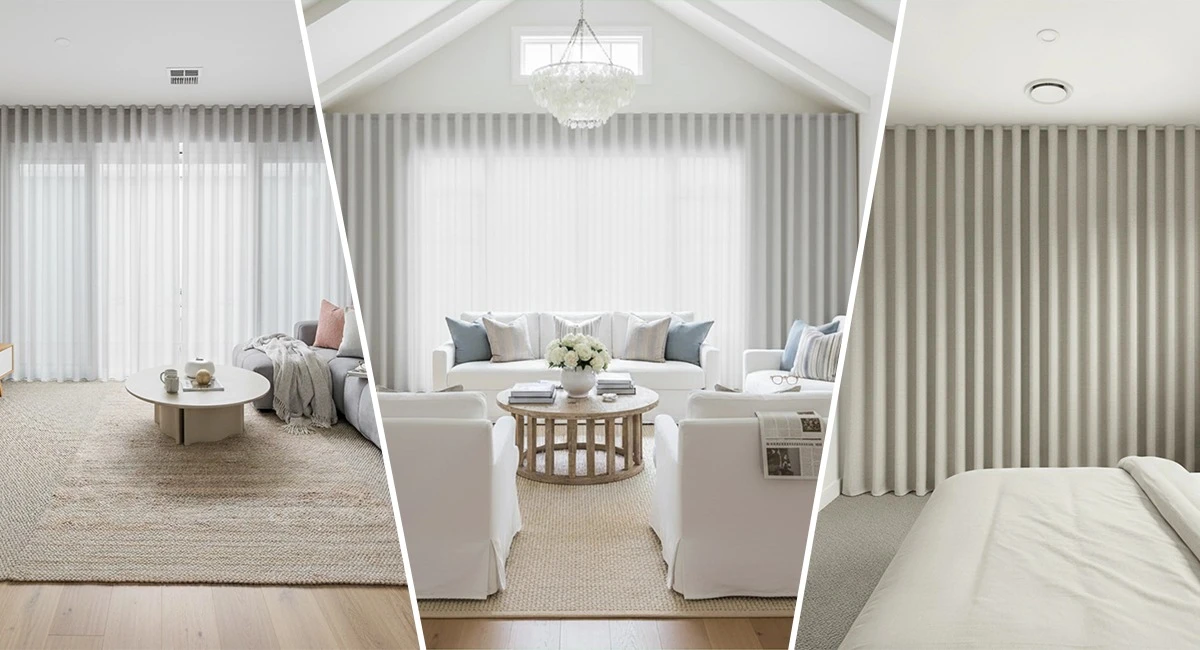
Sheer curtains, light filtering curtains and blockout curtains each have a different job.
The right choice depends on how much light, privacy and softness you want.
Curtain type
Best for
Light Control
Privacy
Sheer Curtains
Soft light, daytime privacy, texture and flow
Gently filters light
Good during the day, limited at night
Light filtering curtains
Soft light with more fabric density
Filters and diffuses light
Moderate privacy, but not full blockout
Blockout curtains
Sleep, darkness, insulation and full privacy
Strong light control
Strong day and night privacy
Best for
Soft light, daytime privacy, texture and flow
Light Control
Gently filters light
Best for
Good during the day, limited at night
Best for
Soft light with more fabric density
Light Control
Filters and diffuses light
Privacy
Moderate privacy, but not full blockout
Best for
Sleep, darkness, insulation and full privacy
Light Control
Strong light control
Privacy
Strong day and night privacy
Sheer curtains are the softest and most open option.
Light filtering curtains give more coverage and don’t allow a view to the outside.
Blockout curtains give the strongest privacy and light control.
Many homes use more than one type. For example, sheer curtains at the front and blockout curtains behind them. That way, your sheer curtains work beautifully from daytime privacy through to night-time blockout coverage.
Should You Use Sheer Curtains on Their Own or Layer Them?
Sheer curtains can look beautiful on their own.
This works well in living rooms, dining rooms, open-plan spaces and rooms where night privacy is not the main concern.
They are also a lovely choice for windows that look onto a private garden, courtyard or balcony.
However, if the room needs privacy, darkness or better insulation at night, layering is the better choice.
A double curtain track lets you pair sheer curtains with blockout curtains. The sheer layer is used during the day. The blockout layer is used at night.
This gives you the best of both worlds.
Soft light when you want it.
Privacy and darkness when you need it.
Layering also gives your window a more luxurious finish. The sheers create movement and softness, while the blockout curtains add weight and function.
For bedrooms, nurseries, media rooms and street-facing spaces, layered curtains are usually the smarter long-term choice.
Best Rooms for Sheer Curtains
Sheer curtains can work throughout the home, but they shine in rooms where natural light and softness matter.
Living rooms
Living rooms are one of the best places for sheer curtains.
They allow daylight to flow in while reducing glare and adding privacy. They also make the room feel more relaxed and complete.
If your living room has sliding doors, large windows or a view to the garden, sheers can frame the outlook beautifully.
Use them on their own for a light look, or layer them with blockout curtains if the room needs evening privacy.
Bedrooms
In bedrooms, sheer curtains create a calm daytime feel.
They soften the morning light and make the room feel gentle rather than stark.
For most bedrooms, sheers are best layered with blockout curtains or blockout blinds. This gives you softness during the day and privacy at night.
The result is a bedroom that feels welcoming in the morning and restful after dark.
Dining areas
Dining rooms often benefit from a softer window treatment.
Sheer curtains add warmth without making the room feel formal. They are especially helpful when the dining area sits within an open-plan space.
The fabric helps define the area while still allowing light to move through.
Open-plan living
Open-plan homes can feel bright, spacious and connected.
They can also feel a little hard if there is too much glass, tile, stone or timber.
Sheer curtains add movement and softness. They help balance the space while keeping the open feeling you love.
They are also useful for zoning. A large wall of sheers can make an open-plan area feel more finished and intentional.
Apartments
Apartments often need privacy without losing natural light.
This is where sheer curtains are extremely useful.
They soften views from nearby buildings and help the home feel less exposed during the day.
Ceiling-mounted sheers can also make apartment ceilings feel higher and windows feel larger.
Home offices
A home office needs light, but not glare.
Sheer curtains can help soften sunlight so the room stays bright and comfortable.
If you work on a computer near a window, sheers may reduce some harshness without making the room feel closed in.
For stronger glare control, you may still want to consider layering with blinds or using a denser fabric.
Choosing the Right Sheer Curtain Fabric
Fabric choice changes the final look of your sheer curtains.
Some sheers feel crisp and refined. Others feel relaxed and textured. Some are almost transparent, while others give more softness and daytime privacy.
Start by thinking about the room.
If the room is modern and minimal, a clean sheer fabric may suit best.
If the room has timber, linen, rattan or warm neutral tones, a textured sheer may feel more natural.
If the window faces the street, choose a fabric with enough density to make the room feel private during the day.
Always view fabric samples in your own light before ordering.
A sheer fabric can look different depending on the wall colour, flooring, window direction and time of day.
Use curtain fabric samples to compare texture, colour and transparency at home.
This step is small, but it can save you from choosing a fabric that looks too bright, too grey, too yellow or too see-through in your space.
Choosing Sheer Curtain Colours
Most sheer curtains sit in a soft neutral palette.
White, warm white, ivory, stone, linen, grey and natural tones are popular because they work with many interiors.
But small colour differences matter.
A cool white sheer can look fresh and crisp. It suits modern homes, white walls and cooler finishes.
A warm white or ivory sheer feels softer. It works well with timber floors, warm whites, beige tones and relaxed coastal interiors.
A natural or linen-toned sheer can add texture and warmth. It suits earthy palettes, rattan, stone, oak and layered neutral styling.
A soft grey sheer can feel calm and contemporary. It works well with concrete tones, charcoal accents and modern apartments.
The best colour is not always the brightest white.
It is the colour that looks right beside your walls, floors and furniture.
If in doubt, choose a sheer that matches the undertone of your room.
Warm room, warm sheer.
Cool room, cooler sheer.
We always recommend ordering free fabric samples before placing your sheer curtain order, as colours and textures can look different on computer monitors and phones.
What is an S-Fold Sheer Curtain?
S-Fold curtains are also known as wave-fold curtains.
They hang in smooth, even waves that run from the track to the floor. This creates a soft, continuous look that feels modern and tailored.
S-Fold sheers are popular because they avoid the fussy look of older curtain headings. They stack neatly, glide smoothly and suit both casual and more refined interiors.
The wave is created through the curtain track and heading system.
The fabric folds forward and back in a consistent rhythm, which is what gives S-Fold sheer curtains their relaxed designer look.
Fullness is important here.
Too little fabric can look flat. Too much fabric can crowd the window. iSeekBlinds crafts S-Fold sheers with premium 200% fullness to create a balanced wave and a soft flowing finish.
This is one of the details that makes custom sheer curtains feel different from ready-made curtains.
They are designed to fit the window, the track and the room.
Curtain Tracks, Rods and Mounting Options
The way your sheer curtains are mounted affects the whole room.
A curtain track gives a clean and modern look. It is especially suited to S-Fold curtains because it allows the fabric to glide smoothly.
A ceiling-mounted track can make the room feel taller. This works beautifully in living rooms, bedrooms and apartments.
A wall-mounted track can also look clean and practical, especially when ceiling mounting is not possible.
You will also need to think about where the curtains stack when open.
They can stack to the left, right or centre, depending on your window, doors, furniture and view.
For sliding doors, the stack should usually sit on the side that makes access easiest.
For wide windows, a centre-opening design may feel more balanced.
Curtain rods can suit some interiors, but for a streamlined S-Fold sheer curtain look, tracks are often the better choice. Our S-Fold curtains come with a sleek, minimal track that’s specifically designed for S-Fold curtains, helping the fabric glide smoothly and sit in those beautiful, even waves.
This topic is worth exploring further in a supporting guide on curtain rods and tracks for sheer curtains.
Choosing the Right Curtain Drop
The drop is how your curtain meets the floor.
This detail can change the whole look.
A skim drop sits just above the floor. It looks neat and practical, and it is easy to live with in high-use areas.
A touch or kiss drop lightly meets the floor. It gives a softer, more tailored feel.
A puddle drop allows extra fabric to gather on the floor. It can look luxurious, but it needs more care and may not suit homes with pets, children or high-traffic rooms.
For most Australian homes, a skim or touch drop is the easiest to maintain.
It looks polished without feeling fussy.
When measuring, be careful with floor levels. Older homes and large spans can have small changes in height across the window.
Measure accurately so the final curtain looks intentional.
Measuring for Sheer Curtains
Good measuring is the difference between curtains that look custom and curtains that look almost right.
Start by deciding where the track will sit.
For a taller, more designer look, many people mount the track above the window or close to the ceiling. This helps draw the eye up and makes the window feel larger.
Next, measure the width.
Do not only measure the glass or window frame. Think about where the curtain should start and finish, and allow room for the curtain stack when the sheers are open.
Then measure the drop.
Measure from the track position to where you want the curtain to finish. This may be just above the floor, touching the floor or puddling.
Always measure each window and space separately, even if they look the same.
Record measurements in millimetres.
Use a steel tape measure or laser meter for accuracy.
Before ordering, check the measure curtains guide so you know which measurements are needed for your chosen curtain style and mounting type.
Installing Sheer Curtains
Sheer curtains can be DIY-friendly when you have the right instructions and the right measurements.
The key is preparation.
Before installing, check your track position, wall or ceiling surface, brackets, screws and any obstructions such as air-conditioning units and vents, cornices, door frames or handles.
A straight track is important for a clean finish.
Take your time marking out the position before drilling. It is much easier to check twice than to move a track later.
Once installed, S-Fold sheer curtains should glide smoothly and hang in even waves.
If you are planning to install them yourself, use the install curtains guide before you start.
DIY does not mean guessing.
It means following a clear process so you can get a professional-looking result without paying for an installer.
Motorised Sheer Curtains
Motorised sheer curtains are a smart option for large windows, wide sliding doors and hard-to-reach areas.
They also suit homes where you want a cleaner, cordless finish.
With motorisation, you can open and close your sheer curtains with less effort. Some systems can also be controlled by app, voice or schedule, depending on the motor option you choose.
This can be useful in open-plan spaces where the curtains are adjusted often.
It can also help protect furniture and flooring by making it easier to close the sheers when the sun is strongest.
Manual sheer curtains are still a great choice for many homes.
Motorisation is simply worth considering if convenience, access or smart home control matters to you.
How to Style Sheer Curtains
The best sheer curtains feel connected to the rest of the room.
They should not look like an extra piece added at the end. They should feel like part of the design.
Keep the palette calm
Sheers usually work best in soft, simple colours.
Choose a colour that blends with your walls or sits gently within your palette.
This lets the fabric create softness without taking over the room.
Hang them high
A higher track position can make the room feel taller.
This is one of the simplest ways to create a more polished look.
Let the fabric move
Sheer curtains look best when they have enough fullness and room to stack.
Avoid making them too tight across the window.
The gentle folds are part of the appeal.
Layer with purpose
If you layer sheers with blockout curtains, think about both colours together.
The sheer layer will be visible during the day. The blockout layer will become more important at night.
Choose colours that work in both conditions.
Match the room mood
A coastal room may suit a warm white or linen sheer.
A modern apartment may suit a crisp white or soft grey.
A relaxed family room may suit a textured natural fabric.
The right choice should support the mood you want to feel when you walk in.
Caring for Sheer Curtains
Sheer curtains are soft and delicate by nature, so care matters.
Regular gentle cleaning helps keep them fresh.
Use a soft brush attachment on your vacuum or lightly shake the fabric to remove dust. Keep the room well ventilated, especially in humid spaces or near windows that attract condensation.
If washing is needed, always follow the care instructions for your specific fabric.
Avoid harsh scrubbing, bleach or high heat unless the fabric instructions clearly allow it.
Moisture control is also important.
If windows often collect condensation, open the sheers regularly, improve airflow and let the fabric dry properly.
This helps reduce the risk of mould and keeps your sheer curtains looking better for longer.
Common Mistakes to Avoid
Expecting full privacy at night
Sheer curtains are not blockout curtains.
They help during the day, but they do not provide full night-time privacy on their own.
Layer them if privacy matters after dark.
Choosing a fabric from a screen only
Online images are helpful, but they cannot show exactly how a sheer will look in your light.
Order free fabric samples before choosing.
Not allowing enough fullness
Sheer curtains need enough fabric to create soft waves.
If there is not enough fullness, they can look flat and unfinished.
Hanging the track too low
A low track can make the window feel smaller.
Mounting higher often creates a more elegant result.
Forgetting about the stack
When sheers are open, the fabric needs somewhere to sit.
Plan the stack so it does not block a doorway, view or important part of the window.
Using the same solution in every room
Some rooms suit sheers on their own.
Others need blockout layering.
Choose based on how each room is used.
Sheer Curtain Buying Checklist
Before you order sheer curtains, walk through this quick checklist.
- •
Do you want sheers on their own or layered with blockout curtains?
- •
Does the room need night-time privacy?
- •
Will the track be wall mounted or ceiling mounted?
- •
Which way should the curtains stack?
- •
Do you want a skim, touch or puddle finish?
- •
Have you checked fabric samples in your own light?
- •
Have you measured the width and drop in millimetres?
- •
Have you checked for handles, vents, cornices or other obstructions?
- •
Would motorisation make the curtains easier to use?
If you can answer these questions, you are well on your way to choosing the right sheer curtains.
Final Thoughts
Sheer curtains are one of the simplest ways to change how a room feels.
They soften the light. They add privacy during the day. They bring movement, texture and warmth to windows that might otherwise feel plain or exposed.
But the best result comes from choosing them with care.
Think about the room, the light, the view and the privacy you need. Decide whether sheers will stand alone or sit in front of a blockout layer. Choose a fabric and colour that works with your home, not just with a trend.
Then measure carefully and install with confidence.
When sheer curtains are chosen well, they do not just dress the window.
They change the way the whole room feels.
Soft in the morning.
Bright through the day.
Calm by evening.
That is the quiet beauty of sheer curtains.
FAQs About Sheer Curtains
Yes, sheer curtains are good for daytime privacy.
They help blur the view into your home while still letting natural light through. At night, they should be layered with blockout curtains or blinds if you need full privacy.
You can usually see through sheer curtains to some degree, especially from the brighter side.
During the day, they reduce visibility from outside. At night, indoor lighting can make the inside of the room more visible from outside.
Yes, sheer curtains can look beautiful in bedrooms.
They create a soft daytime feel. For sleep and night privacy, layer them with blockout curtains or blockout blinds.
Sheer curtains can help soften sunlight and reduce glare, but they are not designed for strong insulation on their own.
For better thermal comfort, layer them with blockout curtains or another insulating window covering.
Choose a colour that suits your room undertone.
Warm whites, ivory and linen tones suit natural and coastal interiors. Crisp whites and soft greys suit modern homes. Always check fabric samples in your own light before ordering.
S-Fold sheer curtains are a strong choice if you want a clean, modern finish.
They create even waves, stack neatly and suit many interior styles.
Yes, sheer curtains can be DIY installed with the right measuring and installation instructions.
Use the measuring and installation guides before ordering and fitting your curtains.


'%3e%3cline%20id='Line_28'%20data-name='Line%2028'%20y2='200'%20transform='translate(1580.5%205493.46)'%20fill='none'%20stroke='%23f7941d'%20stroke-width='5'/%3e%3cg%20id='Ellipse_50'%20data-name='Ellipse%2050'%20transform='translate(1559%205665.46)'%20fill='%23171717'%20stroke='%23f7941d'%20stroke-width='5'%3e%3ccircle%20cx='21.5'%20cy='21.5'%20r='21.5'%20stroke='none'/%3e%3ccircle%20cx='21.5'%20cy='21.5'%20r='19'%20fill='none'/%3e%3c/g%3e%3c/g%3e%3c/svg%3e)