'%3e%3ccircle%20id='Ellipse_59'%20data-name='Ellipse%2059'%20cx='3'%20cy='3'%20r='3'%20transform='translate(11%208.786)'%20fill='none'%20stroke='%23f7941d'%20stroke-linecap='round'%20stroke-linejoin='round'%20stroke-width='2'/%3e%3cpath%20id='Path_82'%20data-name='Path%2082'%20d='M14,2A10,10,0,0,0,4,12a8.048,8.048,0,0,0,1.875,5.625L14,27l8.125-9.375A8.048,8.048,0,0,0,24,12,10,10,0,0,0,14,2'%20transform='translate(0%200)'%20fill='none'%20stroke='%23f7941d'%20stroke-linecap='round'%20stroke-linejoin='round'%20stroke-width='2'/%3e%3c/g%3e%3c/svg%3e)


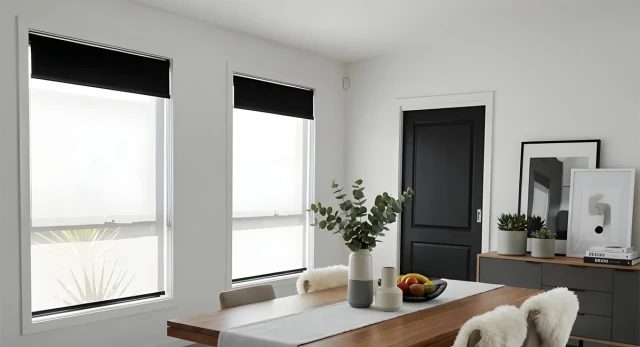
A practical Australian guide to choosing, styling and living with double roller blinds
Some window coverings solve one problem.
A blockout blind gives you privacy and darkness. A sunscreen blind helps with glare and daytime views. A light filtering blind softens the room.
But many homes need more than one thing from the same window.
A living room may need soft daylight during the day and privacy at night. A bedroom may need morning light without feeling exposed, then darkness for sleep. A kitchen may need glare control in the afternoon but still feel open and bright.
That is why double roller blinds have become such a smart choice for Australian homes.
They give you two blinds on one bracket. One layer works during the day. The other works at night. Together, they help you manage light, privacy, glare, heat and comfort without adding bulk to the room.
This complete guide will walk you through how double roller blinds work, which fabrics to choose, where they suit best, how to style them, what to consider before measuring, and how to avoid common mistakes.
At iSeekBlinds, we've been helping Australians choose and install custom-made blinds since 2004. One of the most common questions our team hears is, "How do I get privacy at night without losing my view during the day?" Double roller blinds are often the answer. Whether you're replacing existing blinds or fitting blinds in a new home, we'll help you understand your options so you can measure, order and install with confidence.
By the end of this guide, you'll have a clear understanding of whether double roller blinds are the right choice for your home and feel confident taking the next step.
What Are Double Roller Blinds?
Double roller blinds are two roller blinds fitted onto one streamlined bracket.
Each blind has its own fabric and can be operated separately.
The back blind, closest to the window, is usually the daytime layer. This is typically a sunscreen or light filtering fabric that helps soften sunlight, reduce glare and maintain your daytime privacy or outlook.
The front blind, closest to the room, is usually the blockout layer. It provides privacy, darkness and greater light control when needed.
This is why double roller blinds are often called day and night blinds.
They let you change the way the room works as the light changes.
During the day, lower the sunscreen or light filtering blind.
At night, lower the blockout blind.
It is simple, practical and easy to live with.
How Double Roller Blinds Work
The two blinds sit together at the top of the window.
Each fabric rolls up and down on its own tube. You can use one blind at a time or adjust both depending on the room.
Most homes use the sunscreen or light filtering blind during daylight hours. Because this blind sits closest to the glass, it helps manage glare and natural light while keeping the room comfortable.
When you need greater privacy or darkness, simply lower the front blockout blind.
This layered system gives you more flexibility than a single roller blind.
A single blind asks one fabric to do everything. Double roller blinds let each fabric do what it does best.
The day blind manages light.
The night blind manages privacy.
That is the core benefit.
Why Choose Double Roller Blinds?
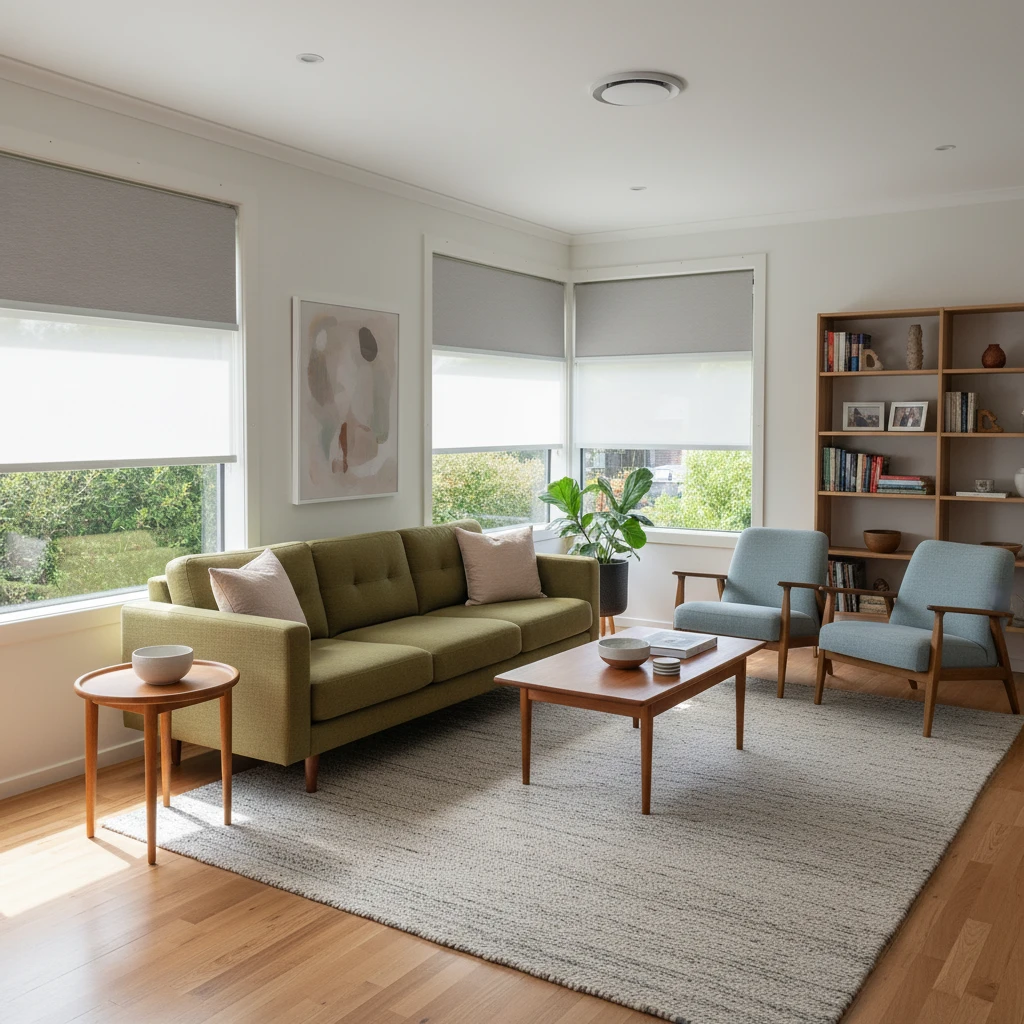
Double roller blinds are popular because they solve everyday problems at the window.
They are practical, neat and adaptable. They suit modern homes, family homes, apartments, open-plan living areas and bedrooms.
For many homeowners, double roller blinds remove the need to compromise. Instead of choosing between privacy or natural light, you can enjoy both. That's one of the reasons they're one of our most popular roller blind solutions for Australian homes.
Here are the main benefits.
They give you day and night control
Light and privacy needs change throughout the day.
In the morning, you may want soft natural light. In the afternoon, you may need glare control. At night, you want privacy once the lights are on.
Double roller blinds let you respond to those changes without changing your window furnishing.
This makes them especially useful in rooms that are used from morning to evening.
They help maintain daytime privacy
Sunscreen and light filtering fabrics can help reduce visibility into your home during the day.
This is useful for street-facing windows, apartments, living rooms and rooms near neighbours.
You can keep the room bright without feeling as exposed.
They provide night-time privacy
The blockout layer gives you strong privacy after dark.
This is important because some daytime fabrics, especially sunscreen, are not designed for full privacy at night.
With double roller blinds, you do not have to choose between daytime light and evening privacy.
You get both.
They reduce glare
Glare can make a room hard to use.
It can hit television screens, computer monitors, benchtops and polished floors.
A sunscreen layer is ideal for glare control because it softens harsh light while keeping the room open.
This is one reason double roller blinds work so well in living rooms, kitchens and home offices.
They create a clean, modern look
Double roller blinds sit close to the window and have a minimal profile.
They are less bulky than heavy layered curtains and suit homes where you want a clean, simple finish.
The look can be soft and neutral or bold and modern depending on the fabric colours you choose.
Understanding the Fabric Layers
The best double roller blinds start with the right fabric combination.
There are three main fabric types to understand: sunscreen, light filtering and blockout.
Each one has a different purpose.
Sunscreen Fabric: Best for Views and Glare Control
Sunscreen fabric is designed for daytime use.
It has an open weave that allows natural light into the room while helping reduce glare and filter UV while still maintaining your outdoor view during the day.
This makes sunscreen fabric ideal for:
- •
living rooms
- •
kitchens
- •
dining areas
- •
home offices
- •
sliding doors
- •
large windows
- •
rooms with garden or outdoor views
Sunscreen fabric is often the best choice when you want the room to stay connected to the outside.
In a typical double roller blind, sunscreen fabric is installed on the back roller, closest to the window, while the blockout fabric sits on the front roller.
Quality sunscreen fabrics can also help reduce UV entering the room, helping protect flooring, furniture and furnishings from everyday sun exposure.
The important thing to know is that sunscreen fabric does not provide full privacy at night.
When it is dark outside and your lights are on inside, visibility can change. That is why sunscreen works so well when paired with a blockout layer.
Use sunscreen during the day.
Use blockout at night.
Light Filtering Fabric: Best for Softness and Daytime Privacy
Light filtering fabric is also designed for daytime use, but it has a softer effect than sunscreen.
Like sunscreen fabric, light filtering fabric is usually installed on the back roller, allowing the blockout blind to operate smoothly from the front.
It lets light through while blurring the view. This creates a warm, gentle glow and a more private daytime feel.
Light filtering fabric is a good choice for:
- •
bedrooms
- •
entryways
- •
street-facing rooms
- •
living areas where privacy matters
- •
apartments
- •
rooms without an important view
If sunscreen feels too open for your room, light filtering may be the better front layer.
It gives you brightness without a clear view through the fabric.
It also adds more softness to the room, which can help bedrooms and family spaces feel calmer.
For full night-time privacy, light filtering fabric should still be paired with blockout.
Blockout Fabric: Best for Privacy and Darkness
Blockout fabric is usually installed on the front roller in most double roller blind systems. Positioned closest to the room, it provides privacy, darkness and improved light control when lowered.
It is designed to block light through the fabric and provide strong privacy.
Use blockout fabric when you need:
- •
privacy after dark
- •
better sleep conditions
- •
reduced light in bedrooms
- •
darkness for media rooms
- •
coverage for street-facing windows
- •
extra comfort in rooms with strong sun
The blockout layer is what makes double roller blinds so practical.
It gives you the confidence to use a softer or more open fabric during the day because you know you have full coverage when it matters.
Best Fabric Combinations for Double Roller Blinds
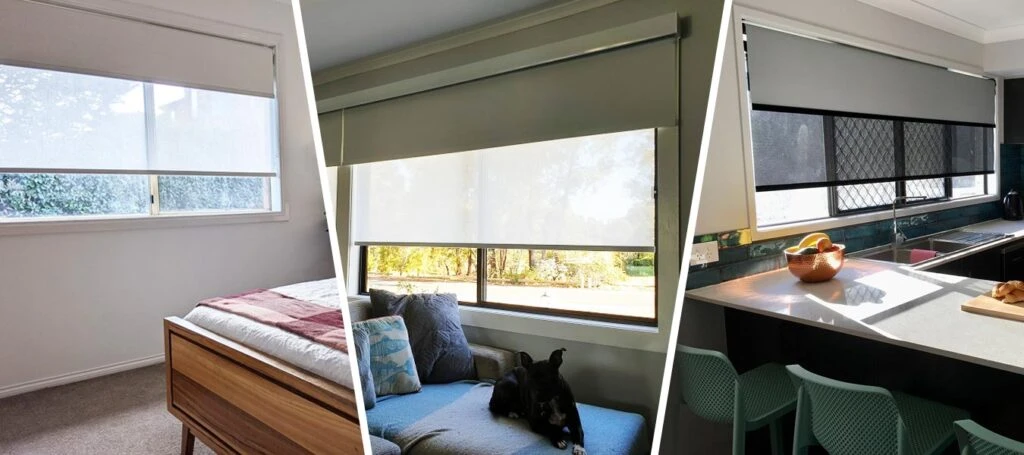
Most double roller blinds use one of two main combinations.
Sunscreen + blockout
This is the most popular choice for rooms with views or glare.
The sunscreen layer gives you daylight, visibility out and glare control. The blockout layer gives privacy and darkness at night.
Choose this combination for living rooms, kitchens, dining areas, home offices and open-plan spaces.
It is also a strong choice for large windows and sliding doors.
Light filtering + blockout
This combination is softer and more private during the day.
The light filtering layer creates a gentle glow and helps blur views into and out of the room. The blockout layer gives night privacy and darkness.
Choose this combination for bedrooms, street-facing windows, nurseries, relaxed living rooms and rooms where the view is not the main feature.
Both options are useful.
The right choice depends on whether you value daytime views or daytime softness more.
For more detail, see the guide to benefits of day and night blinds .
Double Roller Blinds Room by Room
The best way to choose double roller blinds is to think about each room separately.
Do not assume every window needs the same fabric.
Each room has different light, privacy and comfort needs.
After helping thousands of Australians choose custom blinds online, we've found that every room has different priorities. Thinking about each room individually almost always leads to a better result than choosing one fabric combination for the whole house.
Living rooms
Living rooms often need the most flexibility.
You may want natural light during the day, reduced glare in the afternoon and privacy at night.
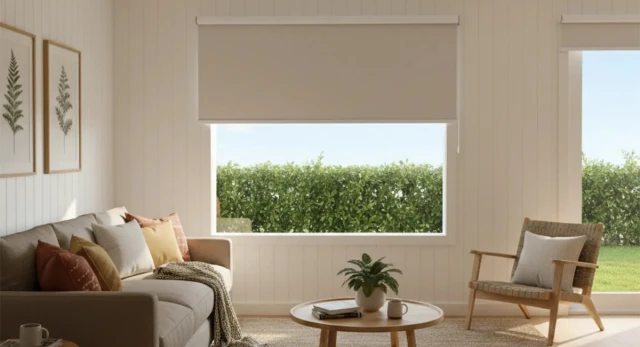
A sunscreen and blockout combination is usually a smart choice.
The sunscreen layer helps keep the space bright and open. The blockout layer gives privacy once the room is lit from inside.
This works especially well in open-plan homes and living rooms with large windows.
Bedrooms
Bedrooms need privacy, softness and darkness.
A light filtering and blockout combination is a beautiful choice if you want a gentle daytime mood and strong night-time coverage.
Sunscreen and blockout can also work in bedrooms with a private outlook.
For nurseries, shift-worker rooms or bedrooms affected by street lighting, the blockout layer is especially important.
Kitchens
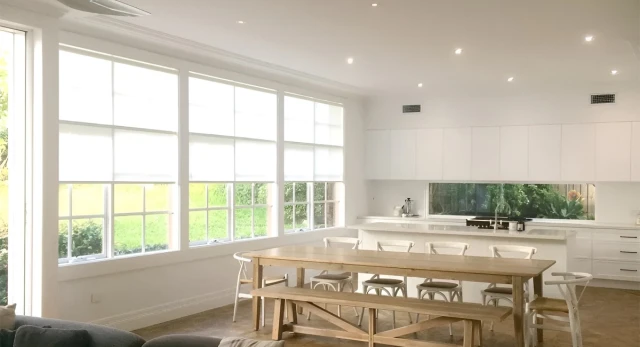
Kitchens often need glare control without losing daylight.
Sunscreen and blockout is usually the stronger choice here.
The sunscreen layer can soften harsh light on benchtops and reduce glare while cooking. The blockout layer can be used at night or during strong afternoon sun.
Home offices
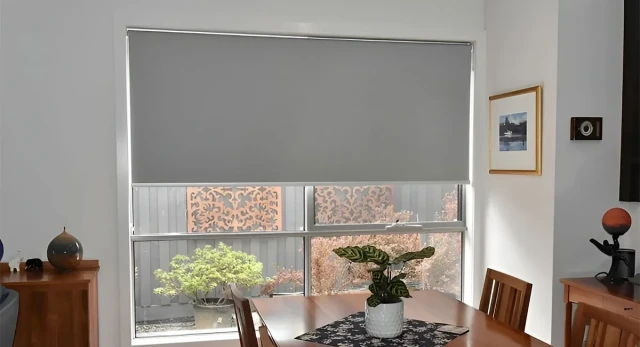
A home office needs natural light, but not screen glare.
Sunscreen fabric is often the best front layer because it reduces harsh brightness while keeping the room open.
If the office is visible from outside at night, the blockout layer becomes important.
Media rooms
Media rooms need darkness.
The blockout layer does the main work here.
A sunscreen or light filtering front layer can keep the room useful during the day when you do not want full darkness.
Apartments and small spaces
Double roller blinds work well in apartments because they provide two functions without adding bulk.
They sit neatly at the window and help manage privacy in homes that may face neighbours, balconies or nearby buildings.
Use light filtering and blockout where privacy matters most. Use sunscreen and blockout where you want to keep a view.
Double Roller Blinds vs Single Roller Blinds
Single roller blinds are simple and effective when a room has one main need.
For example, a spare bedroom may only need blockout. A home office may only need sunscreen. A hallway may only need light filtering.
Double roller blinds are better when the room needs different control at different times of day.
They are especially useful when you want daylight and night privacy in one system.
Here is the simple difference.
| Feature | Single Roller Blinds | Double Roller Blinds |
|---|---|---|
| Number of fabrics | One | Two |
| Daytime control | Depends on fabric | Stronger flexibility |
| Night privacy | Best with blockout | Yes, with blockout layer |
| Outdoor view | Only with sunscreen | Yes, if using sunscreen layer |
| Soft daylight | Only with light filtering | Yes, if using light filtering layer |
| Best for | One clear room need | Day-to-night living |
Enter text here
If the room changes throughout the day, double roller blinds are usually worth considering.
You can read more in Double vs Single Roller Blinds: What’s the Difference? .
Energy Efficiency and Everyday Comfort
Double roller blinds can help make rooms feel more comfortable.
They are not a replacement for insulation, good glazing or smart building design. But they do add useful layers at the window.
The daytime layer helps soften harsh sun before it fills the room. The blockout layer gives stronger coverage when you want privacy, darkness or a more settled feel.
In summer, using the right layer at the right time can help reduce glare and solar heat gain at the window.
In winter, the blockout layer can help the room feel more comfortable after dark.
This is especially useful for bedrooms, living rooms and west-facing windows.
For a deeper look, read Energy Efficiency with Double Roller Blinds .
Choosing Colours for Double Roller Blinds
Colour affects how double roller blinds look and feel.
The daytime fabric is what you see most when the sun is up. The blockout fabric becomes more important at night.
A white or pale sunscreen can keep the room feeling bright and fresh. A soft neutral light filtering fabric can make the room feel warm and calm. A black or charcoal blockout fabric can create contrast and a modern finish. Almond, dove and linen tones can soften the room and work well with natural interiors.
The key is to choose both colours together.
Do not choose the front fabric in isolation.
Ask yourself how the pair will look during the day, in the evening and beside your existing finishes.
Consider:
- •
wall colour
- •
flooring
- •
window frames
- •
cabinetry
- •
furniture
- •
natural light
- •
whether you want contrast or calm
Always order roller blind samples before deciding.
Colours often look different depending on the direction your room faces and the amount of natural light it receives. Viewing samples in your own home is one of the easiest ways to choose with confidence.
Check them in your own light across the day.
For styling ideas, see. Best Colour Combinations for Double Roller Blinds
Inside Mount or Outside Mount?
How the blind is fitted affects the final look and function.
An inside mount sits within the window reveal. It gives a neat, built-in look and is popular for modern interiors.
An outside mount sits over the window opening or architrave. It can provide more coverage because the blind overlaps the window area.
For double roller blinds, you also need to consider bracket depth.
Two rollers need more room than one. This means not every shallow recess will suit an inside mount.
Inside mount may suit you if:
- •
the recess has enough depth
- •
you want a clean minimal finish
- •
small side gaps are acceptable
- •
there are no major obstructions
Outside mount may suit you if:
- •
privacy is a top priority
- •
you want better coverage over the glass
- •
the recess is shallow
- •
the window frame is uneven
- •
you want to reduce light gaps
Before ordering, follow our step-by-step measure roller blinds guide to determine which option best suits your window. If you're unsure, our team is always happy to help before you place your order.
What About Roll Direction?
Roll direction affects how the fabric sits and how close it falls to the glass.
In many double roller blind setups, the layers need to be arranged carefully so they do not interfere with each other.
The roll direction can also affect light gaps, handle clearance and how the blind looks from the room.
This is especially important for inside mount blinds, sliding doors and windows with winders or handles.
Before ordering, check the measuring and product instructions carefully.
A small detail at the planning stage can make the finished blind look and operate much better.
Chain Control or Motorised Double Roller Blinds?
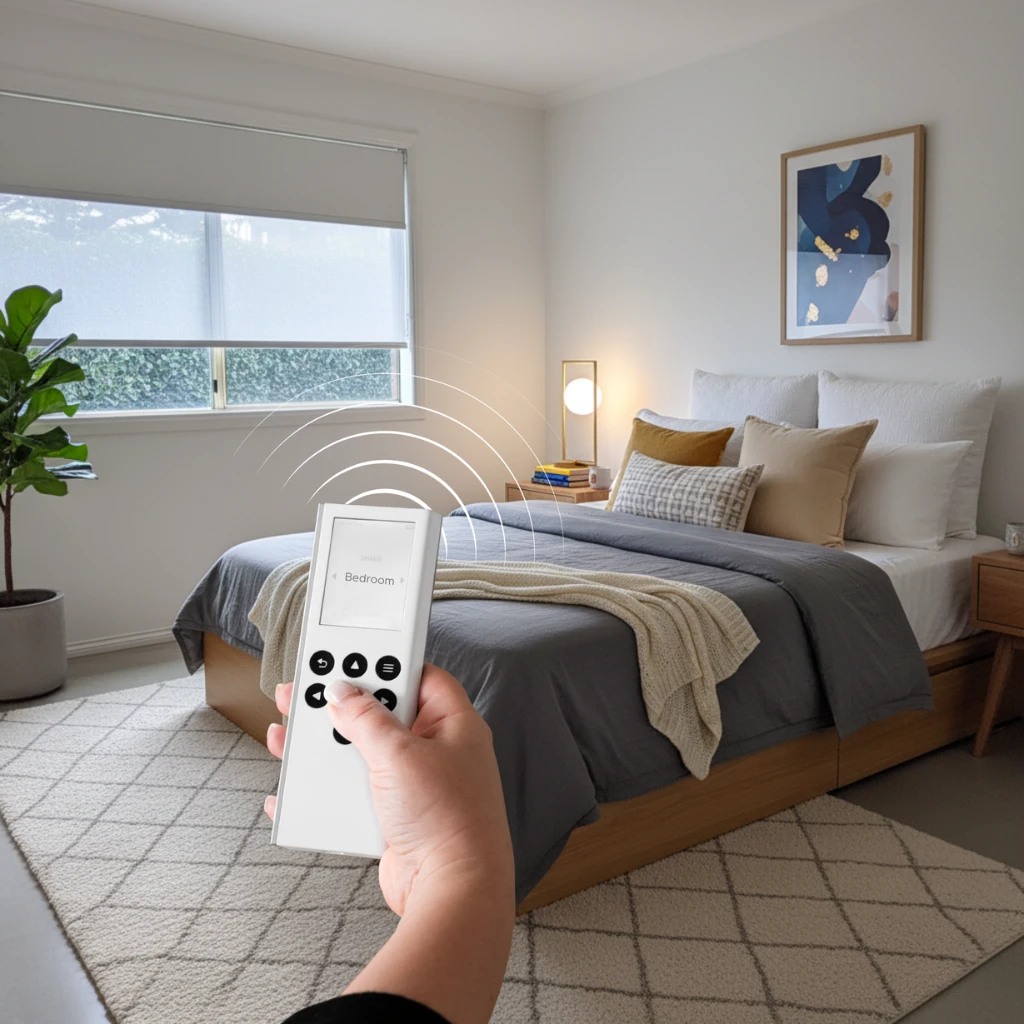
Double roller blinds can be operated manually or motorised.
Chain control is simple, reliable and cost-effective. It works well for standard windows and rooms where the blinds are easy to reach.
Motorised control adds convenience.
It is especially useful for:
- •
large windows
- •
high windows
- •
wide sliding doors
- •
bedrooms
- •
media rooms
- •
open-plan living spaces
- •
homes where a cleaner cordless look is preferred
With double roller blinds, you may choose to motorise one layer or both layers depending on how the room is used.
For example, a bedroom may benefit from a motorised blockout layer. A living room with large windows may benefit from both layers being motorised.
The best choice depends on your budget, window size and how often you adjust the blinds.
Measuring for Double Roller Blinds
Accurate measuring is essential.
Double roller blinds are custom made, so the final result depends on the measurements you provide.
Measure each window separately, even if two windows look the same. Use a steel tape measure and record everything in millimetres.
Before measuring, check:
- •
window depth
- •
handles and winders
- •
tiles or splashbacks
- •
architraves
- •
uneven frames
- •
sliding door access
- •
where the blind will roll
- •
whether inside or outside mount is best
Do not rush this step.
A well-measured blind looks cleaner, operates better and gives stronger privacy and light control.
Follow our step-by-step measure double roller blinds guide before ordering. If you're uncertain about any measurement, our team is happy to help before you place your order. Taking a little extra time here can save a lot of frustration later.
Installing Double Roller Blinds
Double roller blinds can be DIY installed with the right preparation.
The main difference from a single roller blind is that you are working with two layers on one bracket.
This means alignment matters.
Before you begin, check your parts, brackets, screws, wall or frame surface and blind orientation. Make sure the area is clear and the blinds have enough room to roll freely.
Take your time with the bracket placement.
A straight, level installation will help both blinds operate smoothly and sit neatly at the window.
Use the install double roller blinds guide before fitting your blinds.
DIY does not mean guessing.
It means following the right steps with care.
We've created detailed measuring guides, installation videos and support resources to help you through every step, so you can install your blinds with confidence.
Cleaning and Maintenance
Double roller blinds are easy to live with, but they still need basic care.
Dust the fabric regularly with a soft cloth or vacuum brush attachment. For small marks, follow the care instructions for your fabric type.
Avoid harsh scrubbing or strong cleaning products unless the fabric instructions allow them.
Because double roller blinds have two layers, it is also worth checking that both blinds roll smoothly and that chains or motors operate as expected.
In kitchens and bathrooms, keep ventilation in mind. Moisture and cooking residue can affect any window furnishing over time.
A little regular care will keep your blinds looking cleaner and working better for years to come.
Common Mistakes to Avoid
Choosing sunscreen for night privacy
Sunscreen fabric is designed for daytime use.
If you need privacy at night, pair it with blockout.
Ignoring window depth
Double roller blinds need more space than single roller blinds.
Check your recess depth before choosing inside mount.
Choosing colours from a screen only
Fabric colours can change in real light.
Order samples and check them in the room.
Using the same fabric pairing in every room
A living room may need sunscreen and blockout.
A bedroom may need light filtering and blockout.
Choose by room, not by habit.
Forgetting about side gaps
Small side gaps can affect privacy and light control.
Consider outside mount if coverage is a top priority.
Rushing the measuring process
Custom blinds depend on accurate measurements.
Measure carefully and follow the guide.
Forgetting about daytime views
Many homeowners automatically choose blockout fabric without considering how they use the room during the day. Pairing a sunscreen or light-filtering blind on the back roller with a blockout blind on the front roller gives you the flexibility to enjoy natural light during the day and privacy at night.
Quick Buying Checklist
Before you order double roller blinds, ask yourself:
- •
Do I want daytime views or softer daytime privacy?
- •
Does the room need full privacy at night?
- •
Is sunscreen or light filtering better for the front layer?
- •
Which blockout colour suits the room after dark?
- •
Does the window get strong heat or glare?
- •
Is inside mount or outside mount the better fit?
- •
Is there enough recess depth for two rollers?
- •
Are there handles, winders or obstructions?
- •
Would motorisation make the blinds easier to use?
- •
Have I ordered fabric samples?
- •
Have I checked for window handles, winders or other obstructions?
- •
Have I measured in millimetres using the guide?
These questions make the decision much easier.
They also help you choose blinds that feel right long after they are installed.
Final Thoughts
Double roller blinds are one of the most practical window furnishing choices for Australian homes.
They give you softness during the day and privacy at night.
They help manage glare, heat, light and comfort.
They suit bedrooms, living rooms, kitchens, home offices, apartments and open-plan spaces.
Most of all, they give you choice.
You are not asking one fabric to do everything.
You can choose sunscreen when you want views. Light filtering when you want softness. Blockout when you need privacy and darkness.
That is why double roller blinds work so well in real homes.
They move with the rhythm of the day.
Morning light.
Afternoon glare.
Evening privacy.
Night-time comfort.
All in one clean, simple system.
At iSeekBlinds, we make choosing custom double roller blinds simple. Order fabric samples, follow our online measuring guides and installation videos, or reach out to our friendly team if you'd like a little extra guidance. We're here to help you complete your DIY project with confidence.
A better window solution starts with understanding how you want the room to feel from sunrise to bedtime.
FAQs about Double Roller Blinds
They cost more than a single roller blind, but they give you two functions in one neat system.
Sunscreen suits rooms where you want a view. Light filtering suits rooms where you want softness and more daytime privacy.
For stronger coverage, consider an outside mount where appropriate.
At night, lower the blockout layer for privacy.
'%3e%3cline%20id='Line_28'%20data-name='Line%2028'%20y2='200'%20transform='translate(1580.5%205493.46)'%20fill='none'%20stroke='%23f7941d'%20stroke-width='5'/%3e%3cg%20id='Ellipse_50'%20data-name='Ellipse%2050'%20transform='translate(1559%205665.46)'%20fill='%23171717'%20stroke='%23f7941d'%20stroke-width='5'%3e%3ccircle%20cx='21.5'%20cy='21.5'%20r='21.5'%20stroke='none'/%3e%3ccircle%20cx='21.5'%20cy='21.5'%20r='19'%20fill='none'/%3e%3c/g%3e%3c/g%3e%3c/svg%3e)