'%3e%3ccircle%20id='Ellipse_59'%20data-name='Ellipse%2059'%20cx='3'%20cy='3'%20r='3'%20transform='translate(11%208.786)'%20fill='none'%20stroke='%23f7941d'%20stroke-linecap='round'%20stroke-linejoin='round'%20stroke-width='2'/%3e%3cpath%20id='Path_82'%20data-name='Path%2082'%20d='M14,2A10,10,0,0,0,4,12a8.048,8.048,0,0,0,1.875,5.625L14,27l8.125-9.375A8.048,8.048,0,0,0,24,12,10,10,0,0,0,14,2'%20transform='translate(0%200)'%20fill='none'%20stroke='%23f7941d'%20stroke-linecap='round'%20stroke-linejoin='round'%20stroke-width='2'/%3e%3c/g%3e%3c/svg%3e)


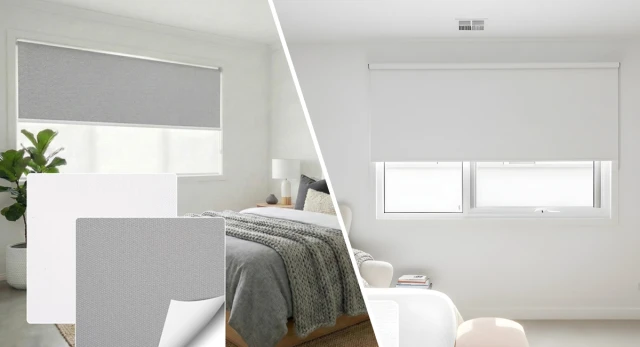
A clear guide to choosing the right roller blind setup for your home
Some windows only need one job done well.
A bedroom may need darkness. A kitchen may need glare control. A hallway may simply need privacy.
Other windows work harder.
They need soft daylight in the morning, privacy in the evening, and protection from harsh Australian sun through the day.
This is where the choice between single roller blinds, double roller blinds, and even two single roller blinds on one window becomes important.
All options can look clean, modern and simple. All can be custom made to suit your window. But they solve slightly different problems.
The key difference is this:
A single roller blind gives you one fabric and one function.
A double roller blind gives you two fabrics on one bracket for more control across the day and night.
Two single roller blinds can give you a similar day-night result when there isn’t enough space in the window reveal for a double roller blind bracket.
Let’s walk through how each option works, where each one makes sense, and how to choose the right setup for your home.
What Are Single Roller Blinds?
A single roller blind uses one piece of fabric on one roller tube.
It is the simplest roller blind option. Clean lines, easy operation and a neat finish at the window.
You choose one fabric type based on what the room needs most.
That might be blockout fabric for full privacy and darkness. It might be sunscreen fabric for daytime glare control and outdoor views. Or it might be light filtering fabric for soft natural light and gentle privacy.
A single roller blind is a great choice when your room has one clear priority.
For example, a guest bedroom may need a blockout blind. A home office may need sunscreen fabric to reduce glare. A hallway may need a light filtering blind to soften the space.
Simple need. Simple solution.
Single roller blinds also need less bracket depth than double roller blinds, which can make them a smart choice for shallow window reveals, tight frames or windows with handles, tiles or other obstructions.
Can You Use Two Single Roller Blinds on One Window?
Yes, in some cases you can use two single roller blinds on one window.
This can be a great option when you want the flexibility of two fabrics, but you don’t have enough space inside the window reveal for a double roller blind bracket.
Instead of using one double bracket, you install two separate single roller blinds in different positions.
One blind can be fitted inside the recess, mounted to the window frame or inside reveal. The second blind can be fitted outside the recess, mounted to the face of the window frame, architrave or wall.
This gives you two layers of control without needing both rollers to sit together inside the reveal.
For example, you might choose:
- •
a sunscreen roller blind inside the recess for daytime glare control and outdoor views
- •
a blockout roller blind outside the frame for night-time privacy and stronger light control
This setup can work beautifully on windows where the reveal is too shallow for a double roller blind bracket, but you still want day and night flexibility.
It is also a handy option for older homes, narrow frames, tricky window depths or spaces where a double bracket may project too far forward.
The result is practical, flexible and still neat when measured carefully.
Common Single Roller Blind Fabric Options
Single roller blinds are usually available in three main fabric types.
Blockout fabric is made for privacy and darkness. It is ideal for bedrooms, nurseries, media rooms and any space where you want stronger light control.
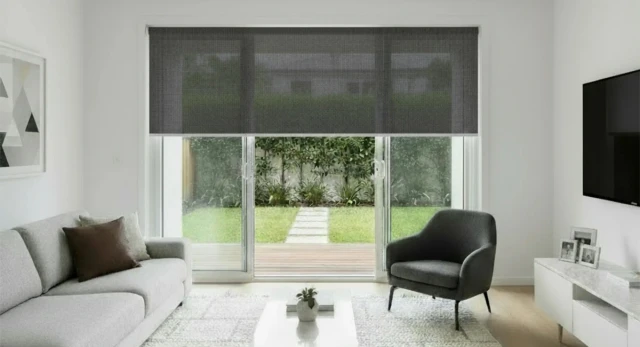
Sunscreen fabric helps reduce glare and sun exposure while keeping your daytime view. It works well in living rooms, kitchens, dining rooms and home offices.
Light filtering fabric softens daylight while giving the room a warmer, more private feel. It suits bedrooms, entries, hallways and living spaces where you want natural light without a clear view through the blind.
The benefit of a single blind is clarity.
You pick the fabric that matches the main job of the room.
And if your window needs two jobs done, but a double bracket won’t fit, two single blinds may give you the flexibility you’re looking for.
What Are Double Roller Blinds?
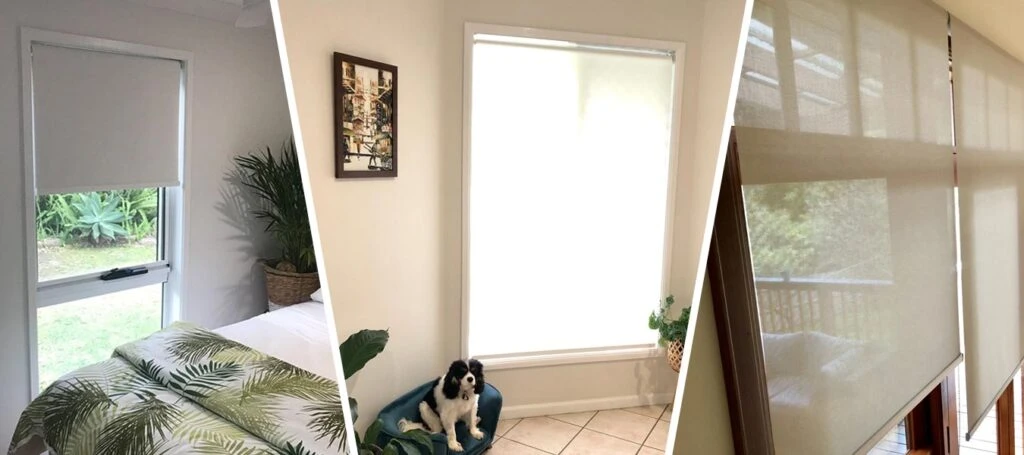
Double roller blinds use two blinds on one streamlined bracket.
Each blind has its own fabric and can be operated separately.
Most people choose a daytime fabric at the front and a blockout fabric behind it. During the day, the front blind helps manage light, glare and privacy. At night, the blockout blind gives you privacy, darkness and comfort.
This is why double roller blinds are often called day-night blinds.
They let you change how the room works without changing the window furnishing.
Morning light can be soft. Afternoon glare can be controlled. Evening privacy can be complete.
All from one window setup.
Double roller blinds are a fantastic option when your window has enough depth for the bracket and you want both blinds neatly positioned together.
Learn how double roller blinds improve privacy and light control.
Common Double Roller Blind Pairings
The most popular pairing is blockout + sunscreen.
This gives you a view during the day and privacy at night. It is a strong choice for living rooms, kitchens, dining areas and open-plan spaces.
Another popular pairing is blockout + light filtering.
This creates a softer daytime look with better daytime privacy. It is a lovely option for bedrooms, street-facing windows and relaxed living areas.
The blockout layer does the heavy lifting at night. The front layer shapes how the room feels during the day.
That is the real strength of double roller blinds.
You do not need one fabric to do everything.
Single vs Double Roller Blinds: The Main Difference
The difference comes down to flexibility and fitting space.
A single roller blind gives you one mode. It can block light, filter light or screen glare, depending on the fabric you choose.
A double roller blind gives you two modes on one bracket. You can use the front blind during the day and the blockout blind at night.
Two single roller blinds can also give you two modes, but with each blind installed separately. This can be helpful when your window reveal does not have enough depth for a double roller blind bracket.
Here is the simple comparison.
Feature
Single Roller Blinds
Double Roller Blinds
Two Single Roller Blinds
Number of fabrics
One
Two
Two
Best for
One clear room need
Day and night control in one bracket
Day and night control when bracket depth is limited
Day-time privacy
Depends on fabric
Stronger flexibility
Stronger flexibility
Night-time privacy
Best with blockout fabric
Yes, with blockout layer
Yes, with blockout layer
Outdoor views
Yes, if using sunscreen
Yes, with sunscreen front layer
Yes, with sunscreen layer
Darkness
Yes, if using blockout
Yes, with blockout back layer
Yes, with blockout blind
Glare control
Yes, if using sunscreen
Yes, with sunscreen or light filtering layer
Yes, with sunscreen or light filtering layer
Installation space
Needs less depth 60mm minimum for inside mount
Needs more bracket space - Minimum 90mm for inside mount installation
Helpful when reveal depth is limited
Cost
Lower – the cost for one blind
Higher, but more flexible – cost of two blinds
Higher – the cost of two blinds
Best rooms
Simple-use rooms
Living rooms, bedrooms and high-sun areas
Shallow reveals, tricky windows and rooms needing two functions
Single Roller Blinds
One
Double Roller Blinds
Two
Two single roller blinds
Two
Single Roller Blinds
One clear room need
Double Roller Blinds
Day and night control in one bracket
Two single roller blinds
Day and night control when bracket depth is limited
Single Roller Blinds
Depends on fabric
Double Roller Blinds
Stronger flexibility
Two Single Roller Blinds
Stronger flexibility
Single Roller Blinds
Best with blockout fabric
Double Roller Blinds
Yes, with blockout layer
Two Single Roller Blinds
Yes, with blockout layer
Single Roller Blinds
Yes, if using sunscreen
Double Roller Blinds
Yes, with sunscreen front layer
Two Single Roller Blinds
Yes, with sunscreen layer
Single Roller Blinds
Yes, if using blockout
Double Roller Blinds
Yes, with blockout back layer
Two Single Roller Blinds
Yes, with blockout blind
Single Roller Blinds
Yes, if using sunscreen
Double Roller Blinds
Yes, with sunscreen or light filtering layer
Two Single Roller Blinds
Yes, with sunscreen or light filtering layer
Single Roller Blinds
Needs less depth 60mm minimum for inside mount
Double Roller Blinds
Needs more bracket space - Minimum 90mm for inside mount installation
Two Single Roller Blinds
Helpful when reveal depth is limited
Single Roller Blinds
Lower – the cost for one blind
Double Roller Blinds
Higher, but more flexible – cost of two blinds
Two Single Roller Blinds
Higher – the cost of two blinds
Single Roller Blinds
Simple-use rooms
Double Roller Blinds
Living rooms, bedrooms and high-sun areas
Two Single Roller Blinds
Shallow reveals, tricky windows and rooms needing two functions
None of these options are wrong.
The right choice depends on your window, your available space and how you use the room.
When Single Roller Blinds Make Sense
Single roller blinds are a smart choice when the room has one main purpose.
If a bedroom only needs darkness at night, a blockout roller blind may be all you need.
If a home office mainly needs glare control, a sunscreen roller blind may be enough.
If a hallway needs soft daylight and privacy, a light filtering roller blind can keep the space calm and simple.
Single roller blinds are also useful when budget or space is tight.
They need less bracket depth than double roller blinds. This can make them easier to fit in shallow window recesses, narrow frames or smaller rooms.
They also have fewer moving parts, which makes them simple to use and maintain.
Choose single roller blinds if you want:
- •
a clean and minimal finish
- •
a lower-cost option
- •
one fabric for one main function
- •
easier fitting in a tight space
- •
simple day-to-day operation
They are practical, neat and effective.
For many rooms, that is exactly enough.
When Two Single Roller Blinds Make Sense
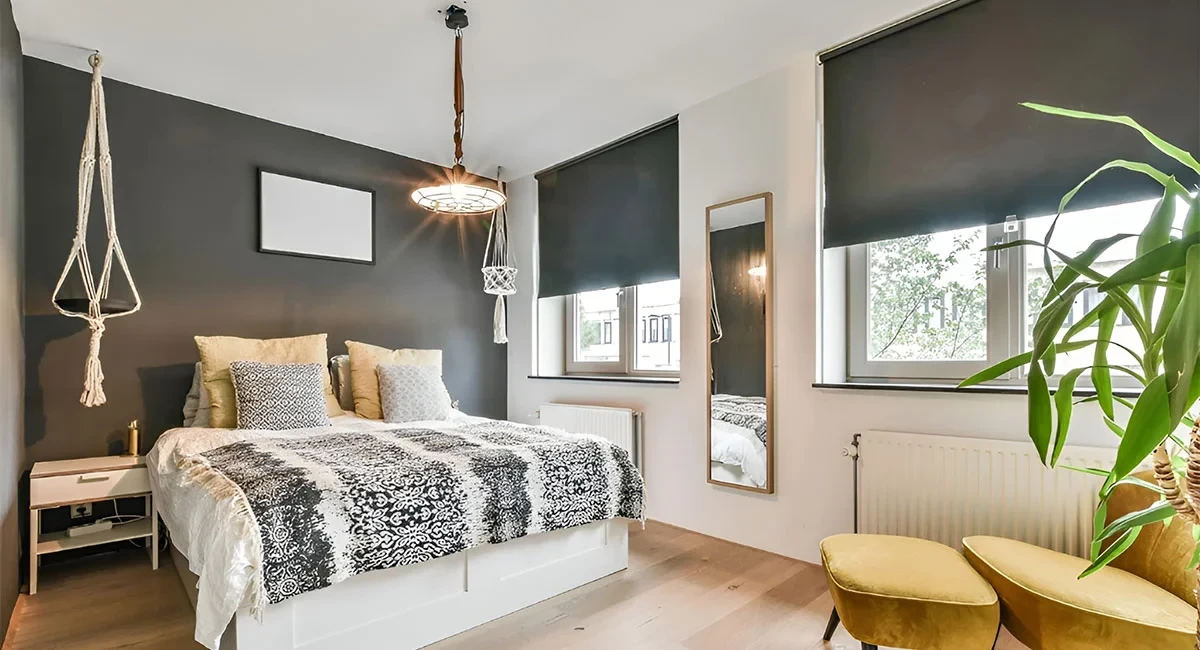
Two single roller blinds are worth considering when you want the flexibility of two fabrics, but your window does not have enough space in the reveal for a double roller blind bracket.
This is a common challenge with shallow reveals.
A double roller blind bracket needs enough depth to hold a larger double roller blind bracket. If the reveal is too tight, the bracket may not fit properly, or the blinds may sit too far forward.
Using two single roller blinds can solve this.
One blind can be installed inside the recess. The second blind can be installed outside the recess on the face of the window frame, architrave or wall.
This gives you a practical layered setup.
During the day, you can use the sunscreen or light filtering blind to soften light, reduce glare and maintain comfort. At night, you can lower the blockout blind for privacy and darkness.
Choose two single roller blinds if you want:
- •
two fabric functions without using a double bracket
- •
a solution for shallow window reveals
- •
sunscreen or light filtering fabric during the day
- •
blockout coverage at night
- •
more flexibility on a tricky window
This setup is especially helpful when you love the idea of double roller blinds, but your window depth says otherwise.
It is a smart workaround that can still give you a beautiful, practical result.
When Double Roller Blinds Are Worth It
Double roller blinds are worth considering when a room changes throughout the day.
A living room might need sunscreen fabric during the afternoon, then full privacy at night. A bedroom might need soft filtered light during the day, then blockout coverage for sleep. A west-facing kitchen might need glare control without losing the open feel of the room.
This is where double roller blinds become more than a design upgrade.
They make the room easier to live in.
You can lift and lower each layer as the light changes. You can enjoy your view without giving up privacy later. You can keep the room bright during the day and comfortable at night.
Choose double roller blinds if you want:
- •
filtered daylight and night privacy
- •
better control in rooms with changing light
- •
a sunscreen layer and a blockout layer together
- •
a softer daytime blind with a full blockout backup
- •
a more complete window solution
- •
two blinds neatly fitted on one bracket
The upfront cost is higher than a single roller blind.
But you are getting two functions in one neat system.
For busy rooms, large windows and high-sun spaces, that added control can make a real difference.
Room-by-Room Guide
The easiest way to choose is to think about how each room behaves during the day.
Where does the sun land?
When do you need privacy?
Do you want to keep the view?
How much room do you have in the reveal?
Your answers will point you towards single roller blinds, double roller blinds or two single blinds.
Bedrooms
Bedrooms usually need privacy and darkness.
A single blockout roller blind can work well if the room is mostly used for sleep.
Double roller blinds are better if you also use the bedroom during the day. A light filtering or sunscreen front blind lets in daylight while the blockout blind handles night privacy.
If the window reveal is too shallow for a double bracket, two single roller blinds can be a great alternative. You could fit the daytime blind inside the recess and the blockout blind outside the frame.
For main bedrooms, nurseries and shift-worker rooms, having both daytime softness and night-time blockout can make the room feel much more comfortable.
Living Rooms
Living rooms often need more than one type of control.
During the day, you may want light, views and glare control. At night, you may want privacy once the lights are on.
This makes double roller blinds a strong option.
A sunscreen front layer helps keep the room open through the day. The blockout layer gives privacy and comfort after dark.
If there isn’t enough space for a double bracket, two single roller blinds can still give you a similar result. A sunscreen blind inside the recess and a blockout blind outside the frame can work beautifully for everyday living.
Kitchens and Dining Areas
Kitchens can get bright, hot and reflective.
If glare is your main issue, a single sunscreen blind may be enough.
If the kitchen faces neighbours, a street or strong afternoon sun, double roller blinds give more control. You can screen the sun during the day and close the blockout blind at night.
For shallow kitchen reveals, two single blinds may be easier to fit than a double roller blind bracket. This can be especially useful around tiled reveals, window winders, handles or tight frames.
Home Offices
A home office needs practical light control.
Sunscreen fabric is often a great choice because it reduces glare while keeping the room bright.
If the office also needs privacy after dark, double roller blinds are a better long-term option.
If a double bracket does not fit inside the reveal, two single roller blinds can give you the best of both worlds. Use the sunscreen blind during work hours, then lower the blockout blind when privacy matters.
Media Rooms
Media rooms usually need darkness.
A single blockout roller blind may be enough if the room has one purpose.
If the same room is also used as a living area during the day, double roller blinds make it more flexible.
Two single roller blinds can also work well if the window reveal is shallow. A lighter daytime layer can soften the room when you are not watching a screen, while the blockout blind helps create a darker space when needed.
For even better coverage, the blockout blind can be face mounted from one edge of the architrave to the other. This helps cover more of the window area and reduce light gaps, giving you stronger blockout when it’s time to watch a movie, relax or sleep.
Hallways and Entryways
These spaces often need privacy and softness, but not full blockout.
A single light filtering blind may be the best choice.
Double roller blinds are usually only needed here if the window faces the street and you want extra night-time coverage.
For narrow reveals, two single blinds can be an option, but in many hallways and entries, one well-chosen fabric will do the job beautifully.
What about Installation Space?
This is one of the practical differences that really matters.
Single roller blinds need less space only 60mm for inside mounting.
Double roller blinds need more room because two rollers sit on the same bracket. This can affect whether they suit an inside mount, especially in shallow window recesses. Double roller blinds need a minimum of 90mm for inside mount installation.
Before choosing, check your window depth, handles, tiles, architraves and any obstructions.
If space is limited, a single roller blind may be the safer option.
If you have enough depth, double roller blinds can give you more function without adding bulk to the room.
If you do not have enough depth for a double bracket, but you still want two fabric layers, consider two single roller blinds instead.
One blind can be mounted inside the recess, and the other can be face mounted outside the window frame. This is a clever way to achieve day and night control when the reveal is too shallow for a double roller blind bracket.
Use the measure roller blinds guide before ordering so you can check the best fit for your window.
A little planning here can make installation much smoother.
Inside Mount, Outside Mount or Both?
Roller blinds can be installed in different ways, depending on your window and the look you want.
An inside mount sits within the window recess. This gives a neat, built-in finish and keeps the blind close to the glass.
An outside mount sits on the face of the window frame, architrave or wall. This can help improve coverage and is useful when there is not enough depth inside the recess.
For two single roller blinds, you may use both mounting styles on the same window.
The daytime blind can sit inside the recess, while the blockout blind sits outside the frame. This creates a layered setup without needing a double bracket inside the reveal.
It can also help reduce light gaps because the outside mounted blockout blind can cover more of the window area.
This is a great option to explore if your window is shallow, has obstructions, or simply does not suit a standard double roller blind bracket.
Chain or Motorised Control?
Single, double and layered roller blind setups can all be simple to operate.
A chain control is reliable and easy for everyday use. It is a popular choice for standard windows and rooms where the blind is within easy reach.
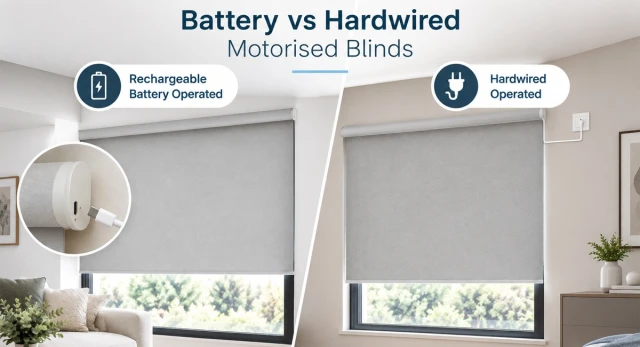
Motorised control is useful for large windows, high windows, wide sliding doors or homes where you want a cleaner cordless finish.
With double roller blinds, you can choose how each blind layer is controlled. Some homes may only need motorisation on one layer. Others may prefer both layers motorised for convenience.
With two single roller blinds, you can also think about which blind you will use most often. For example, you may choose chain control for the blockout blind and motorisation for the sunscreen blind on a large or hard-to-reach window.
This is worth thinking about early, especially for large open-plan spaces.
Cost and Value
Single roller blinds are usually the more affordable option because they use one fabric and one roller system.
Double roller blinds cost more because they include two blinds on one bracket.
Two single roller blinds also use two fabrics and two roller systems, so they will cost more than one single blind.
However, they can be a practical solution when a double roller blind bracket will not fit your window.
The better value depends on how the room is used and what your window can physically accommodate.
If one fabric solves the problem, a single roller blind is a sensible choice.
If the room needs daylight control and night privacy, double roller blinds may offer better value over time because they remove the need to compromise.
If the room needs two functions but the reveal is too shallow for a double bracket, two single roller blinds may be the best-value solution because they give you flexibility without forcing a bracket that does not suit the space.
Instead of choosing between view and privacy, you get both.
Quick Decision Guide
Choose single roller blinds if you want a simple solution for one clear need.
Choose double roller blinds if you want more flexibility from morning to night and you have enough room for the bracket.
Choose two single roller blinds if you want two layers of control, but your window reveal is too shallow for a double roller blind bracket.
Your priority
Best option
Lowest cost
Single roller blinds
One simple funtion
Single roller blinds
Full night privacy plus daytime light
Double roller blinds
Keep the view during the day
Double roller blinds with sunscreen
Soft daylight and privacy
Double roller blinds with light filtering
Shallow window recess
Single roller blinds or two single roller blinds
Want two fabrics but no space for double bracket
Two single roller blinds
Large living room windows
Double roller blinds
Bedrooms used during the day
Double roller blinds or two single roller blinds
Tricky window depth or obstructions
Two single roller blinds may be a better fit
Why Choose iSeekBlinds?
iSeekBlinds makes it easier to choose, measure and install roller blinds yourself.
You can compare blockout, sunscreen and light filtering fabrics before you commit. You can order roller blind samples and view them in your own light. This helps you see how each fabric looks beside your walls, flooring, furniture and window frames.
You can also use step-by-step DIY help to measure and install with more confidence.
When you are ready to plan your order, start with the double roller blinds range, then check the measure roller blinds and install roller blinds guides before ordering and fitting.
And if your window reveal is too shallow for a double roller blind bracket, don’t worry. You may still be able to achieve a flexible day-night setup with two single roller blinds, using one inside mount and one outside mount.
A good result starts before the blind arrives.
It starts with choosing the right fabric combination, checking the window space and measuring carefully.
Our team is here to support you through each step, so you can measure, customise and install with confidence.
Final Thoughts
The difference between double and single roller blinds is simple.
Single roller blinds do one job well.
Double roller blinds give you two layers of control on one bracket.
Two single roller blinds can give you a similar two-layer result when there is not enough space inside the window reveal for a double roller blind bracket.
If your room has one clear need, a single roller blind may be perfect.
If your room needs daylight, privacy, glare control and night comfort, double roller blinds are usually the stronger choice.
If your window is shallow or tricky, two single roller blinds may be the clever solution. One blind can be mounted inside the recess, and the other can be mounted outside the frame, giving you flexible day-night control without forcing a double bracket into a tight space.
Think about how the room changes from morning to evening.
Do you want to keep the view during the day?
Do you need privacy at night?
Does the room get harsh sun?
Do you have enough depth for a double roller blind bracket?
Would an inside-and-outside mounted setup work better?
Once you answer those questions, the right choice becomes much easier.
For many Australian homes, double roller blinds offer the best balance of light, privacy and everyday comfort. And when the window reveal is too shallow, two single roller blinds can be a smart, flexible alternative that still helps your room work beautifully from day to night.
FAQs about Double vs Single Roller Blinds
Double roller blinds are better when you need more control. They let you use one fabric during the day and a blockout fabric at night. Single roller blinds are better when the room only needs one main function.
If your window does not have enough depth for a double roller blind bracket, two single roller blinds may be a great alternative.
Yes, in many cases you can. One blind can be installed inside the window recess, mounted to the window frame or reveal. The second blind can be installed outside the recess, mounted to the face of the frame, architrave or wall.
This can give you a similar day-night result to double roller blinds when there is not enough space in the reveal for a double bracket.
Two single roller blinds are a smart option when your window reveal is too shallow for a double roller blind bracket.
You still get two fabric choices, such as sunscreen for daytime and blockout for night-time, but each blind is mounted separately. It is a practical solution for tricky windows, narrow reveals or older window frames.
The blockout layer in double roller blinds is designed for night privacy and stronger light control. Light gaps can still depend on the fitting style, roll direction and window shape. For the best result, measure carefully and choose the right mount.
An outside mounted blockout blind may help improve coverage, especially when used as part of a two single blind setup.
Sunscreen fabric gives daytime privacy when it is brighter outside than inside. At night, when your lights are on, visibility can change. For night privacy, pair sunscreen with a blockout blind.
This can be done with double roller blinds or with two single roller blinds on the same window.
They need more care than single roller blinds because there are two layers on one bracket. With the right measuring and installation guide, they can still be a DIY-friendly option.
If your reveal is too shallow or the bracket does not suit your window, two single roller blinds may be easier to plan and install.
Yes. We recommend ordering free fabric samples as they are the best way to compare fabric colours, texture and light control in your own home before ordering.
Check them in the room where the blinds will be installed, during the day and at night, so you can see how the fabric performs in your own light.
'%3e%3cline%20id='Line_28'%20data-name='Line%2028'%20y2='200'%20transform='translate(1580.5%205493.46)'%20fill='none'%20stroke='%23f7941d'%20stroke-width='5'/%3e%3cg%20id='Ellipse_50'%20data-name='Ellipse%2050'%20transform='translate(1559%205665.46)'%20fill='%23171717'%20stroke='%23f7941d'%20stroke-width='5'%3e%3ccircle%20cx='21.5'%20cy='21.5'%20r='21.5'%20stroke='none'/%3e%3ccircle%20cx='21.5'%20cy='21.5'%20r='19'%20fill='none'/%3e%3c/g%3e%3c/g%3e%3c/svg%3e)