'%3e%3ccircle%20id='Ellipse_59'%20data-name='Ellipse%2059'%20cx='3'%20cy='3'%20r='3'%20transform='translate(11%208.786)'%20fill='none'%20stroke='%23f7941d'%20stroke-linecap='round'%20stroke-linejoin='round'%20stroke-width='2'/%3e%3cpath%20id='Path_82'%20data-name='Path%2082'%20d='M14,2A10,10,0,0,0,4,12a8.048,8.048,0,0,0,1.875,5.625L14,27l8.125-9.375A8.048,8.048,0,0,0,24,12,10,10,0,0,0,14,2'%20transform='translate(0%200)'%20fill='none'%20stroke='%23f7941d'%20stroke-linecap='round'%20stroke-linejoin='round'%20stroke-width='2'/%3e%3c/g%3e%3c/svg%3e)


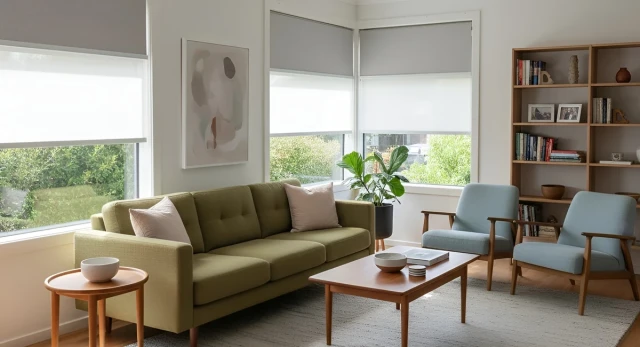
How to create a clean, calm and practical window finish for modern Australian homes
Double roller blinds give contemporary interiors a clean, low-profile window finish without sacrificing practical control over light and privacy.
Modern Australian homes often use open-plan layouts, large windows and simple materials to create rooms that feel bright and spacious. Those same features can bring afternoon glare, heat and a lack of privacy after dark.
With two independently operated blinds on one bracket, double roller blinds let you use a sunscreen or light filter layer during the day and a blockout layer when you want stronger privacy and room darkening.
Why double roller blinds suit contemporary interiors
Contemporary rooms rely on clean lines and a sense of visual calm. Roller blinds sit close to the window, take up little space and allow the room's architecture, furniture and finishes to remain the focus.
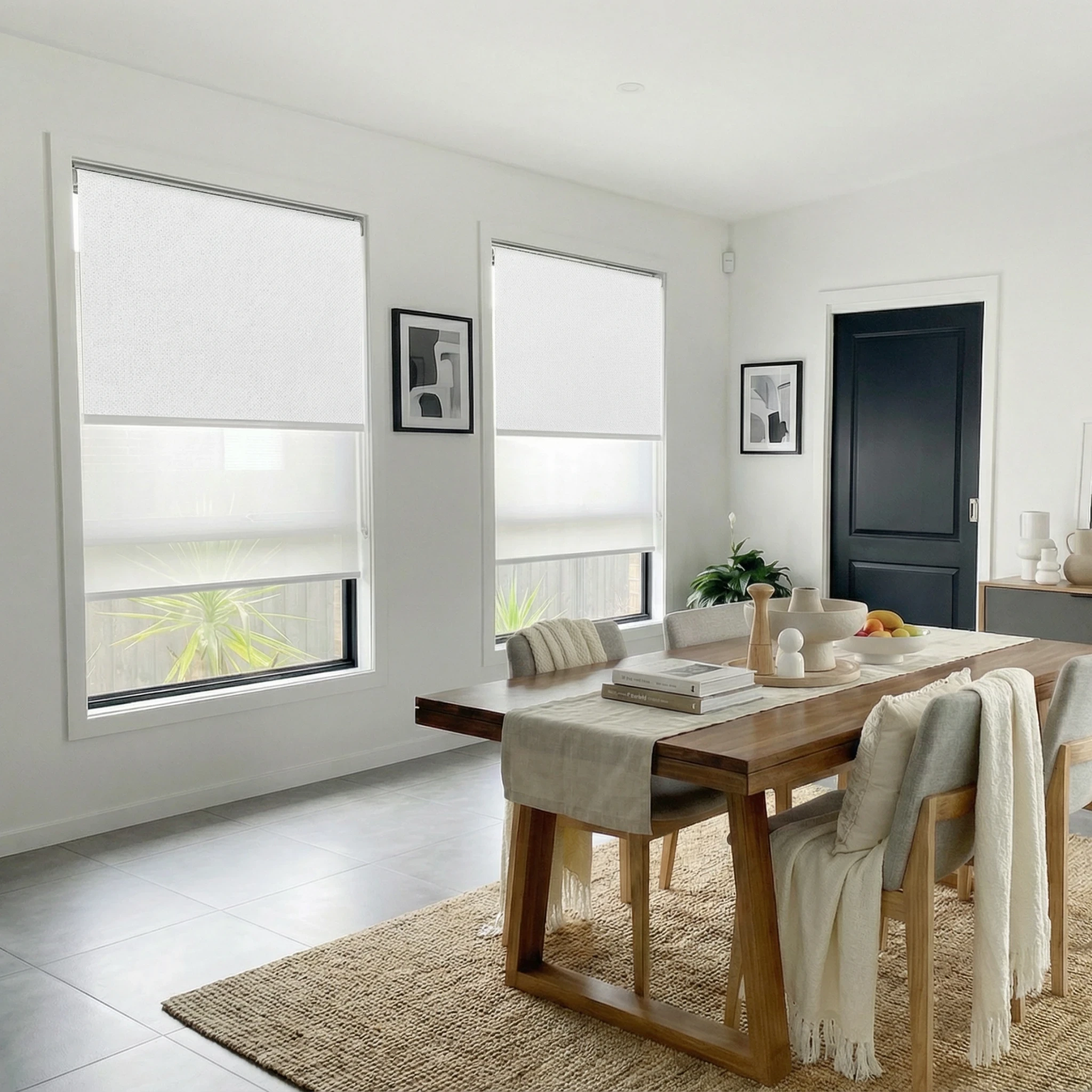
Curtains create softness and fullness, while double roller blinds are ideal when you prefer a more compact, streamlined finish. When raised, they sit neatly at the top of the window. When lowered, they create a smooth fabric panel that is easy to coordinate with the room.
How double roller blinds work
A double roller system combines two independently operated blinds on one bracket, letting you adjust each layer as your needs change. Read how double roller blinds work.
- •
Sunscreen fabric reduces glare and UV while helping maintain the daytime view.
- •
Light filter fabric softens daylight and provides daytime privacy without making the room feel dark.
- •
Blockout fabric provides strong night-time privacy and room darkening, although small gaps around the blind can still allow some light into the room.
Sunscreen fabric is not designed for privacy after dark. Light filter privacy may also reduce when indoor lights are on, so the blockout layer is the dependable choice for night-time coverage.
Choose fabrics for the way the room is used
A sunscreen and blockout pairing works well in living rooms, home offices and areas where keeping the daytime outlook matters. Use the sunscreen layer to reduce glare, then lower the blockout blind at night.
A light filter and blockout pairing creates a softer daytime glow with more visual screening. It can suit bedrooms, dining rooms and living spaces where the outlook is less important than gentle light.
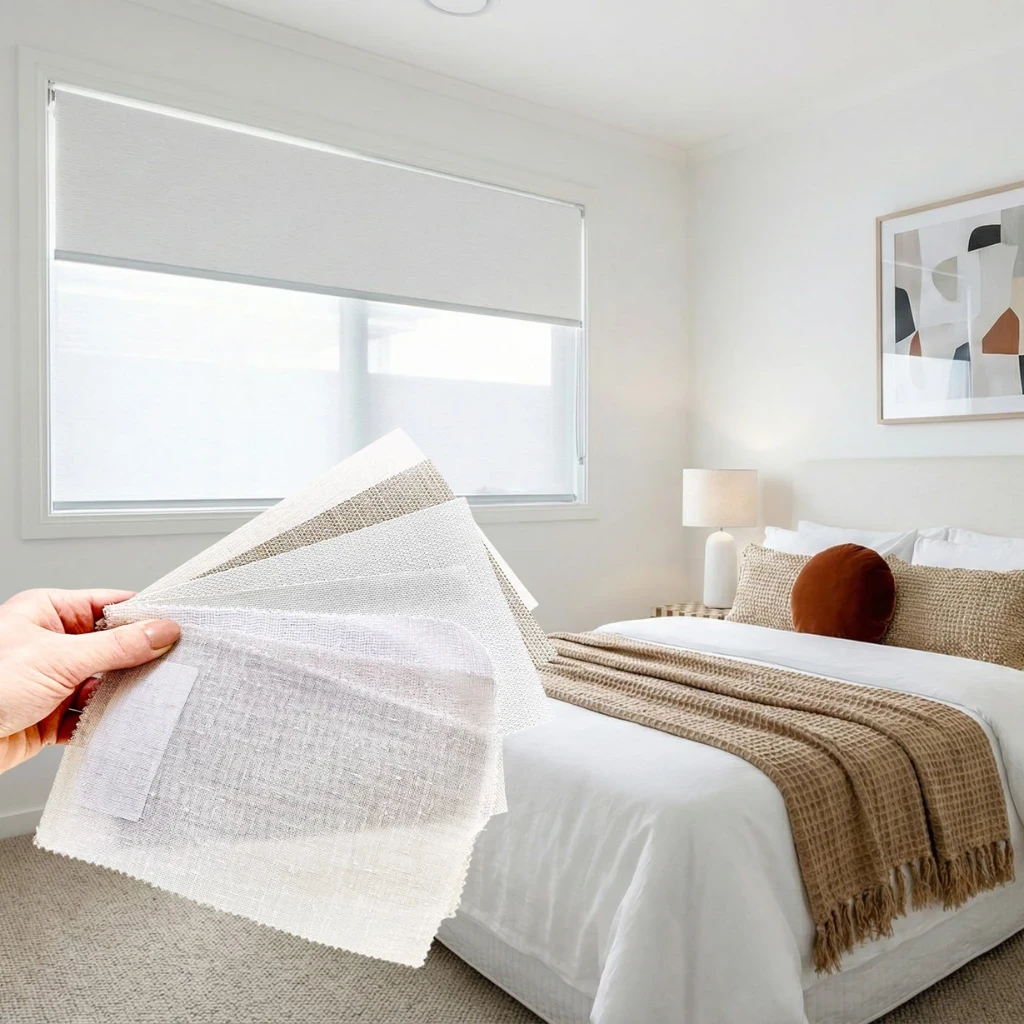
Order samples and view them at the window. Fabric can look different once daylight passes through it, so check the colour and transparency in both bright and overcast conditions.
Use colour to create a contemporary finish
For a seamless look, choose blind colours close to the wall or window-frame colour. This reduces contrast and helps the window feel calm and integrated.
- •
Soft whites and warm whites suit bright, minimal rooms.
- •
Light grey and stone tones complement concrete, pale timber, tiles and neutral furniture.
- •
Warm neutrals soften rooms with timber floors and natural textures.
- •
Charcoal or black can connect with dark window frames, tapware and architectural details.
For a subtle finish, keep contrast low. For a feature, repeat the stronger colour elsewhere in the room. See our best double roller blind colour combinations.
Use colour to create a contemporary finish
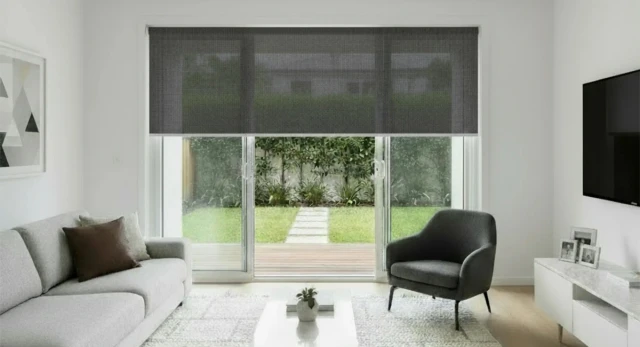
Large windows are a major part of contemporary design, but they can make a room feel exposed. During the day, a sunscreen or light filter layer can reduce direct views into the home while allowing natural light inside. At night, lower the blockout layer for stronger privacy when the indoor lights are on.
This day-to-night flexibility is especially useful in street-facing living rooms, apartments, townhouses and bedrooms close to neighbouring homes.
Style open-plan areas and large windows
In open-plan homes, consistency helps the kitchen, dining and living zones feel connected. Use related fabric colours across nearby windows and keep the hardware finish consistent.
Double roller blinds can suit sliding doors and larger windows within the product's size limits. For extra-wide openings that need several blinds side by side, linked roller blinds may provide a neater and more flexible solution.
Consider how doors open, where people walk and whether each section of glass needs independent control before choosing the final setup.
Style open-plan areas and large windows
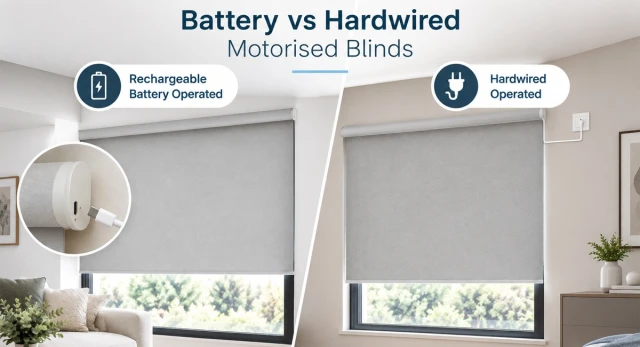
Motorisation makes double roller blinds easier to operate, especially across large windows, hard-to-reach areas or rooms with several blinds.
You can motorise both blinds or choose a combination of motorised and manual control. When both blinds are motorised, the window has a completely chain-free finish. If one blind remains chain-operated, its chain and child-safety device will still be visible.
Depending on the chosen motor, control options can include a wand, remote, app or compatible smart-home system. Check motor and blind size limits before ordering.
Make fit part of the design
A recess fit creates a neat, built-in look. Double roller blinds need at least 85 mm of clear recess depth, so check handles and obstructions. Use the double roller blind measuring guide before ordering.
A face fit sits over the window opening or architrave. It can provide additional coverage and may help reduce light gaps, making it a practical choice when recess depth is limited or stronger room darkening is important.
Neither option is automatically better. The right choice depends on the window, the available space and the balance you want between appearance and coverage.
Soften hard finishes without adding bulk
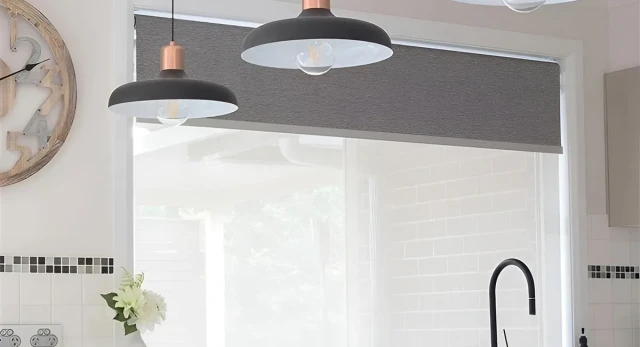
Contemporary interiors often combine stone, glass, concrete, tiles and timber. Double roller blinds introduce a subtle fabric finish that visually softens these materials without adding the fullness of curtains.
A textured neutral can add gentle depth, while a plain fabric keeps the finish crisp and minimal. The aim is to support the room, not compete with it.
Common mistakes to avoid
- •
Choosing fabric colours without viewing samples at the window.
- •
Expecting sunscreen fabric to provide privacy after dark.
- •
Expecting blockout fabric to remove every light gap around the blind.
- •
Choosing recess fit without checking the minimum 85 mm depth.
- •
Assuming the window will be chain-free when only one of the two blinds is motorised.
- •
Using too many unrelated colours across one open-plan area.
- •
Choosing a standard double blind for an opening better suited to a linked system.
Quick contemporary blinds checklist
- •
Do I want the blinds to blend in or create contrast?
- •
Is the daytime priority glare control, privacy, view-through or soft light?
- •
Do I need strong night-time privacy and room darkening?
- •
Does the recess have at least 85 mm of clear depth?
- •
Would face fit provide better coverage?
- •
Is the window within the product's size limits?
- •
Would a linked system be better across the opening?
- •
Do I want one blind or both blinds motorised?
- •
Have I checked fabric samples in the room?
Final thoughts
Double roller blinds suit contemporary interiors because they combine a streamlined appearance with useful day-to-night control. The daytime layer manages light and glare, while the blockout layer provides stronger privacy and room darkening when you need it.
Choose the fabric, colour, fit and controls around the way the room is actually used. With accurate measuring and the right configuration, double roller blinds can feel like a natural part of the interior and remain easy to live with every day.
FAQs
'%3e%3cline%20id='Line_28'%20data-name='Line%2028'%20y2='200'%20transform='translate(1580.5%205493.46)'%20fill='none'%20stroke='%23f7941d'%20stroke-width='5'/%3e%3cg%20id='Ellipse_50'%20data-name='Ellipse%2050'%20transform='translate(1559%205665.46)'%20fill='%23171717'%20stroke='%23f7941d'%20stroke-width='5'%3e%3ccircle%20cx='21.5'%20cy='21.5'%20r='21.5'%20stroke='none'/%3e%3ccircle%20cx='21.5'%20cy='21.5'%20r='19'%20fill='none'/%3e%3c/g%3e%3c/g%3e%3c/svg%3e)