A bedroom can look beautiful and still feel uncomfortable after dark.
Streetlights can shine through the window. Early morning sun can wake you before you are ready. Neighbouring homes can make a room feel exposed once the lights come on inside. Blockout curtains can provide the coverage and room darkening that these bedrooms need. When planned well, they provide strong privacy after dark, reduce unwanted light and add the softness of full-length fabric. For iSeekBlinds customers, blockout curtains are particularly useful when you want one window furnishing to combine strong privacy, room darkening and the softer look of full-length fabric. This article explains how blockout curtains support bedroom privacy, a darker sleeping environment and a considered interior finish. If you want the broader product overview, including fabrics, measuring, installation and buying considerations, see the Complete Guide to Blockout Curtains.
Privacy Becomes More Important After Dark
Privacy feels different during the day and at night. During daylight, the brightness outside can make it harder to see into a home. Once the sun goes down and lights come on indoors, bedrooms, street-facing living rooms and homes close to neighbouring properties can suddenly feel much more exposed. Blockout Curtains are opaque, so when the curtains are closed they provide strong visual privacy. That makes them particularly useful for bedrooms, nurseries, street-facing rooms and living areas close to neighbouring homes. For daytime softness and natural light, layering becomes especially useful.
Daytime Privacy and Night-Time Privacy Are Different Jobs
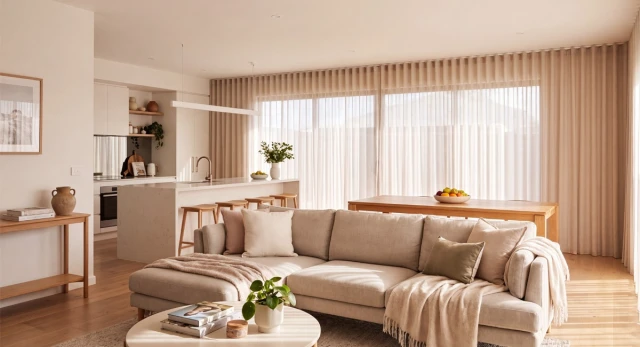
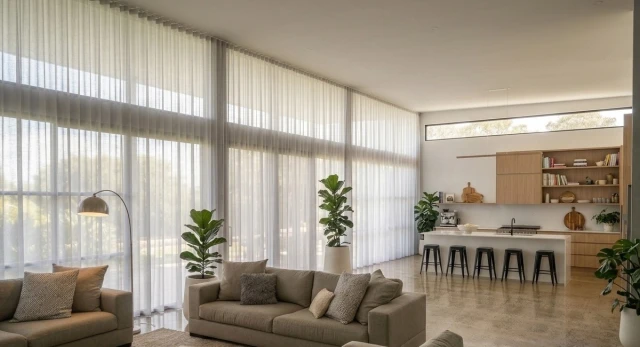
A blockout curtain works best when you actually want the window covered. But most people do not want their living room or bedroom dark all day just to maintain some privacy. Pairing blockout curtains with Sheer Curtains gives the window more flexibility. Use the sheer layer during the day to soften light and views into the room, then close the blockout layer at night for stronger privacy and room darkening. A Double Curtain system lets each fabric perform the job it is best suited to rather than expecting one layer to work in every lighting condition.
Why Darkness Matters in a Bedroom
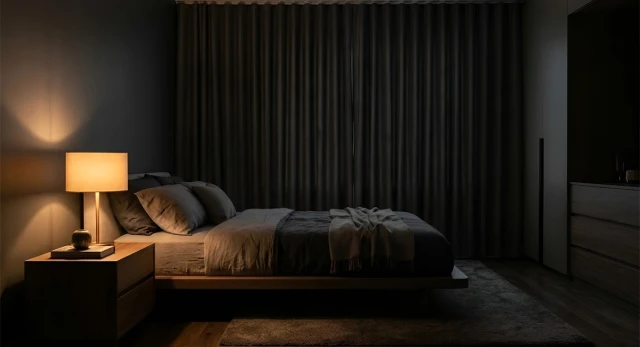
Bedrooms are one of the most natural places for blockout curtains because unwanted light can make the room harder to control. Early sunrise, streetlights, neighbouring security lights, car headlights and bright summer evenings can all affect the sleeping environment. Blockout fabric stops light passing through the fabric itself, helping create a darker room when you are trying to sleep. Curtains cannot guarantee better sleep, but they give you more control over unwanted light in the bedroom. That control can be useful in main bedrooms, nurseries, children's rooms and bedrooms used by shift workers.
Shift Workers Need a Different Kind of Bedroom
Shift workers may need to create darkness in the middle of the day. That can be difficult in an Australian home with large windows and strong sunlight. Blockout curtains can provide generous coverage, particularly when the track position and curtain width are planned to reduce exposed areas around the window. iSeekBlinds blockout curtains use a modern S-Fold heading, combining practical light control with a soft residential finish. Where strong room darkening is the goal, remember that the fabric and installation work together. The fabric can stop light passing through it, but small amounts of light may still appear around the perimeter depending on the window, track and curtain position.
Children’s Rooms and Nurseries
Children do not always sleep according to the sun. Daytime naps, early bedtimes and long summer evenings can all make room darkening useful. Blockout curtains help parents manage the room's light level when conditions outside change. They also provide strong night-time privacy. Open them during the day when you want natural light, or layer them with sheers if daytime privacy matters too. The softness of fabric also works naturally in bedrooms and nurseries, where the window treatment can contribute to a calmer overall feel.
Style Is More Than Choosing a Colour
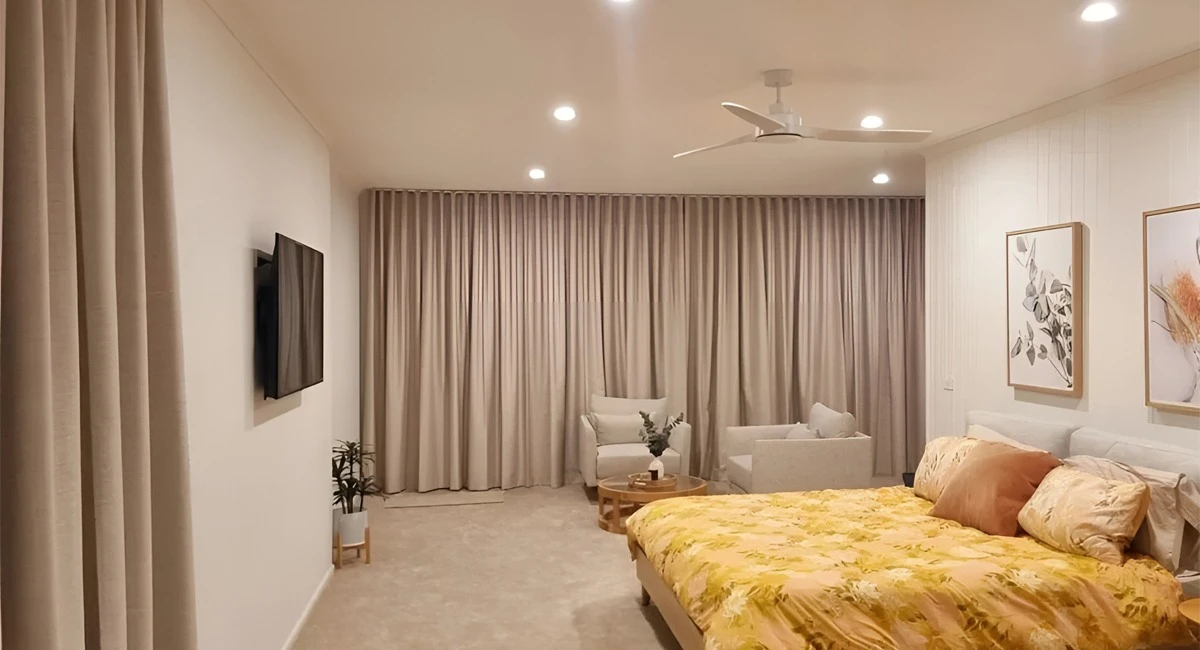
Blockout curtains are often bought for practical reasons, but they take up a large amount of visual space. When closed, a full curtain can cover much of a wall. When open, the fabric creates a stack at one or both sides of the window. That means the curtain becomes part of the interior design. The current iSeekBlinds blockout range uses an S-Fold heading, which creates smooth, repeating waves from top to bottom. The consistent waves create a clean contemporary finish that suits many Australian interiors. S-Fold curtains work across contemporary, coastal and relaxed interiors, with the fabric colour and texture determining the final look. When open, the curtain frames the window. When closed, it creates a soft wall of fabric.
Choose Colour for Mood, Not Just Blockout
You do not need to choose a dark curtain colour simply because you want blockout performance. The blockout effect comes from the fabric construction, so lighter face colours can still provide strong light control. A pale neutral can keep a bedroom feeling calm and airy. Warm beige or taupe can work with timber and warmer interiors. Grey can suit cooler contemporary palettes. Darker fabric can create more contrast or drama. Choose the colour for the whole room rather than assuming a darker face colour will provide better blockout performance. Ordering Blockout Curtain Fabric Samples is useful because colours can look very different in your own light. Compare the sample with your walls, flooring, bedding and furniture, then check it during the day and under artificial light at night.
Think About How the Room Looks with the Curtains Closed
A common mistake is choosing curtains only while imagining them open. In a bedroom, they may spend many hours closed every night. Ask yourself whether the colour feels restful across a large area, whether it works with the bedding and whether you want the curtain to be a feature or a quiet background. For many bedrooms, a quieter colour that works with the walls, flooring and bedding will be easier to live with over time. This is also why layering works so well. A sheer adds softness and movement during the day, while the blockout layer brings privacy, room darkening and visual weight at night.
Privacy Does Not Mean the Room Has to Feel Heavy
The term “blockout” can make people imagine very dark, heavy curtains. That is not necessary. A light face colour and clean S-Fold shape can keep a blockout curtain feeling soft and contemporary. The overall effect comes from fabric colour, S-Fold shape, track position, curtain length, stack direction and whether it is layered with a sheer. Mounting the track high can create a greater sense of height when the fixing surface and room layout allow it. A centre-opening curtain can create symmetry. A one-way stack can keep fabric away from the side of the window you use most. These design decisions affect how the curtain feels without changing its core job.
Be Realistic About What Blockout Curtains Do
Blockout curtains provide strong privacy when closed and stop light passing through the fabric. They do not create a completely sealed room. Some light may still enter around the sides, top, bottom or centre depending on the installation. The fabric can soften room acoustics, but blockout curtains are not soundproofing. A well-fitted curtain adds another fabric barrier at the window, but thermal performance still depends on the glazing, coverage, fabric and installation. If insulation and seasonal comfort are your main concern, see Thermal Curtains: A Practical Australian Guide.
Where Privacy, Sleep and Style Come Together
Blockout curtains are particularly useful in rooms where privacy, room darkening and appearance all matter. A main bedroom needs privacy, a darker sleeping environment and a calm interior. A nursery needs light control, privacy and softness. A street-facing bedroom may need the window covered every night without feeling closed in during the day. A media room benefits from reduced light and the visual softness of full-length fabric. A guest bedroom needs to work for different people with different sleep preferences. In these rooms, privacy, sleep and style are all part of making the room more comfortable. If you are comparing different window furnishing types for bedrooms, Are Blinds or Curtains Better for Bedrooms? is a useful next read.
Final Thoughts
Blockout curtains are most useful when the room needs privacy, room darkening and the softness of fabric. It is the way several benefits come together. Close them at night and the room feels more private. Reduce unwanted light and the bedroom becomes easier to control. Choose the right colour, S-Fold styling and track position and the curtains become part of the interior rather than simply something covering the glass. That makes them particularly well suited to bedrooms, nurseries and other rooms where comfort matters as much as appearance. Start with the room's practical needs and then choose the fabric colour, track position, stack direction and layering to suit them. If you want to compare the full iSeekBlinds range, fabric options, measuring, installation and other buying details, continue to the Complete Guide to Blockout Curtains.
Custom blockout curtains can do a practical job. But when they are designed around the room, they can also make that room feel much more complete.
FAQs