Blockout curtains spend a lot of time doing exactly what they are designed to do.
They sit between your room and the sun. That means they are regularly exposed to heat, daylight and UV. Over time, any fabric exposed to strong sunlight can change in appearance. Colours may become lighter. One side of the curtain may fade faster than another. Areas closest to the window may look different from fabric that stays folded or shaded. That does not automatically mean something is wrong with the curtain. But there are practical steps you can take to reduce uneven fading, avoid accidental damage during cleaning and keep iSeekBlinds blockout curtains looking better for longer. The key is understanding what causes fading, how to reduce uneven change and what can realistically be improved once fading has occurred.
Do Blockout Curtains Fade?
Yes. Like most interior fabrics, blockout curtain fabric can gradually fade with long-term sun exposure. The amount of fading depends on factors such as:
- •
Window orientation
- •
Amount of direct sunlight
- •
UV exposure
- •
Curtain colour
- •
How often the curtains remain closed
- •
How much of the fabric is exposed
- •
Room conditions
- •
Cleaning and care
A west-facing curtain exposed to strong afternoon sun may experience different conditions from a curtain in a shaded south-facing bedroom. This is a normal form of fabric ageing rather than an issue unique to blockout curtains. The current iSeekBlinds curtain warranty treats normal wear and gradual fading over time as ageing rather than a manufacturing defect. For the full product overview, see the Complete Guide to Blockout Curtains.
Why Sunlight Causes Curtain Fading
Sunlight contains ultraviolet radiation. Over time, UV can affect dyes and pigments within fabrics. This is why:
- •
Furniture can fade near windows.
- •
Timber floors can change colour.
- •
Rugs can become lighter.
- •
Artwork can fade.
- •
Curtain fabric can gradually change.
Blockout fabric is designed primarily to control light, privacy and insulation. Its blockout performance does not mean the decorative face of the fabric is completely immune to long-term UV exposure. A curtain may continue to block light through the fabric even if its visible face has changed slightly over time.
Uneven Fading Is More Noticeable Than General Fading
General fading often happens gradually. Because the whole curtain changes slowly, it may not be very noticeable. Uneven fading is usually more obvious. This can happen when:
- •
One side receives stronger sun.
- •
Part of the curtain remains permanently stacked.
- •
A neighbouring building shades one section.
- •
Furniture blocks sunlight from part of the fabric.
- •
One panel is used more frequently than another.
- •
A curtain sits partly open for long periods.
For example, if a centre-opening curtain is always pushed to one side during the day, one stack may receive much stronger direct sunlight than the other. The difference can become more noticeable over time.
Window Orientation Matters
Australian sun exposure can vary significantly depending on the direction of the window.
West-Facing Windows
West-facing windows can receive strong afternoon sun. This can create:
- •
Heat
- •
Glare
- •
Strong direct light
- •
Higher UV exposure
Curtains on these windows may experience more intense conditions than curtains in shaded rooms.
North-Facing Windows
North-facing windows can receive extended sunlight depending on the season and external shading. The fabric may be exposed for longer periods during the day.
East-Facing Windows
East-facing windows receive morning sun. The intensity may be lower than strong western afternoon exposure, but repeated exposure still matters over time.
South-Facing Windows
South-facing windows generally receive less direct sun, although this depends on the building, location and surrounding environment. The important thing is not to assume every room will age at the same rate.
Dark Colours Can Show Fading More Clearly
Dark fabrics can make colour changes easier to notice. Black. Charcoal. Deep grey. Dark brown. These colours create strong visual contrast, so any lightening may stand out more clearly. That does not necessarily mean dark fabric fades faster in every situation. It means the visual difference can be more obvious. Lighter neutral colours can sometimes disguise gradual fading better because the starting colour is already pale. When choosing between light and dark blockout curtains, think about both the interior design and the amount of direct sun at the window.

Order Samples Before Choosing
One of the easiest ways to make a better long-term choice is to use Blockout Curtain Fabric Samples. Look at samples in the actual room. Place them near the window. Compare them in:
- •
Morning light
- •
Afternoon light
- •
Artificial light
- •
Direct sunlight
- •
Shade
This helps you understand not only the colour but how dramatic any future change might appear. For a highly exposed west-facing window, a softer neutral may be easier to live with long term than a very dark feature fabric.
iSeekBlinds Blockout Fabrics Use Different Constructions
The iSeekBlinds blockout curtain range includes fabrics with different constructions and care requirements. Some fabrics use polyester with an acrylic blockout coating. Others use polyester with a 3-pass blockout lining. Examples across the current range include fabrics such as:
- •
Epic
- •
Alaska
- •
Belmore
- •
Soleil
- •
Galaxy
These fabrics should not automatically be treated as though they all have identical cleaning requirements. Always check the exact product specification for the colour and fabric you order. The safest maintenance advice is the care instruction attached to that specific product.
Can Faded Curtain Fabric Be Restored?
Permanent sun fading generally cannot be cleaned away or reversed. Once pigment has changed because of UV exposure, normal cleaning will not restore the original colour. This is important because aggressive cleaning can actually make the appearance worse. If one area looks lighter than another, do not assume it is dirt. Before trying to remove the mark, consider:
- •
Is the lighter area facing the sun?
- •
Does it follow the shape of the window exposure?
- •
Is it only visible on the most exposed fold?
- •
Has the change happened gradually?
If the answer is yes, it may be fading rather than a stain. Harsh cleaning will not restore sun-faded colour and may damage the fabric further.
Do Not Scrub Faded Areas
Some current iSeekBlinds blockout fabrics specifically recommend avoiding excessive rubbing and abrasion. This matters because rubbing can change the surface appearance of the fabric. If you scrub one small section aggressively, you may end up with:
- •
A lighter patch
- •
A flattened texture
- •
A visible cleaning mark
- •
Damage to the surface finish
If spot cleaning is required, follow the care instructions for that fabric and test on a non-visible area first. Follow the exact fabric-care instructions and use the gentlest suitable method rather than aggressive stain removal.
Regular Vacuuming Is the Best Starting Point
Current iSeekBlinds care guidance for blockout curtains generally recommends gentle, regular vacuuming. Use a suitable soft attachment. This helps remove:
- •
Dust
- •
Light debris
- •
Surface particles
without wetting or rubbing the fabric. Regular light maintenance is better than allowing dirt to build up and relying on heavy cleaning later. The aim is to preserve the fabric surface, not repeatedly deep-clean it.
Be Careful with Spot Cleaning
Spot cleaning should be treated cautiously. Before touching a visible area:
- •
Check the care instructions for the exact fabric.
- •
Test the cleaning method on a non-exposed section.
- •
Use the minimum moisture required.
- •
Avoid aggressive rubbing.
- •
Let the area dry naturally.
Do not assume that every blockout fabric can be cleaned with the same detergent or method. Different fabric constructions can react differently.
Avoid Harsh Chemicals
Strong household cleaners are not designed for curtain fabric. Avoid using:
- •
Bleach
- •
Strong stain removers
- •
Solvent cleaners
- •
Abrasive cleaning products
- •
Undiluted household chemicals
unless the specific fabric care instructions explicitly allow them. A product designed for a benchtop or bathroom is not automatically suitable for coated curtain fabric. Damage caused by improper care can be more noticeable than the original mark.
Can Sheer Curtains Reduce Fading?
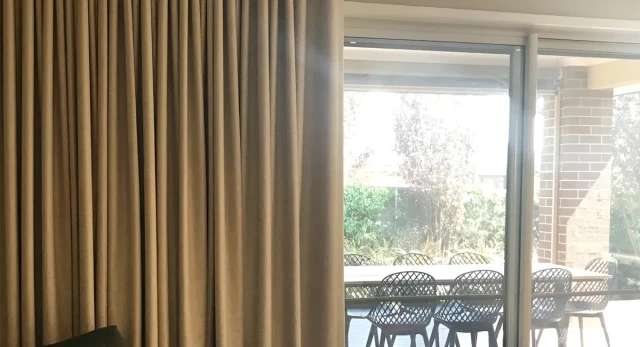
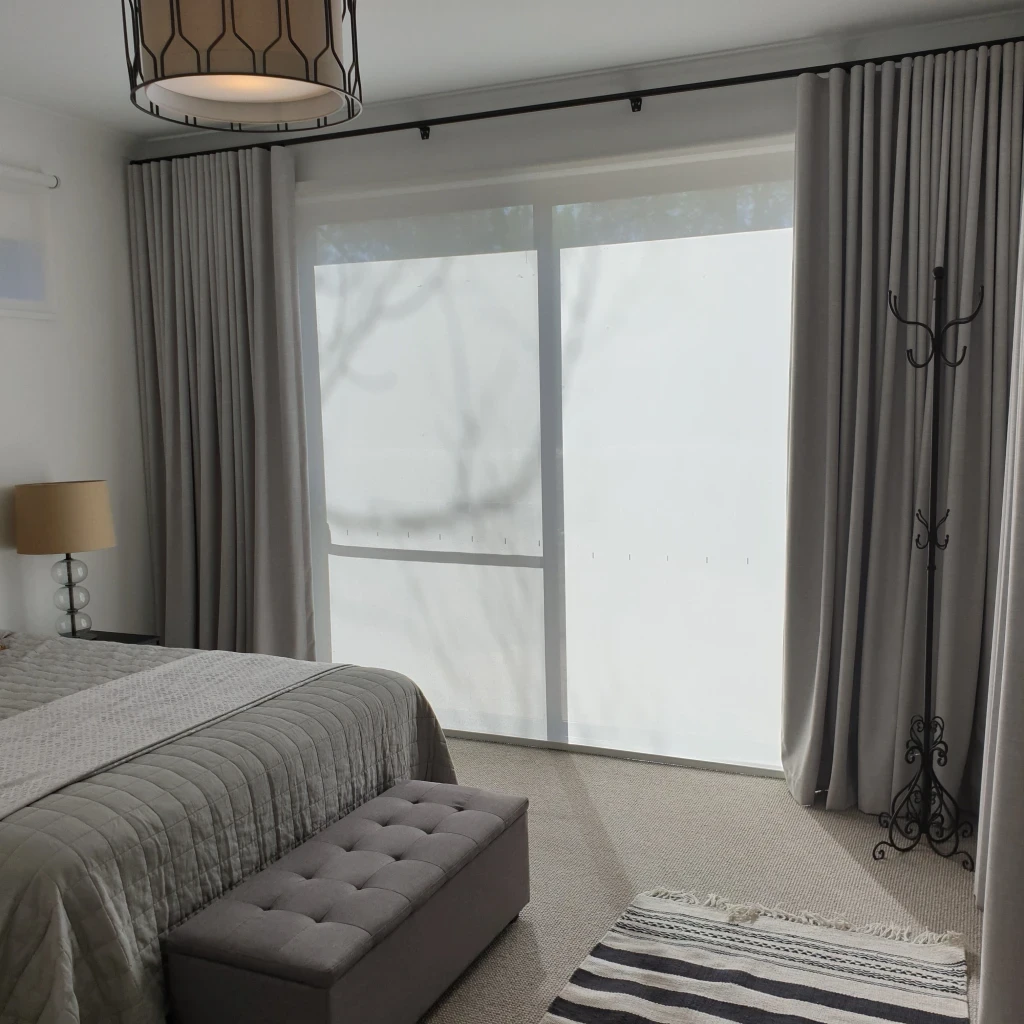
Layering can change how much direct sunlight reaches the blockout curtain face. A Double Curtain commonly combines:
- •
Sheer curtain at the front
- •
Blockout curtain behind
During the day, the sheer layer can soften light and improve daytime privacy while the blockout curtain remains open. This may reduce the time the blockout face sits directly across the glass, although a sheer does not eliminate UV exposure and should not be relied on for privacy after dark. At night, close the blockout layer. For bedrooms and living rooms, this is one of the most flexible iSeekBlinds curtain setups.
Use the Blockout Curtain When You Actually Need It
Leaving blockout curtains closed across a sun-exposed window all day can increase the time the decorative face is exposed to heat and UV at the glass. That does not mean you should keep them open when you need heat or light control. The point is simply to use the curtain according to the room. For example: Use the sheer layer during moderate daylight. Close the blockout curtain when:
- •
Privacy is required.
- •
The room needs darkness.
- •
Strong sun needs controlling.
- •
Heat through the window becomes uncomfortable.
This gives the blockout curtain a practical job rather than leaving it permanently exposed without a reason.
Sunscreen Blinds Can Add Another Protective Layer
Some rooms use both blinds and curtains. A Sunscreen Roller Blind can reduce glare and UV exposure during the day while maintaining a daytime outlook. The curtain can then remain open until stronger privacy or blockout is needed. This layered approach can be useful in rooms with:
- •
Strong western sun
- •
Large windows
- •
Valuable furniture
- •
Timber floors
- •
Strong glare
It also gives you more control over the way sunlight enters the room.
Check External Shading Too
Curtains are only one part of the window. External elements can also change exposure. These may include:
- •
Eaves
- •
Awnings
- •
Verandahs
- •
Pergolas
- •
Trees
- •
Neighbouring buildings
Two identical curtains in the same house may fade differently if one window receives direct sunlight and the other sits behind deep external shading. That difference does not necessarily indicate a fabric problem. It may simply reflect different conditions.
Track Position Can Affect Exposure
Curtain track position is usually discussed in terms of styling and blockout performance. It can also affect how the curtain sits relative to the window. A curtain mounted high and wide can provide excellent coverage. But the fabric still needs to stack somewhere when open. Think about where the stack sits during the brightest part of the day. If the curtain is constantly pushed into a narrow area receiving concentrated sunlight, that section may age differently from the rest. Follow the iSeekBlinds Curtain Measuring Guide when planning track width and stack-back.
Do Not Confuse Fading with Dust
Curtains can also appear uneven because of dust. This is particularly noticeable on darker fabrics. Before assuming fading has occurred:
- •
Vacuum gently.
- •
Look at the fabric in even light.
- •
Compare folds.
- •
Check whether the apparent colour change disappears once dust is removed.
Dust usually sits on the surface. Sun fading changes the fabric colour itself. The two can look similar from across the room.
Do Not Confuse Fading with Lighting
Natural and artificial light can also make curtain colours look different. A warm beige curtain may look:
- •
Cream in morning light
- •
Grey in cool afternoon shade
- •
Warmer under evening lighting
This is not fading. Before comparing two areas, view them under the same lighting conditions. Curtain folds naturally create shadows as well. S-Fold curtains are designed to create alternating light and shade across the fabric. That variation is normal.
S-Fold Curtains Naturally Create Shaded Areas
iSeekBlinds blockout curtains use an S-Fold heading. The wave shape means some sections face the window more directly than others. Other areas sit deeper within each fold. Over many years, these sections may experience slightly different amounts of exposure. This is another reason completely uniform ageing cannot always be guaranteed. The same folds that give the curtain its soft, consistent appearance also create varying light angles across the fabric.
What If Only One Panel Looks Different?
If your curtain uses multiple panels, first check whether both panels receive the same conditions. Ask:
- •
Does one sit near a sunny side window?
- •
Is one panel always left closed?
- •
Does one panel stack behind the other?
- •
Is one exposed to an open door?
- •
Does external shading affect only one side?
Different exposure often explains different ageing. If the change is sudden, unusual or unrelated to exposure, contact iSeekBlinds for advice rather than attempting aggressive cleaning.
What If the Curtain Has a Localised Mark?
A localised mark is different from gradual fading. Possible causes may include:
- •
Contact with furniture
- •
Dirty hands
- •
Moisture
- •
Cleaning products
- •
Dust
- •
Rubbing
- •
Accidental spills
Check the exact fabric care instructions before trying to clean it. If spot cleaning is permitted, test first in a non-visible area. Do not use a stronger cleaning method simply because the first attempt did not remove the mark.
Protect Curtains During Renovations
Paint, plaster dust and building work can damage curtain fabric quickly. If renovating:
- •
Remove curtains where practical.
- •
Keep them away from wet paint.
- •
Protect them from sanding dust.
- •
Do not allow trades to lean materials against them.
- •
Keep chemicals away from the fabric.
Construction damage is different from normal fading and is much harder to correct. Protecting the curtain is easier than trying to clean it later.
Airflow and Moisture Matter Too
Blockout curtains should be used in normal interior conditions. Avoid leaving fabric pressed against wet glass or damp surfaces for extended periods. Good airflow around windows helps prevent moisture build-up. This is particularly important in rooms with:
- •
Condensation
- •
Poor ventilation
- •
High humidity
Curtains are not designed to function as moisture barriers. Keep the window area dry where possible.
CurtainIQ Motorisation Can Reduce Uneven Handling
Motorisation does not prevent UV fading, but it can make curtain operation more consistent. With iSeekBlinds CurtainIQ, suitable curtains can open and close without being pulled manually across the fabric. This can reduce:
- •
Uneven hand pulling
- •
Repeated handling of the leading edge
- •
Fabric being dragged incorrectly
Smart CurtainIQ can also suit homes where scheduled curtain operation makes sense. For example, Smart CurtainIQ can be scheduled through a compatible smart-home setup so the curtain closes for a specific period of intense afternoon sun rather than remaining closed all day. Motorisation is about easier, more consistent operation; it does not make the fabric fade-proof.
Should You Replace a Faded Curtain?
A faded curtain does not automatically need replacing. If:
- •
The blockout performance is still good.
- •
The fabric remains structurally sound.
- •
The colour change is minor.
- •
You are still happy with the appearance.
then replacement may not be necessary. Replacement becomes more relevant when:
- •
Colour differences are visually distracting.
- •
The fabric is also physically damaged.
- •
The room has been redecorated.
- •
The curtain no longer suits the space.
Fading is primarily an appearance issue unless other damage is also present.
Can You Replace Only One Curtain?
Because iSeekBlinds curtains are custom made, replacing only one part of an older curtain setup needs careful consideration. A new fabric panel may not perfectly match an older panel that has already experienced years of:
- •
Sun exposure
- •
Cleaning
- •
Normal ageing
Even if the same colour name is available, there may be visible differences between new and aged fabric. If appearance needs to match closely, speak with iSeekBlinds before ordering a replacement section.
What Does the iSeekBlinds Warranty Cover?
The current iSeekBlinds curtain warranty covers eligible manufacturing and workmanship defects, with curtain tracks and hardware covered under the applicable terms and normal-use conditions. Normal fabric wear or fading over time is currently listed as an exclusion. Incorrect measuring, incorrect installation, misuse and improper care are also excluded. Motorised curtains use separate motor warranty terms. This is why following the correct measuring, installation and fabric-care guidance matters. The warranty is intended to cover eligible defects; gradual ageing and sun fading are different.
How to Reduce the Risk of Noticeable Fading
You cannot completely eliminate normal sun-related ageing. But you can reduce unnecessary exposure and damage. A practical approach is:
- •
Choose colours with the room's sun exposure in mind.
- •
Order samples before buying.
- •
Use sheer curtains during the day where suitable.
- •
Consider sunscreen blinds for very exposed windows.
- •
Use blockout curtains when their privacy, darkness or heat-control function is needed.
- •
Vacuum gently and regularly.
- •
Follow the exact fabric care instructions.
- •
Avoid harsh chemicals.
- •
Avoid aggressive rubbing.
- •
Keep fabric away from damp surfaces.
- •
Protect curtains during renovations.
- •
Contact iSeekBlinds if a sudden or unusual issue appears.
Good care will not make fabric immortal. It will help avoid unnecessary damage.
Common Fading and Care Mistakes
Assuming Every Colour Will Age Identically
Different colours and different window conditions can make fading more or less noticeable.
Leaving One Panel Permanently Exposed
Uneven exposure can create uneven ageing.
Scrubbing a Faded Area
Permanent colour loss cannot usually be scrubbed away.
Using Strong Cleaning Chemicals
Harsh products can damage the fabric finish.
Ignoring Fabric-Specific Care Instructions
Different iSeekBlinds blockout ranges can use different constructions. Check the exact product.
Assuming Every Colour Difference Is Fading
Dust, shadows and changing room light can also alter how the fabric looks.
Expecting Warranty to Cover Normal Sun Fading
The current iSeekBlinds curtain warranty excludes normal fabric fading over time.
Quick Curtain Care Checklist
To keep blockout curtains looking their best:
- •
Vacuum gently and regularly.
- •
Check the exact fabric care instructions.
- •
Spot clean only when appropriate.
- •
Test cleaning in a hidden area first.
- •
Avoid excessive rubbing.
- •
Avoid harsh chemicals.
- •
Keep the curtain clear of damp glass.
- •
Use ventilation where condensation is present.
- •
Consider a sheer or sunscreen layer for highly exposed windows.
- •
Use the curtain according to the room's actual light and privacy needs.
- •
Protect fabric during building work.
- •
Contact iSeekBlinds if an issue appears abnormal.
Final Thoughts
Blockout curtains are designed to spend years managing sunlight, privacy and room comfort. That naturally exposes them to conditions that can gradually change fabric appearance. Some colour change over time is normal for fabric exposed to sunlight. Strong Australian sun can make that change more noticeable, particularly on highly exposed windows and deeper colours. The best approach is prevention and sensible care. Choose the fabric carefully. Order samples. Think about window orientation. Use sheer or sunscreen layers where they make sense. Vacuum gently. Avoid harsh cleaning. Do not scrub areas that may actually be sun-faded. And follow the specific care guidance for the exact iSeekBlinds fabric you order. If permanent fading has already occurred, cleaning will not return the fabric to its original colour. At that point, the decision is mainly about appearance.
If the curtain still performs well and you are happy with it, it can continue doing its job. If the colour difference becomes too noticeable, replacement may eventually be the practical option. For a complete overview of the current range, fabrics, measuring, installation and CurtainIQ options, use the Complete Guide to Blockout Curtains. Good curtain care is straightforward: protect the fabric from avoidable damage, clean it gently according to its care instructions and recognise that gradual ageing is normal in a sun-filled Australian home.
FAQs