
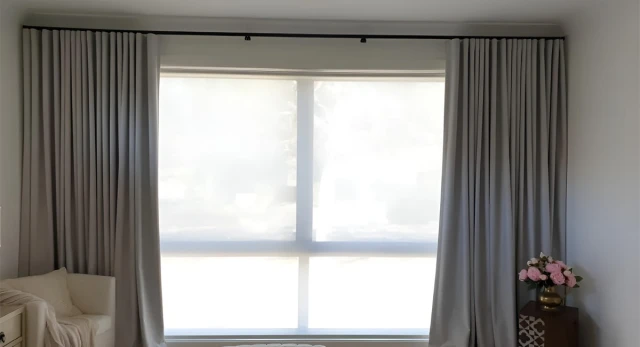
Blockout curtains are used every day and should remain easy to operate, clean and care for over time.
They manage privacy, unwanted light and comfort around the window through daily use. And because full-length curtains cover a large area, their condition can have a noticeable effect on how the whole room looks. Blockout curtains do not need complicated maintenance. The most important habits are simple: keep them reasonably clean, operate them properly, manage moisture around the window, avoid harsh cleaning products and deal with small problems before they become bigger ones. This guide explains how to look after iSeekBlinds blockout curtains so the fabric, track and operating system remain in good condition for as long as practical.
Start with Correct Measuring and Installation
Long-term curtain care starts before the curtain is installed. A track that is positioned correctly allows the curtain to hang naturally and move without repeatedly contacting furniture, window handles or other obstacles. Accurate measuring also helps avoid curtains that drag excessively across the floor or sit in an awkward position. The current iSeekBlinds Curtain Measuring Guiderecommends measuring each window individually, using millimetres and planning the mounting position, track width, stack direction and drop before ordering. When installing the curtain, make sure the track is secure and properly aligned. A poorly installed track can place unnecessary stress on the hardware and make the curtain harder to operate. Follow the iSeekBlinds Curtain Installation Guide rather than improvising the installation. A secure, accurately positioned track gives the curtain room to hang and move as intended.
Dust is much easier to remove before it becomes embedded in the fabric. Current iSeekBlinds care guidance recommends gently vacuuming blockout curtains on a regular basis using an appropriate soft attachment. Use a soft attachment and work gently so the fabric surface is not abraded. Move gently across the curtain and pay attention to:
- •
The top of the folds
- •
The leading edge
- •
The bottom section
- •
Areas near open windows
- •
Fabric close to sliding doors
- •
Sections beside furniture
Light, regular maintenance is preferable to allowing heavy dust to build up and then trying to remove it with stronger cleaning methods later.
Spot Clean Carefully
A small mark does not automatically mean the whole curtain needs deep cleaning. For many current iSeekBlinds blockout fabrics, the recommended approach is cautious spot cleaning after first testing the method on a non-visible section. Several current fabrics also specifically advise avoiding excessive rubbing and abrasion. That matters because aggressive rubbing can change the surface appearance even if the original mark disappears. When dealing with a small spot:
- •
Check the care instructions for the exact fabric.
- •
Test in a hidden area.
- •
Use only the amount of moisture permitted by the care instructions.
- •
Avoid scrubbing.
- •
Allow the area to dry as directed for that fabric.
- •
Check the result before doing anything stronger.
Stop once the mark has been treated safely rather than repeatedly applying stronger products.
Do Not Treat Every Blockout Fabric the Same
The current iSeekBlinds blockout range includes different fabric constructions. Some blockout fabrics use a coated construction, while others use a layered blockout construction, so cleaning instructions can differ between ranges. That is why it is important to follow the instructions for your particular fabric rather than assuming every blockout curtain can be treated identically. Keep the product details or care instructions from your order. If you are unsure what you have, confirm the fabric range before trying a new cleaning method.
Avoid Harsh Household Cleaning Products
A product that is safe for a benchtop, bathroom tile or floor is not automatically safe for curtain fabric. Avoid experimenting with:
- •
Bleach
- •
Strong stain removers
- •
Solvents
- •
Abrasive cleaners
- •
Concentrated household chemicals
unless the specific fabric instructions say they are suitable. Harsh cleaning can damage the face of the fabric or its blockout construction. Improper care is also excluded from the current iSeekBlinds curtain warranty, so following the correct care instructions matters.
Handle the Fabric as Little as Possible
Curtains are designed to move along the track. They are not designed to be repeatedly pulled directly by the fabric. Open and close the curtain using its intended hand-drawn or motorised operating method rather than repeatedly tugging the fabric. Repeated handling can introduce:
- •
Skin oils
- •
Makeup
- •
Hand cream
- •
Food residue
- •
Dirt
to the same section of fabric. This is particularly noticeable on light-coloured curtains. Smooth operation reduces unnecessary handling and strain on the S-Fold heading.
Open and Close Curtains Smoothly
Do not yank the curtain if it feels stuck. If movement suddenly becomes difficult, stop and investigate. Check whether:
- •
Furniture is blocking the curtain.
- •
The fabric is caught.
- •
A hook has moved.
- •
Something is obstructing the track.
- •
The curtain has become trapped behind another furnishing.
Forcing the curtain may turn a small obstruction into damaged hardware. A properly operating curtain should move smoothly.

Keep Furniture Clear of the Curtain
A full-length curtain needs room to hang. Beds, lounges, side tables and cabinets pushed firmly against the fabric can create ongoing friction. Over time that may result in marks, creasing or areas where dust collects more quickly. Leave enough space for the S-Fold to maintain its natural shape. This is especially important near the stack position, where all the fabric gathers when the curtain is open.
Watch the Bottom of the Curtain
The lower section often receives more wear than the rest. It is close to:
- •
Vacuum cleaners
- •
Robot vacuums
- •
Shoes
- •
Pets
- •
Children's hands
- •
Mops
- •
Wet floors
- •
Sliding doors
Keep the floor reasonably clean and avoid repeatedly dragging cleaning equipment across the fabric. If the curtain is designed to finish just above or at floor level, make sure furniture does not force the hem out of position. A correctly measured drop reduces unnecessary floor contact.
Protect Curtains During Cleaning and Renovations
Household projects can damage curtains much faster than ordinary use. Paint, plaster dust, timber dust, adhesives, silicone and cleaning chemicals can all create difficult or permanent marks. If painting or renovating around a window, remove the curtain where practical or protect it properly. Do not simply push it into one side of the track beside wet paint or building dust. The same principle applies during heavy cleaning. Keep fabric away from wet mops and chemical sprays.
Manage Condensation and Moisture
Blockout curtains sit close to windows, so moisture around the glass matters. If condensation regularly forms, wipe the glass and sill and allow the area to dry. Avoid leaving the curtain pressed against wet glass. Rooms that may require extra attention include:
- •
Bedrooms in winter
- •
Laundries
- •
Rooms near bathrooms
- •
Coastal homes
- •
Poorly ventilated spaces
Improving airflow and managing condensation also helps protect the surrounding window and sill.
Do Not Leave Damp Fabric Bunched Together
If part of a curtain becomes wet, spread it out so it can dry. Do not leave damp fabric tightly stacked for long periods. Trapped moisture and poor airflow can create conditions that are harder on the fabric and the surrounding window. Address the moisture source as well. Drying the curtain without fixing persistent condensation will not solve the underlying problem.
Manage Sun Exposure Sensibly
Sunlight is part of what window furnishings are designed to manage. That also means curtains themselves experience long-term exposure. Normal fabric fading over time is currently excluded from the iSeekBlinds curtain warranty. You cannot completely prevent normal fabric ageing, but you can avoid unnecessarily uneven exposure. For example, if a curtain always remains half closed in exactly the same position, one section may receive more direct sun than another. Where practical, vary how the curtain is used. If you want a deeper explanation of fading, read Blockout Curtains: Common Fading Issues and Fixes.
Consider Layering on Highly Exposed Windows
A Double Curtain system allows the blockout curtain to remain open during moderate daytime conditions while a sheer layer provides softer light and some daytime privacy. Then close the blockout curtain when stronger privacy, darkness or heat control is required. This lets the blockout layer remain open until stronger privacy, room darkening or heat control is needed. Layering also gives the room greater flexibility without changing the main blockout curtain.
Use Curtains Strategically for Heat Control
During strong summer sun, close blockout curtains before the room becomes excessively hot. During winter, open them when useful sunlight can warm the room and close them when outside temperatures fall. Using the curtain in response to the weather helps it provide useful light and temperature control without leaving it closed unnecessarily. For more detail on this aspect, see Do Blockout Curtains Help with Energy Bills?. You do not need to leave blockout curtains permanently closed to benefit from them.
Keep the Track Clean
The fabric attracts most of the attention, but the track also matters. Occasionally inspect it for:
- •
Dust
- •
Debris
- •
Loose components
- •
Obstructions
- •
Unusual resistance
Do not add household lubricant to the track unless iSeekBlinds or the track manufacturer specifically recommends it. Adding an unsuitable product can attract dust or interfere with the operating components. If movement becomes noticeably different from normal, identify the cause rather than repeatedly forcing the curtain.
Check Hooks and Folds Occasionally
S-Fold curtains rely on their track and heading system to maintain the repeating wave. If one area starts hanging differently, check it before the problem gets worse. A hook may have shifted or the fabric may be caught. Fixing a minor alignment issue early helps keep the folds sitting consistently. When removing curtains for any reason, keep track of how the hooks and panels are arranged so they can be reinstalled correctly.
Take Extra Care with Pets and Children
Long curtains naturally attract attention from young children and pets. Try to avoid:
- •
Cats climbing the fabric
- •
Dogs rubbing repeatedly against the hem
- •
Children pulling on the curtain
- •
Toys being caught in the folds
For families, keeping furniture away from the curtain can also reduce opportunities for climbing or pulling. Normal family use is expected; the aim is simply to avoid repeated pulling, climbing or rubbing that places unnecessary stress on the fabric and hardware.
Motorised Curtains Need Good Habits Too
Motorisation can reduce the amount of direct handling because the curtain opens and closes using the track system rather than being pulled by hand. iSeekBlinds curtains can be configured with CurtainIQ motorisation, with a five-year motor warranty when the motor is installed and used correctly. Do not obstruct a motorised curtain while it is moving. Keep furniture and other objects clear of the travel path. If the curtain stops moving normally, investigate the obstruction rather than repeatedly activating the motor. Motorisation makes operation convenient, but the fabric still needs the same general care.

Do Not Ignore Small Problems
A small issue is often easier to correct than a large one. Investigate if you notice:
- •
A new stain
- •
A hook out of position
- •
Uneven hanging
- •
Unexpected track resistance
- •
Persistent condensation
- •
Fabric rubbing against an obstruction
- •
Hardware becoming loose
Addressing a small issue early can prevent the same point from being rubbed, pulled or obstructed every time the curtain moves.
Understand Normal Ageing
Even carefully maintained curtains will change over time. Fabric is exposed to:
- •
Sunlight
- •
Dust
- •
Air movement
- •
Temperature changes
- •
Daily operation
Normal wear does not necessarily mean the curtain has failed. The current iSeekBlinds residential curtain warranty covers manufacturing and workmanship defects and track/hardware defects under normal use, while normal fabric wear or fading, misuse and improper care are excluded. Long life comes from good care, but it does not mean the product will remain visually identical forever.
A Simple Blockout Curtain Maintenance Routine
A simple routine is enough for most homes.
Regularly
- •
Open and close curtains smoothly.
- •
Keep furniture clear.
- •
Check for obvious marks.
- •
Manage condensation.
- •
Gently vacuum when dust starts building.
Every Few Months
- •
Inspect the track.
- •
Check the folds and hooks.
- •
Look at the hem.
- •
Inspect areas exposed to direct sunlight.
- •
Clean the surrounding window and sill.
When a Mark Appears
- •
Identify the exact fabric.
- •
Check its care instructions.
- •
Test any spot-cleaning method in a hidden area.
- •
Avoid aggressive rubbing.
Before Renovating
- •
Remove or properly protect the curtains.
Simple routines are usually enough.
When Should a Blockout Curtain Be Replaced
Age alone does not decide when a curtain needs replacing. If it still operates correctly, provides the required privacy and light control and looks acceptable in the room, it can continue to be useful. Replacement may become worth considering when:
- •
Fabric has significant permanent damage.
- •
Appearance has changed beyond what you are comfortable with.
- •
Hardware can no longer operate correctly.
- •
The room has been redesigned.
- •
Your functional requirements have changed.
A curtain does not need replacing simply because it no longer looks brand new. Good maintenance is about protecting its useful life while accepting normal ageing.
Final Thoughts
Extending the life of blockout curtains is mainly about preventing avoidable damage. Vacuum gently, spot clean only as directed, avoid harsh chemicals and aggressive rubbing, leave room around the fabric, manage condensation, protect the curtain during renovations and investigate changes in track movement early. The current iSeekBlinds blockout range includes different fabric constructions, so always follow the care guidance for the exact fabric you purchase. For the wider product overview, read the Complete Guide to Blockout Curtains. For sun exposure and colour changes specifically, continue to Blockout Curtains: Common Fading Issues and Fixes. A blockout curtain works hard every day. A little sensible care helps it keep doing that job for longer.
FAQs