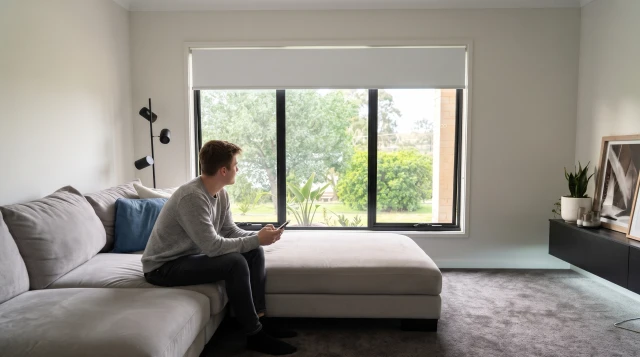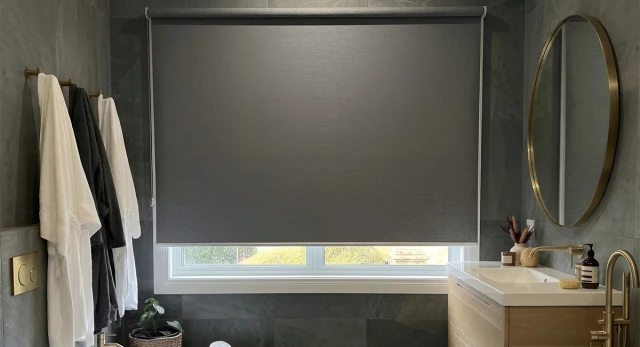
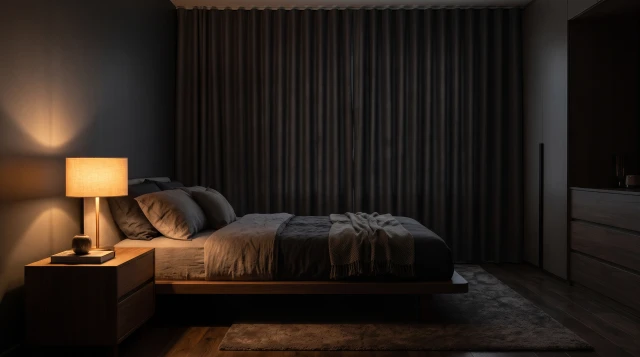
Blockout curtains are a practical way to add privacy, room darkening, comfort and softness to an Australian home.
They work particularly well in bedrooms, nurseries and media rooms, but they can also make living rooms, open-plan spaces and large windows feel more private and settled at night. Unlike sheer curtains, blockout curtains are designed to stop light passing through the fabric. Unlike roller blinds, they also add softness, texture and movement to the room. And when they are installed high and wide, they can make a window feel larger while improving coverage around the glass. At iSeekBlinds, blockout curtains are custom made to your measurements in Melbourne and designed for DIY measuring and installation. The right result comes down to more than choosing a colour. You need to think about fabric, track position, curtain width, stack direction, drop, fullness, layering and whether motorisation would make the curtain easier to use.
This guide covers all of it.
What Are Blockout Curtains?
iSeekBlinds Blockout Curtains use coated blockout fabrics designed to stop light passing directly through the material. Depending on the room and installation, they can provide:
- •
Strong privacy
- •
Strong light control
- •
Room darkening
- •
Added insulation at the window
- •
Sound absorption that may soften room acoustics
- •
Protection for interiors from direct sunlight when closed
- •
A soft, full curtain finish
The current iSeekBlinds range uses an S-Fold heading style, which creates a consistent wave across the curtain. This gives blockout curtains a clean, contemporary appearance rather than the heavier look sometimes associated with traditional curtains. iSeekBlinds recommends 200% fullness to create the correct S-Fold drape and improve coverage.
Blockout Fabric vs a Completely Black Room
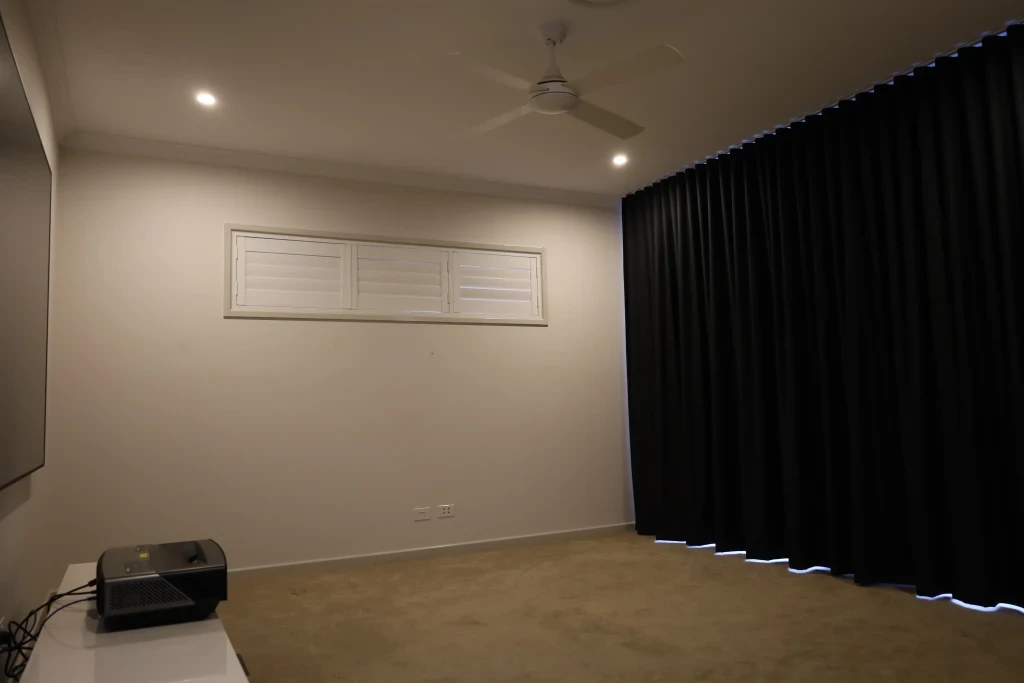
This distinction is important. The selected fabric can be classed as 100% blockout. This means light does not pass directly through the material. But an installed curtain is not a sealed wall. Small amounts of light can still enter:
- •
Around the sides
- •
Above the track
- •
Below the curtain
- •
Where two curtain panels meet
- •
Around uneven walls or skirting
That is why track position and curtain coverage matter. A curtain mounted close to the ceiling and extending well beyond the window opening generally provides stronger room darkening than one fitted closely around the window itself. If you want the best blockout performance, think about the whole installation rather than only the fabric.
Why Choose Blockout Curtains?
Privacy
When closed, blockout fabric provides strong day and night-time privacy. This makes it particularly useful for:
- •
Bedrooms
- •
Street-facing rooms
- •
Apartments
- •
Ground-floor living areas
- •
Rooms facing neighbours
Unlike sheer fabric, privacy does not depend on whether it is brighter outside or inside.
Darkness
Blockout curtains are useful where morning sun, streetlights or neighbouring properties make a room too bright. They can help create a darker environment for sleep, daytime naps or movie viewing.
Insulation
Curtains add a layer between the room and the window. iSeekBlinds positions its blockout curtains as providing thermal insulation that can support comfort across summer and winter.
Softer Interiors
Curtains also change how a room feels. A large window covered only by hard finishes can feel visually cold. Fabric adds:
- •
Softness
- •
Movement
- •
Texture
- •
Depth
That can make bedrooms and living rooms feel more complete.
Best Rooms for Blockout Curtains
Bedrooms
Bedrooms are one of the strongest applications. Blockout curtains provide:
- •
night-time privacy
- •
Reduced morning light
- •
Streetlight control
- •
Added softness
- •
A more settled atmosphere
They are particularly useful for main bedrooms, kids’ rooms, guest rooms and rooms with large windows.
Nurseries
Daytime naps often happen when the home is still bright. Blockout curtains can help create a darker environment during the day while also providing night-time privacy. Their soft finish can also make a nursery feel warmer and calmer.
Media Rooms
Media rooms benefit from stronger light control. Blockout curtains reduce incoming light and can also soften the room acoustically compared with a completely hard window treatment.
Living Rooms
Living areas may not need darkness during the day, but blockout curtains can be valuable after dark. They can provide:
- •
Strong evening privacy
- •
Better coverage across large windows
- •
Added warmth
- •
A more enclosed evening feel
This becomes especially useful for street-facing or open-plan rooms.
iSeekBlinds Blockout Curtain Fabrics
The current iSeekBlinds range includes several blockout curtain collections, including:
- •
Epic
- •
Alaska
- •
Galaxy
- •
Belmore
- •
Soleil
These ranges provide different colours, textures and finishes. The free blockout curtain sample range includes a broad selection of colours and textures across these collections.
Epic
Epic includes a broad neutral palette with colours such as Alabaster, Ash, Chalk, Cloud, Cobblestone, Ebony, Pewter, Putty and Smoke. It is a useful starting point if you want a versatile blockout fabric that can work across bedrooms, living areas and double curtain combinations.
Alaska
Alaska has a softer, more relaxed appearance. Current colours include options such as Cloud, Sand, Ash and Thunder. It can work particularly well in bedrooms and interiors using timber, warm neutrals or softer natural finishes.
Galaxy
Galaxy provides another blockout option with colours including Luna, Dusk and Pluto. It can suit modern bedrooms, living spaces and rooms where you want a little more depth.
Belmore
Belmore includes a broad selection of neutrals ranging from light to dark. Current options include colours such as Chalk, Vanilla, Driftwood, Taupe, Frost, Jasper, Asphalt and Ebony.
Soleil
Soleil has a soft herringbone texture and a more decorative finish. Current colours include Cobblestone, Donkey, Hemp, Buff, Oatmeal, Pearl, Chalk, Mist, Cement, Graphite, Phantom and Nugget. It can work particularly well where the curtain needs to provide both blockout performance and visible texture.
Always Order Fabric Samples First
Curtain fabric covers a large area. A colour that looks subtle on a screen can feel completely different when it spans an entire wall. Use the iSeekBlinds Blockout Curtain Fabric Samples before ordering. Compare the samples beside:
- •
Wall paint
- •
Flooring
- •
Bedding
- •
Furniture
- •
Window frames
- •
Rugs
- •
Cabinetry
- •
Existing sheer curtains
Look at the samples during the day. Then under artificial light at night. The colour needs to work in both conditions.
Light or Dark Blockout Curtains?
You do not need a dark-coloured curtain to achieve blockout performance. The blockout backing is what controls light through the fabric. A light curtain can still be a true blockout curtain.
Light Colours
- •
Blend into pale walls
- •
Keep bedrooms feeling calm
- •
Suit coastal interiors
- •
Work well with warm whites and natural timber
- •
Make large curtains feel visually lighter
Dark Colours
- •
Add contrast
- •
Suit media rooms
- •
Coordinate with dark window frames
- •
Work in contemporary interiors
- •
Create a stronger feature
The choice is mainly about design. Choose the blockout performance first. Then choose the colour that works with the room.
S-Fold Blockout Curtains
The current iSeekBlinds blockout curtain range uses S-Fold styling. S-Fold curtains create a continuous wave across the track. Instead of bunching heavily, the folds remain regular and controlled. This gives the curtain a clean, modern appearance. S-Fold works particularly well with:
- •
Floor-to-ceiling installations
- •
Wide windows
- •
Sliding doors
- •
Bedrooms
- •
Living rooms
- •
Double curtain systems
iSeekBlinds recommends 200% fullness for its blockout curtains so the S-Fold wave forms properly and the curtain has enough fabric for good coverage.
Mount the Curtain High
Track position has a major effect on how blockout curtains look and perform. iSeekBlinds recommends mounting the curtain track just below the ceiling or as high as practical above the window. This can:
- •
Make the room feel taller
- •
Make the window feel larger
- •
Improve top coverage
- •
Reduce visible light gaps
- •
Improve insulation around the window
- •
Create a more finished appearance
A curtain fitted only slightly above the window can still work. But a higher installation often creates a stronger result.
Go Wider Than the Window
Width matters too. If the track finishes close to the edge of the glass, more light can enter around the sides. Extending the track beyond the window gives the fabric more opportunity to overlap the opening. It also allows the curtain to stack away from the glass when open. This can improve:
- •
Light coverage
- •
Privacy
- •
Stack-back
- •
The visual width of the window
The current iSeekBlinds measuring guidance recommends going wider and higher for better blockout performance.
Choosing the Right Curtain Drop
iSeekBlinds allows you to customise the finished drop. Current curtain options include drop styles such as:
- •
Skim
- •
Kiss
Skim
The curtain finishes just above the floor. This creates a clean, practical finish and can make cleaning easier.
Kiss
The curtain finishes so it just touches the floor. This creates a more tailored full-length appearance.
Choosing the Stack Direction
The stack is where the curtain gathers when it is open. Current iSeekBlinds options include:
- •
Left stack
- •
Right stack
- •
Centre opening
Think about:
- •
Door access
- •
Window layout
- •
Furniture
- •
Views
- •
Where you want the fabric to sit when open
For a sliding door, it usually makes sense to keep the main access point clear. For a large feature window, centre opening can create a balanced appearance.
Blockout Curtains for Large Windows
Curtains are particularly useful for wide windows and sliding doors. Hand-drawn iSeekBlinds blockout curtains can suit openings from approximately 250 mm to 10,000 mm wide, with drops up to approximately 2,900 mm depending on the fabric and configuration. Motorised size limits are different, so check the CurtainIQ specifications before ordering. Always check the specific product before ordering because size limits can vary. For large openings, also consider:
- •
Number of panels
- •
Stack direction
- •
Available stack-back space
- •
Track position
- •
Motorisation
The larger the curtain, the more important these details become.
Double Curtains: Sheer During the Day, Blockout at Night
One of the most flexible ways to use blockout curtains is as part of an iSeekBlinds Double Curtain setup. A common combination is:
- •
Sheer curtain at the front
- •
Blockout curtain behind
During the day, the sheer layer can soften light and provide daytime privacy. At night, close the blockout layer for stronger privacy and darkness. This gives you:
- •
Daytime softness
- •
night-time privacy
- •
Better light control
- •
Added insulation
- •
A layered designer look
For bedrooms and living rooms, this is often the most complete curtain solution.
Sheer and Blockout Colours Should Work Together
When choosing a double curtain setup, do not select each fabric separately. Think of them as one system. The sheer will dominate during the day. The blockout will become more visible at night. A warm sheer may work best with a warm neutral blockout. A cool white sheer may suit a cooler grey or crisp blockout. You can also use contrast deliberately. The key is to compare the actual samples together.
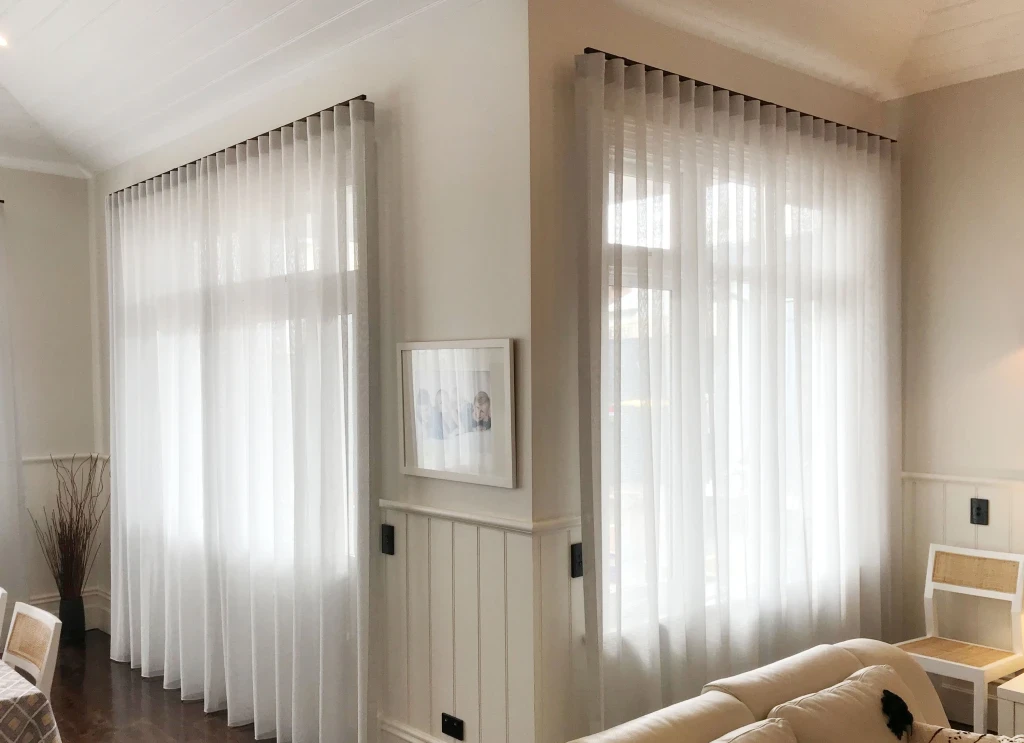
Blockout Curtains vs Sheer Curtains
Sheer Curtains and blockout curtains do very different jobs. Sheers are designed to:
- •
Soften daylight
- •
Add movement
- •
Reduce harsh glare
- •
Provide daytime privacy
- •
Keep the room bright
Blockout curtains are designed to:
- •
Provide strong privacy
- •
Darken the room
- •
Improve insulation
- •
Create stronger coverage
If you only need one of these functions, choose the single curtain type. If you want both, use a double curtain system.
Blockout Curtains vs Light Filtering Curtains
Light filtering curtains sit between sheers and blockout. They diffuse natural light and provide more coverage than sheer fabric without creating full darkness. They can work well in:
- •
Living rooms
- •
Dining areas
- •
Home offices
- •
Open-plan spaces
Blockout is the better choice where privacy and darkness matter more. For bedrooms, nurseries and media rooms, blockout will usually provide the stronger result.
Blockout Curtains vs Blockout Roller Blinds
Both can provide strong privacy and room darkening. The difference is mainly in appearance and coverage. Blockout Roller Blinds provide:
- •
A simple, compact finish
- •
Minimal visual bulk
- •
Easy operation
- •
Strong fabric blockout
Blockout curtains provide:
- •
Softness
- •
Texture
- •
Larger perimeter coverage
- •
A more decorative finish
- •
Better opportunity to extend high and wide
Some homes even use both. A blockout blind can sit within the window while curtains add another layer over the top.
CurtainIQ Motorisation
Blockout curtains can also be motorised using the current iSeekBlinds CurtainIQ system. There are currently two CurtainIQ approaches.
Smart CurtainIQ
Smart CurtainIQ provides:
- •
App control
- •
Voice control
- •
Automations
- •
Compatible smart-home integration
- •
Matter over Thread technology
- •
Rechargeable battery power
Smart CurtainIQ uses Matter over Thread and works through a compatible platform such as Apple Home, Google Home, Alexa or Samsung SmartThings when the required Thread border router or smart-home device is available. A full charge generally lasts around 10–12 months depending on curtain size and use. A one-way motorised curtain can be up to approximately 3,600 mm wide; a centre-opening setup can span up to approximately 7,200 mm using two motors.
Tap CurtainIQ
Tap CurtainIQ is the simpler motorised option. You tap the curtain to start opening or closing it. There is:
- •
No app
- •
No voice control
- •
No remote-control option
It is rechargeable and follows the same motorised size limits: up to approximately 3,600 mm for a one-way curtain or 7,200 mm for a centre-opening setup using two motors. This can be a useful option where you want easier operation without building the curtain into a smart-home system.
When Motorisation Makes Sense
Motorisation can be particularly useful for:
- •
Wide curtains
- •
Large sliding doors
- •
Hard-to-reach windows
- •
Bedrooms
- •
Media rooms
- •
Smart homes
- •
Open-plan living areas
A large blockout curtain may be used every morning and every evening. Motorisation makes that repeated movement easier. It can also help keep the fabric folds more consistent because you are not pulling the curtain unevenly by hand.
Measuring for Blockout Curtains
Accurate measuring is essential. Use the iSeekBlinds Measure Curtains guidance before ordering. General principles include:
- •
Measure in millimetres.
- •
Use a steel tape measure or laser.
- •
Measure every window individually.
- •
Decide on the track location before measuring.
- •
Think about stack-back.
- •
Check corners and obstructions.
- •
Do not make your own manufacturing deductions.
- •
Go wider and higher where better blockout coverage is required.
iSeekBlinds also provides measuring templates for internal and external corners.
DIY Installation
iSeekBlinds blockout curtains are designed for DIY installation. Use the Install Curtains guidance before starting. Your installation needs to get the track position right. Check:
- •
Ceiling or wall fixing
- •
Bracket locations
- •
Track level
- •
Cornices
- •
Air-conditioning vents
- •
Door frames
- •
Furniture
- •
Curtain stack space
The curtain can only perform as well as the track allows. Take your time positioning it. A few extra minutes measuring the track location can make a noticeable difference to the finished result.
Wall Mount or Ceiling Mount?
Both can work. Ceiling mounting often creates the strongest floor-to-ceiling effect. It can make the room feel taller and provide good coverage above the window. Wall mounting may be more appropriate where:
- •
Ceiling mounting is not practical
- •
Cornices interfere
- •
The track needs to sit away from the wall
- •
Existing architecture makes wall fixing easier
For wall mounting, bracket selection may also depend on how far the track needs to project from the wall. Choose the installation method before finalising measurements.
Cleaning Blockout Curtains
Blockout curtains are relatively low maintenance. Regular gentle cleaning is usually enough. Depending on the fabric:
- •
Vacuum gently using a suitable attachment.
- •
Remove dust regularly.
- •
Spot clean cautiously.
- •
Test cleaning in a non-visible area first.
- •
Avoid heavy rubbing or abrasion.
- •
Follow the specific fabric care instructions.
Some blockout curtain fabrics may have specific dry-cleaning or ironing requirements. Always check the individual fabric specification before cleaning.
Common Mistakes to Avoid
Mounting the Track Too Close to the Window
A higher, wider curtain generally provides better coverage and a stronger visual result.
Choosing Fabric Before Ordering Samples
Large curtain surfaces amplify colour. Always compare samples in the actual room.
Expecting a Completely Sealed Black Room
The fabric is blockout. Small amounts of light can still enter around the curtain.
Forgetting Stack-Back
Make sure the open curtain has somewhere to sit without unnecessarily covering the glass or doorway.
Ignoring Floor Level
Floors are not always perfectly level. Measure carefully before choosing the finished drop.
Choosing Sheer Curtains for night-time privacy
Sheers are primarily a daytime privacy option. Use blockout where full evening privacy matters.
Forgetting About Double Curtains
If you need daylight during the day and darkness at night, layering may be better than trying to make one curtain do everything.
Measuring Before Deciding the Track Position
Track location affects the finished width, drop and stack. Plan first. Then measure.
Quick Buying Checklist
- •
Which room is this for?
- •
How much darkness do I need?
- •
Is night-time privacy important?
- •
Do I want a single or double curtain?
- •
Would a sheer layer be useful during the day?
- •
Which blockout fabric range suits the room?
- •
Have I ordered samples?
- •
Which blockout fabric range suits the room?
- •
How high should the track sit?
- •
How far beyond the window should it extend?
- •
Where should the curtain stack?
- •
Do I want left, right or centre opening?
- •
Which finished drop suits the room?
- •
Is CurtainIQ motorisation worthwhile?
- •
Have I measured in millimetres?
- •
Have I checked all obstructions?
- •
Have I reviewed the installation guide?
Getting these decisions right before ordering makes the installation much easier.
Final Thoughts
Blockout curtains are about more than making a room dark. They provide strong privacy when closed. They add softness. They create another insulating layer at the window. They help bedrooms feel calmer. They can make media rooms more comfortable. And they give large windows and sliding doors a more complete finish. The current iSeekBlinds range makes that solution customisable. Choose from Epic, Alaska, Galaxy, Belmore and Soleil blockout fabrics. Choose your colour. Choose the track position. Choose the stack. Choose the drop. Layer with sheers if you want flexible day and night control. Add CurtainIQ if easier or automated operation suits the room. Then measure carefully and install using the iSeekBlinds DIY guidance. For the strongest result, think about the complete window rather than the curtain fabric alone. Go high. Go wide. Allow enough fullness.
Give the curtain somewhere to stack. And choose fabric samples in the room where the curtain will actually live. A well-planned blockout curtain can make a bedroom darker, a living room more private and an entire space feel softer and more finished.
FAQs