'%3e%3ccircle%20id='Ellipse_59'%20data-name='Ellipse%2059'%20cx='3'%20cy='3'%20r='3'%20transform='translate(11%208.786)'%20fill='none'%20stroke='%23f7941d'%20stroke-linecap='round'%20stroke-linejoin='round'%20stroke-width='2'/%3e%3cpath%20id='Path_82'%20data-name='Path%2082'%20d='M14,2A10,10,0,0,0,4,12a8.048,8.048,0,0,0,1.875,5.625L14,27l8.125-9.375A8.048,8.048,0,0,0,24,12,10,10,0,0,0,14,2'%20transform='translate(0%200)'%20fill='none'%20stroke='%23f7941d'%20stroke-linecap='round'%20stroke-linejoin='round'%20stroke-width='2'/%3e%3c/g%3e%3c/svg%3e)


How to soften large spaces, control light and create a more comfortable Australian home
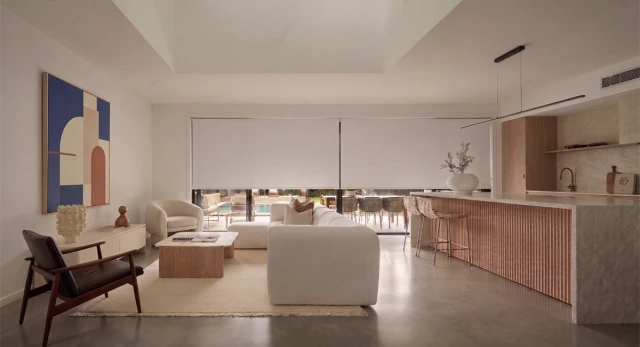
Open-plan living is one of the most popular layouts in Australian homes.
It brings people together. Kitchen. Dining. Living. Outdoor connection. Natural light. Space to move. A more relaxed way to live. But open-plan spaces can also feel hard to finish.
Large windows can bring in glare. Sliding doors can make the room feel exposed. Hard floors, stone benchtops and open walls can make the space feel echoey or bare. One big room can sometimes feel practical, but not always warm.
That is where curtains can make a real difference.
Curtains soften the edges of the room. They add movement, texture and warmth. They help control light and privacy. They can make tall windows, wide doors and open spaces feel more considered without making the room feel heavy.
The key is choosing the right curtain type, fabric, track and stack for the way the room works.
Open-plan living should feel bright and connected.
But it should also feel calm, comfortable and easy to use every day.
1. Curtains Help Soften Large Open Spaces
Open-plan rooms often include a mix of hard surfaces. Tiles. Timber floors. Stone benchtops. Cabinetry. Glass doors. Large walls.
These finishes can look beautiful, but they can also make the room feel a little hard or unfinished.
Curtains help by adding softness and movement.
They frame the window or door area with fabric, which can make the whole room feel warmer and more relaxed. This is especially useful in homes where the living area connects directly to a kitchen or dining space.
Custom Curtains can help make an open-plan area feel more complete without adding clutter.
The right curtain does not need to dominate the room. It simply helps the space feel more balanced. Soft fabric against hard surfaces. Movement against straight lines. Warmth against glass. That balance is what makes open-plan living feel more comfortable.
2. Sheer Curtains Create Lightness and Flow
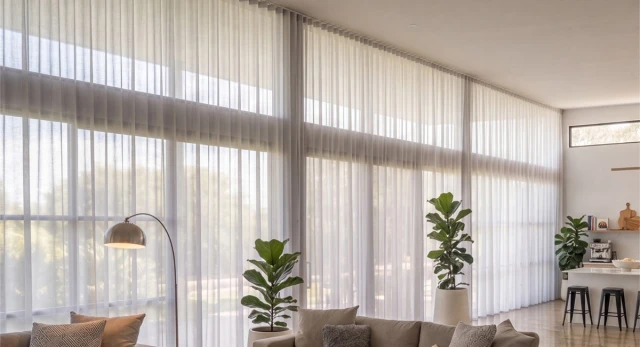
Sheer curtains are one of the best choices for open-plan living areas.
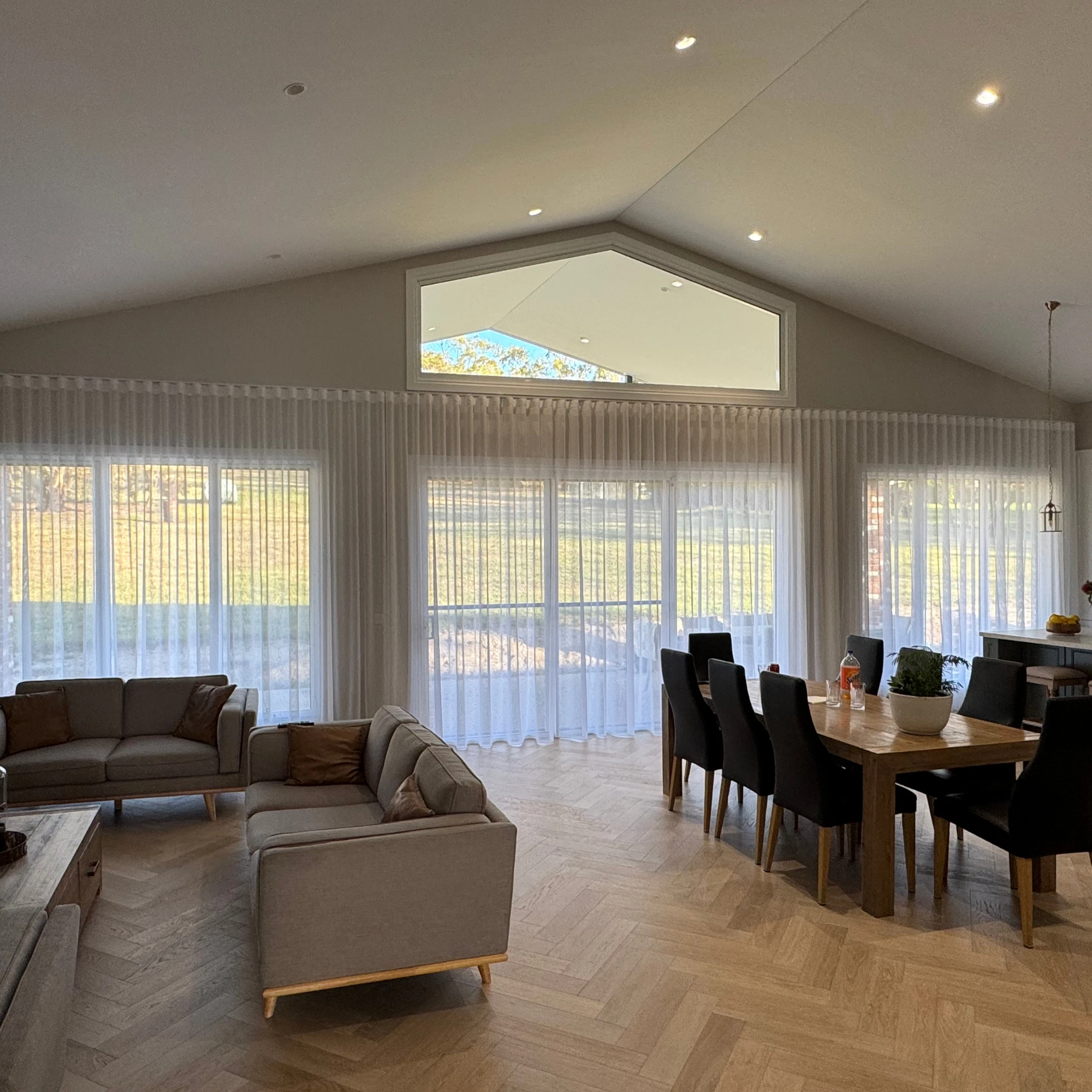
They soften daylight without making the room dark. They add movement and texture without feeling bulky. They can also help reduce the exposed feeling that often comes with large windows and sliding doors.
Sheer Curtains work especially well in:
- •
Living rooms
- •
Dining areas
- •
Open-plan family spaces
- •
Apartments
- •
Sliding door areas
- •
Garden-facing rooms
- •
Coastal-style homes
In an open-plan room, sheers can help connect the different zones visually. They create a soft backdrop behind the living or dining area and make the windows feel dressed rather than bare.
They also suit the relaxed Australian style many homeowners want. Light. Soft. Easy. But sheers are mainly a daytime solution.
They provide softness and daytime privacy, but they are not designed to provide full night privacy on their own.
For a broader explanation of sheer curtain use, privacy and room suitability, read the Complete Guide to Sheer Curtains.
3. Use Curtains to Define Zones
One of the challenges with open-plan living is that everything can feel like one big area.
That can be practical, but sometimes the room needs more definition. Curtains can help create zones without building walls.
A soft curtain backdrop behind the lounge area can make it feel more settled. Curtains around a dining space can make that part of the room feel more intentional. A curtain across large sliding doors can help create a visual boundary between inside and outside when needed.
This is not about closing the room off. It is about shaping the space.
Curtains can help open-plan living feel less like one large box and more like a series of connected areas.
Living. Dining. Kitchen. Outdoor.
Each zone still feels connected, but the room gains softness and structure.
This is especially useful in homes with large windows at one end of the open-plan area, where the curtain becomes the main fabric feature in the space.
4. Light Filtering Curtains Add Soft Daylight
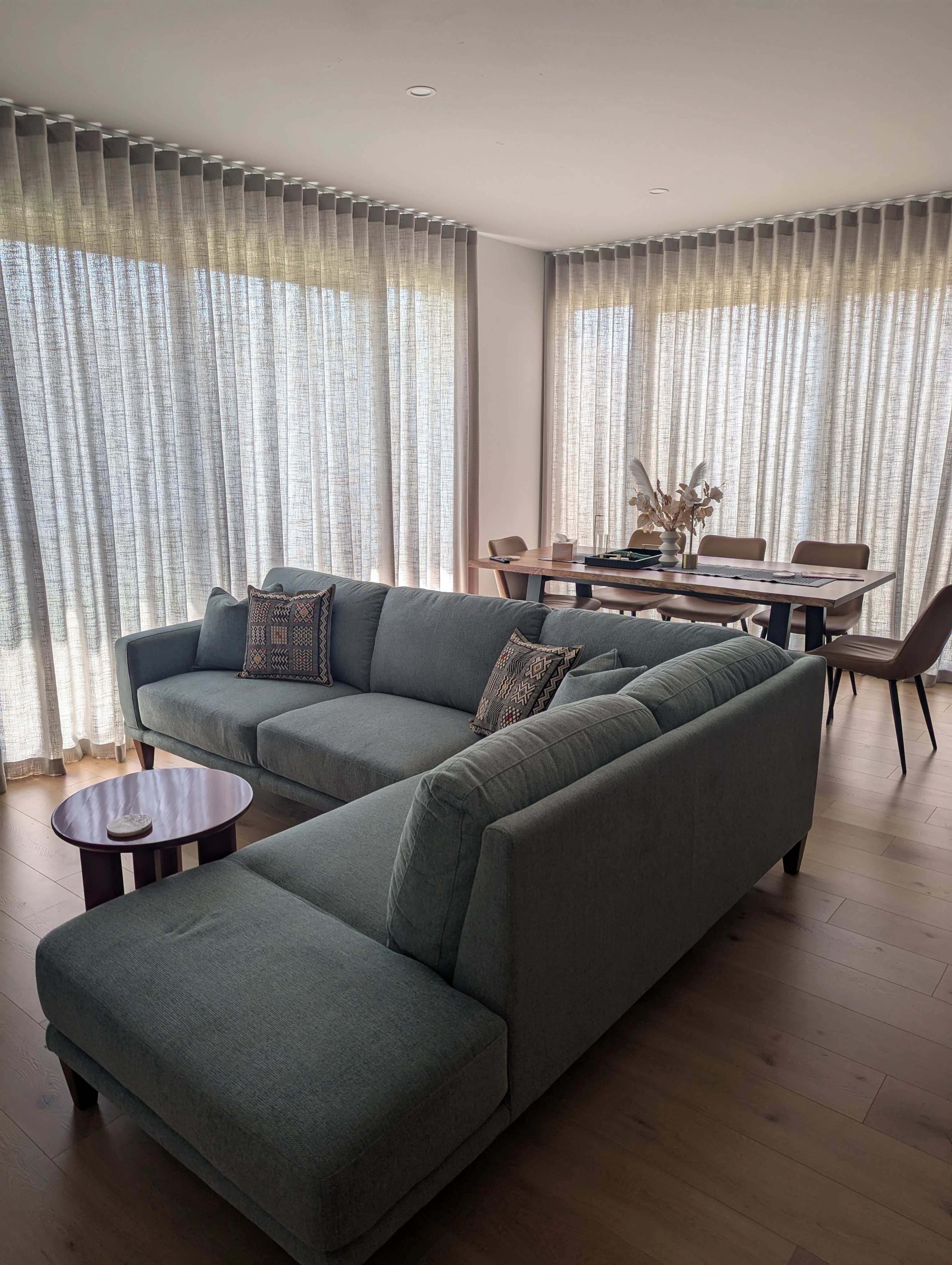
Some open-plan rooms need more coverage than sheers, but not full blockout.
That is where Light Filtering Curtains can work well.
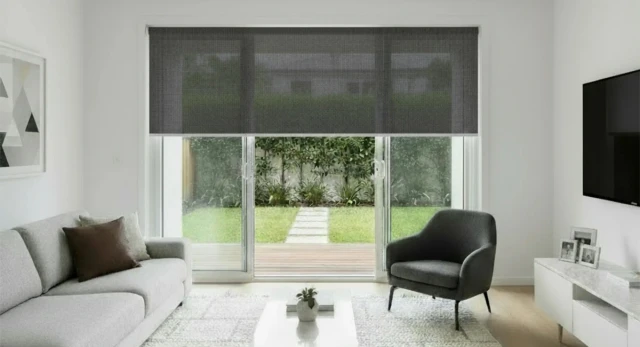
Light filtering curtains softly diffuse sunlight. They help reduce harsh glare while keeping the room bright and comfortable. They are useful in rooms where the light feels too sharp, but you do not want the space to feel dark.
They suit:
- •
Living rooms
- •
Dining areas
- •
Kitchens
- •
Home offices within open-plan spaces
- •
Rooms with strong afternoon light
- •
Rooms that need gentle privacy
Light filtering fabric can make an open-plan area feel more relaxed during the day.
It softens the window. It reduces harsh contrast. It gives the room a more finished look.
This option can be useful when sheer curtains feel too transparent but blockout curtains feel too heavy for daytime use.
5. Blockout Curtains Support Night Privacy and Comfort
Open-plan living areas often have large windows or glass doors. During the day, this can feel bright and beautiful. At night, it can feel exposed.
When the lights are on inside, the room may be more visible from outside. This matters if your open-plan area faces neighbours, a street, a side path, an outdoor entertaining area or a shared fence.
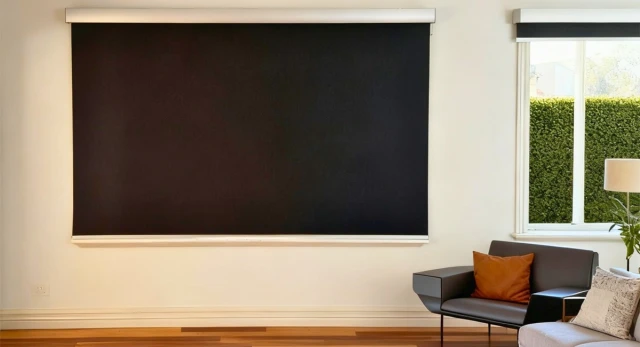
Blockout Curtains can help create stronger privacy and a more enclosed feeling when needed.
They are also useful in open-plan rooms where you want better comfort at night, stronger light control or a more settled evening mood.
Blockout curtains can suit:
- •
Street-facing living rooms
- •
Open-plan rooms near neighbours
- •
Media areas
- •
Rooms with large glass doors
- •
Spaces used at night
- •
Homes that need extra warmth and comfort
They do not need to feel heavy if you choose the right colour and track style.
Soft neutrals, warm whites, stone, grey and natural tones can keep the look calm while still giving the room stronger coverage.
6. Double Curtains Give Day and Night Flexibility
Open-plan rooms often need to work across the whole day. Morning light. Afternoon glare. Dinner time. TV at night. Guests on the weekend. Quiet evenings. One curtain layer may not be enough for all of that.
Double Curtains give the room more flexibility by combining two curtain layers. A common setup is sheer curtains for daytime softness with blockout curtains for night privacy and stronger coverage.
This works beautifully in open-plan living because the room can stay bright during the day and feel more private at night.
During the day, the sheer layer softens light and adds movement. At night, the blockout layer gives the room privacy and comfort.
This combination is especially useful for open-plan spaces with large windows, sliding doors or outdoor-facing glass.
It also gives the room a more designer-style finish without needing bold colours or busy patterns.
Soft by day. Private by night. That is the strength of double curtains.
7. Choose the Right Track for the Space
Curtain tracks have a big impact on how open-plan curtains look and work.
In a large room, the track should feel clean and intentional.
A ceiling-mounted track can draw the eye upwards and create a clean, full-height finish. It allows the curtains to fall from a higher point, which can create a softer and more spacious look.
A wall-mounted track can also work well, especially when the ceiling height, window position or room layout makes ceiling mounting less suitable.
With iSeekBlinds curtains, you can choose track options to suit the room and the way the curtain needs to operate.
Think carefully about:
- •
Ceiling mount or wall mount
- •
Single track or double track
- •
Track colour
- •
Stack direction
- •
Curtain drop
- •
Number of panels
- •
Door and window access
The track should support the way the room works every day. Not just how it looks in photos.
Before ordering, follow the Measure Curtains guide carefully so the curtain and track suit the open-plan area properly.
8. Plan the Curtain Stack
Stack is one of the most important details in open-plan spaces. Curtains need somewhere to sit when open.
If the stack blocks a sliding door, view, walkway or outdoor access point, the room can become frustrating to use.
This matters in open-plan living because windows and doors are often large.
Before choosing curtains, think about where the fabric should stack. Left. Right. Centre. Away from a door opening. Clear of a walkway. Beside the view instead of across it.
A good stack plan makes the curtains feel natural to use. It keeps the room practical and prevents fabric from getting in the way.
For large openings, this planning is especially important.
The curtain should soften the room when closed and sit neatly when open.
Both matter.
9. Pick Colours That Connect the Whole Room
Open-plan rooms usually have several finishes in one space. Kitchen cabinetry. Benchtops. Flooring. Sofa fabric. Dining furniture. Wall colour. Lighting. Rugs. Curtains need to work with all of them.
That is why calm colours often work best in open-plan living areas.
Think:
- •
Warm white
- •
Soft white
- •
Linen
- •
Stone
- •
Beige
- •
Oatmeal
- •
Soft grey
- •
Natural taupe
- •
Charcoal accents
- •
Muted warm neutrals
A neutral curtain colour can connect the kitchen, dining and living zones without competing with them.
If the room already has warm timber or beige tones, choose warmer fabric.
If the room has cooler grey, white or black finishes, a cooler fabric may sit better.
For fabric inspiration across curtain and blind ranges, read Interior Designers Favourite Curtain and Blind Fabrics.
The safest choice is usually a colour that supports the room rather than demands attention.
10. Use Curtains to Make the Room Feel Taller
Open-plan spaces often benefit from vertical height.
Even when the ceiling is not especially high, the way curtains are hung can change the feeling of the room.
A higher track can draw the eye upwards. A longer curtain drop can make the wall feel taller. A clean S-Fold style can create smooth vertical movement.
This can be especially helpful in living and dining spaces where the window or sliding door is a major feature.
Curtains that start too low can make the room feel smaller. Curtains that finish awkwardly above the floor can look unfinished. Think carefully about the drop style. A skim drop gives a clean finish just above the floor. A kiss drop lightly touches the floor. A puddle drop creates a softer, more decorative feel.
For most open-plan homes, a clean skim or kiss drop often suits best because it keeps the look relaxed but tidy.
11. Think About Open-Plan Bedrooms and Living Zones
Some homes use curtains to soften open-plan bedrooms, studio apartments or multipurpose spaces.
In these layouts, curtains can help create privacy, separation and comfort without a permanent wall.
A curtain can help divide a sleeping zone from a living zone.
It can soften a large studio space. It can create a calmer corner for rest or work. This approach works best when the fabric is chosen carefully. Sheers can create soft separation without closing the space completely.
Blockout curtains can provide stronger privacy or room darkening where sleep matters.
For bedroom comparisons, read Curtains vs Roller Blinds for Bedrooms.
Open-plan does not always mean fully open all the time. Sometimes the best layout is flexible. Curtains can help create that flexibility.
12. Mix Curtains with Blinds Where Needed
Some open-plan rooms need curtains and blinds together.
This can happen when the room has different window types, strong sun, privacy needs or a large open layout.
For example, you might use curtains across the main sliding doors and roller blinds on smaller side windows.
Or you might use sheer curtains for softness and a blockout blind where stronger privacy or light control is needed.
Curtains and roller blinds can work together when each product has a clear purpose.
Curtains bring softness and height. Roller blinds bring compact light and privacy control.
This is especially useful in homes where the open-plan area connects to bedrooms, media zones or home offices.
For more ideas on layered window furnishings, read Mixing Shutters with Curtains.
The goal is not to use more products. The goal is to make the whole space work better.
13. Choose Fabric Samples Before Ordering
Open-plan rooms are large, so fabric choice matters even more.
A curtain fabric that looks soft in a small sample can feel much stronger once it covers a wide window or sliding door.
A white can look too cool. A beige can look too yellow. A grey can turn blue. Texture can look more noticeable across a large drop. That is why samples are important.
Before ordering, compare Curtain Fabric Samples in the room where the curtains will be installed.
Hold them beside:
- •
Flooring
- •
Wall colour
- •
Kitchen cabinetry
- •
Benchtops
- •
Sofa fabric
- •
Rugs
- •
Dining furniture
- •
Window frames
Check them in morning light. Afternoon light. Evening light. The larger the open-plan space, the more important this step becomes. Samples help you choose with confidence.
14. Install with the Whole Room in Mind
Curtains in open-plan spaces are not just a window decision. They affect the whole room.
Track position, stack direction, drop and fabric fullness all change how the living area feels and functions.
Before installation, review the Install Curtains guide so you understand how the track, brackets and curtain movement work.
Think about how the curtains will sit when open. Think about how they will look from the kitchen. Think about how they will frame the dining area. Think about access to sliding doors or outdoor areas. Think about furniture placement. Good curtains should make the space easier to live in. Not harder.
A little planning before installation can make the final result feel much more polished.
Common Mistakes to Avoid
Choosing Curtains Only for Looks
Open-plan curtains need to suit the room function.
Think about glare, privacy, stack, door access and night coverage before choosing fabric.
Forgetting About Night Privacy
Sheers are beautiful during the day, but they are not full night privacy curtains.
Use blockout or double curtains where after-dark privacy matters.
Ignoring the Curtain Stack
Large open-plan doors and windows need a clear stack plan. Do not let curtains block walkways, views or door access.
Choosing a Colour That Only Suits One Zone
The curtain colour needs to work with the kitchen, dining and living areas together.
Check samples across the whole space.
Hanging the Track Too Low
A higher track can help the room feel taller and more resolved.
Low tracks can make large curtains feel less polished.
Measuring Too Quickly
Open-plan curtains are usually large and highly visible. Measure carefully and follow the guide before ordering.
Quick Open-Plan Curtain Checklist
Before choosing curtains for open-plan living, ask yourself:
- •
What does the space need most?
- •
Do I need softness, privacy, light control or all three?
- •
Would sheer curtains suit daytime softness?
- •
Do I need blockout curtains for night privacy?
- •
Would double curtains give better flexibility?
- •
Is the window or door extra wide?
- •
Where should the curtains stack?
- •
Will the stack block access or views?
- •
Should the track be ceiling mounted or wall mounted?
- •
Which curtain colour suits the whole space?
- •
Have I checked fabric samples in my own light?
- •
Have I measured carefully?
- •
Have I checked the install guide?
These questions help you create an open-plan space that feels softer, more practical and more complete.
Final Thoughts
Curtains can make open-plan living feel more comfortable, more finished and easier to enjoy.
They soften hard surfaces. They reduce the exposed feeling of large windows. They help manage light and privacy. They add warmth, movement and texture. They can also help define zones without closing the room off. The best curtain choice depends on the space. Sheer curtains create softness and flow. Light filtering curtains soften daylight. Blockout curtains support privacy and comfort. Double curtains give day and night flexibility.
The right track, stack and colour help the curtains work with the room rather than against it.
Open-plan living should feel bright and connected, but it should also feel calm and comfortable.
With the right curtains, the whole space can feel more balanced.
Create a softer open-plan home with custom curtains.
FAQs
'%3e%3cline%20id='Line_28'%20data-name='Line%2028'%20y2='200'%20transform='translate(1580.5%205493.46)'%20fill='none'%20stroke='%23f7941d'%20stroke-width='5'/%3e%3cg%20id='Ellipse_50'%20data-name='Ellipse%2050'%20transform='translate(1559%205665.46)'%20fill='%23171717'%20stroke='%23f7941d'%20stroke-width='5'%3e%3ccircle%20cx='21.5'%20cy='21.5'%20r='21.5'%20stroke='none'/%3e%3ccircle%20cx='21.5'%20cy='21.5'%20r='19'%20fill='none'/%3e%3c/g%3e%3c/g%3e%3c/svg%3e)