'%3e%3ccircle%20id='Ellipse_59'%20data-name='Ellipse%2059'%20cx='3'%20cy='3'%20r='3'%20transform='translate(11%208.786)'%20fill='none'%20stroke='%23f7941d'%20stroke-linecap='round'%20stroke-linejoin='round'%20stroke-width='2'/%3e%3cpath%20id='Path_82'%20data-name='Path%2082'%20d='M14,2A10,10,0,0,0,4,12a8.048,8.048,0,0,0,1.875,5.625L14,27l8.125-9.375A8.048,8.048,0,0,0,24,12,10,10,0,0,0,14,2'%20transform='translate(0%200)'%20fill='none'%20stroke='%23f7941d'%20stroke-linecap='round'%20stroke-linejoin='round'%20stroke-width='2'/%3e%3c/g%3e%3c/svg%3e)



How sheer and blockout curtain layers create softness, privacy and a more finished Australian home
Layered curtains are back in style because Australian homes now ask more of their window furnishings. We want daylight and softness during the day, then privacy, comfort and stronger light control at night. A single curtain layer can look beautiful, but it may not always do everything the room needs. A sheer curtain can soften the day, but it will not give full night-time privacy. A blockout curtain can create privacy and comfort, but it may feel too heavy if used all day. Layering gives you that flexibility: a soft, light-filled room during the day and stronger coverage when you need it at night. It is easy to see why layered curtains are a popular choice in Australian homes.
They suit modern interiors, coastal spaces, bedrooms, open-plan living areas, apartments and family homes where the window needs to feel both practical and beautiful. Layering curtains is not about making a room look old-fashioned. Done well, it feels clean, soft and modern.
1. Layering Curtains Gives You More Flexibility
The main reason curtain layering works so well is flexibility. The way a room feels changes across the day: morning light may be gentle, while afternoon sun can feel much stronger. A living room may feel open during the day but exposed at night. A bedroom may need gentle daylight in the morning and strong privacy after dark. A single fabric often cannot do all of that. Layered curtains let each fabric do its own job. A sheer layer can soften daylight and add daytime privacy. A blockout layer provides strong night-time privacy and room darkening. The fabric blocks light, although some light may still enter around the edges depending on track position and coverage. This is why Double Curtains are such a practical choice.
They combine two curtain layers on one window, giving the room more control without needing a heavy or complicated look. Instead of limiting the window to open or closed, layering gives you useful options for different light levels, times of day and privacy needs.
2. Sheer Curtains Create the Daytime Layer
The daytime layer is usually the sheer curtain. Sheers are loved because they soften the room without making it dark. They let natural light move through the space, but they reduce the harsh feeling of a bare window. Sheer Curtains work beautifully as the front daytime layer in living rooms, bedrooms, dining areas and open-plan spaces. They can help:
- •
Soften bright windows
- •
Add gentle movement
- •
Create a relaxed backdrop
- •
Make large windows feel less exposed
- •
Support daytime privacy
- •
Keep the room feeling light
Sheers are especially useful in Australian homes where natural light is part of the design. They help keep that brightness, but make it feel calmer and more comfortable. The important thing is using sheers for the right purpose. They are ideal during the day, but they are not a complete night-time privacy solution on their own. For more detail on sheers, privacy and room use, read the Complete Guide to Sheer Curtains.
3. Blockout Curtains Create the Night Layer
The second layer is usually the blockout curtain. This is the practical night layer. Blockout Curtains are useful when the room needs stronger privacy, better light control and a more settled feeling after dark. They suit:
- •
Main bedrooms
- •
Kids' bedrooms
- •
Nurseries
- •
Guest rooms
- •
Media rooms
- •
Street-facing living rooms
- •
Open-plan areas used at night
In a layered setup, the blockout curtain can stay open until its privacy and light-control benefits are needed. During the day, the sheer layer can stay closed for softness and filtered light. At night, the blockout layer can be drawn for privacy and comfort. This makes blockout curtains feel less heavy because they are used when they are needed most. The result is practical, but still beautiful.

4. Layered Curtains Make Bedrooms Feel More Complete
Bedrooms are one of the best places to use layered curtains. A bedroom needs softness, privacy and comfort. It should feel calm during the day and restful at night. A sheer layer can make the bedroom feel gentle and relaxed during daylight hours. It softens the window, adds movement and creates a more finished look. A blockout layer can then support sleep, privacy and room darkening at night. This combination works especially well in:
- •
Main bedrooms
- •
Nurseries
- •
Kids' rooms
- •
Guest bedrooms
- •
Street-facing bedrooms
- •
Bedrooms with large windows
- •
Rooms that receive early morning sun
Layered curtains can make a bedroom feel more considered than using one flat layer alone. The window gains depth, and the room feels softer. For a broader comparison between bedroom curtains and blinds, read Curtains vs Roller Blinds for Bedrooms . A bedroom should not feel exposed during the day or uncomfortable at night. Layering helps with both.
5. Layering Works Beautifully in Open-Plan Living
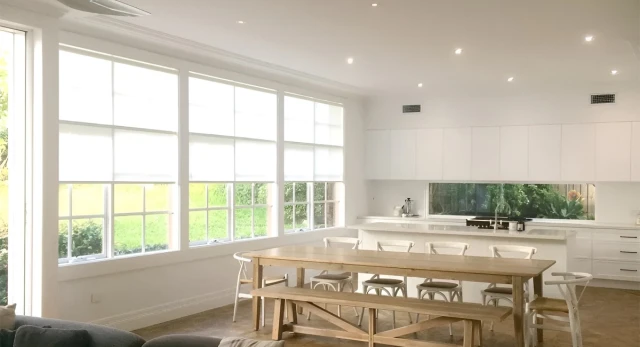
Open-plan living is common in Australian homes, but these spaces can be hard to soften. They often include large windows, sliding doors, hard floors, stone benchtops and wide glass areas. Without fabric, the room can feel stark, bright or unfinished. Layered curtains can help balance that. A sheer layer softens the whole space during the day. A blockout layer creates privacy and warmth in the evening. This is especially useful where the open-plan area faces a patio, neighbours, street, balcony or outdoor entertaining area. Layered curtains can also help define zones without closing the space off. The living and dining zones can feel softer, calmer and more complete. For more ideas, read Using Curtains for Open-Plan Living. Open-plan homes need light. But they also need comfort. Layered curtains help create that balance.
6. Layering Adds Texture Without Clutter
One reason curtain layering feels current again is that it adds texture in a simple way. Many Australian homes use neutral colour palettes. White walls, timber floors, stone benchtops, neutral furniture and black or white window frames are common starting points. These rooms can look beautiful, but sometimes they need more softness and depth. Layered curtains add that depth without needing bold colours, busy patterns or extra decoration. A sheer layer adds movement. A blockout layer adds weight and structure. Together, they make the window feel more designed. This works especially well when the fabrics are chosen in soft, natural tones. Warm white, linen, stone, oatmeal, soft grey and natural beige can all add depth while keeping the palette calm. The palette stays calm, while the room gains a more complete finish.
For fabric inspiration, read Interior Designers Favourite Curtain and Blind Fabrics.
7. Layered Curtains Help with Day and Night Privacy
Privacy is one of the strongest reasons to layer curtains. Day privacy and night-time privacy are different. During the day, sheer curtains can help soften views into the home while still allowing light through. This can make the room feel more comfortable without closing it off. At night, when lights are on inside, sheers are not enough on their own. That is when the blockout layer matters. A blockout curtain gives stronger coverage when you need more privacy after dark. This is helpful for:
- •
Bedrooms
- •
Living rooms
- •
Apartments
- •
Townhouses
- •
Street-facing homes
- •
Rooms near neighbours
- •
Sliding door areas
- •
Outdoor-facing rooms
Layering means the room can stay bright and soft during the day, then private and settled at night. You do not need to choose one or the other. That is why the trend is practical, not just decorative.

8. Layering Makes Large Windows Feel Softer
Large windows and sliding doors are common in modern Australian homes. They bring in light and connect the home to outdoor areas. But they can also feel exposed, especially when left bare or covered with only one flat layer. Layered curtains help large windows feel softer and more intentional. The sheer layer creates a soft backdrop across the glass. The blockout layer adds structure when the room needs stronger coverage. This works well for:
- •
Sliding doors
- •
Stacking doors
- •
Wide living room windows
- •
Large bedroom windows
- •
Dining spaces
- •
Open-plan areas
- •
Apartment windows
The curtain stack also becomes part of the look. When planned properly, the fabric can sit neatly to the side without blocking access or views. This makes the window feel dressed rather than covered.
9. Ceiling-Mounted Tracks Make Layering Feel Modern
Layered curtains can feel very modern when the track is planned well. A ceiling-mounted track can make the curtain fall from a higher point, which helps the room feel taller and more polished. It also creates a cleaner finish because the curtain becomes part of the architecture of the room. A double track allows each curtain layer to move separately. This gives you proper control over the sheer and blockout layers. You can use the sheer layer during the day, draw the blockout layer at night, or close both when you want maximum coverage. Before ordering, follow the Measure Curtains guide carefully so the track, width, drop and stack suit the room. The curtain fabric is important. But the track makes the whole layered setup work.
10. Choose Colours That Work Together
Layered curtains do not need high contrast to look good. In many homes, the best result comes from two fabrics that sit quietly together. A soft sheer with a warm white blockout. A light sheer with a stone blockout. A neutral sheer with a soft grey blockout. A warm natural sheer with a beige blockout. The colours should feel connected, not random. For a calm look, keep both layers within the same colour family. For example:
- •
Warm white sheer with warm white or linen blockout
- •
Soft white sheer with stone blockout
- •
Natural sheer with beige blockout
- •
Cool white sheer with soft grey blockout
- •
Light grey sheer with charcoal or deeper grey blockout
The sheer layer usually looks lighter because of its transparency. The blockout layer usually looks more solid. That means colours do not need to match exactly. They just need to work together. Always check Curtain Fabric Samples in your room before choosing. Natural light can change everything.
11. Layering Is Not Only for Large Homes
Layered curtains are often shown in large designer homes, but they can also work in Australian homes of all sizes. The key is choosing the right room. Layering can work in:
- •
Apartments
- •
Townhouses
- •
Family homes
- •
Renovated homes
- •
Coastal homes
- •
New builds
- •
Main bedrooms
- •
Living rooms
- •
Open-plan spaces
Even a smaller room can suit layered curtains if the track, stack and fabric are planned carefully. For small bedrooms, you may need to check whether there is enough room for the curtain stack. For compact living rooms, a soft sheer with a simple blockout layer may be enough. Layering does not need to dominate a compact room; it can be subtle, soft and practical.
12. Double Curtains Create a More Considered Finish
A single curtain can work well, while double curtains can give the room a more considered finish because they add depth and flexibility. The window gains dimension, the fabric brings movement and the whole room feels softer and more purposeful. This does not mean the room needs to look formal. Layered curtains can still feel relaxed and modern, especially with S-Fold styling, neutral fabrics and clean tracks. The effect is simple, but it gives the room a more complete, considered finish. This is one reason layering is back in trend. Homeowners want rooms that feel warmer and more considered, but still easy to live in. Double curtains create that feeling without relying on heavy decoration. They are practical. But they also make the room feel more polished.
13. Layering Can Help With Temperature and Comfort
Curtains can also help make a room feel more comfortable. Large windows can allow heat to build up during the day and make rooms feel cooler at night. Layered curtains give you more control over how the window is covered and can add an extra fabric barrier at the glass. A sheer layer can soften strong light during the day. A blockout layer can add more coverage in the evening. This may improve comfort as conditions change, although thermal performance will vary with the fabric, window, coverage and installation. It is not only about darkness or privacy. It is also about comfort. In bedrooms, layered curtains can make the room feel more restful. In living areas, they can create a more relaxed evening setting. In open-plan spaces, they can soften large glass areas.
The room can feel less exposed and more comfortable to use throughout the day.
14. Layering Curtains with Blinds Can Also Work
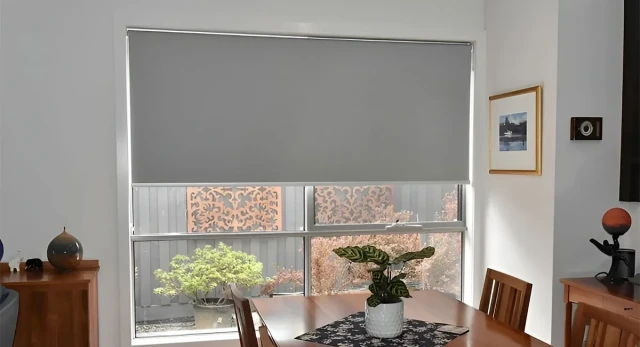
Curtain layering usually means sheer curtains with blockout curtains. But some rooms may layer curtains with blinds instead. For example, a room may use a roller blind for practical light control and curtains for softness. This can work where:
- •
The room needs compact privacy control
- •
The window has limited wall space
- •
You want curtains mainly for softness
- •
A blind already exists
- •
The room needs extra flexibility
The key is not to overdo it. Each layer should have a clear purpose. A blind may handle privacy or blockout. A curtain may add softness and height. The room should feel intentional, not crowded. For homes that mix window furnishings, keep colours and undertones consistent so the room still feels calm.
Common Mistakes to Avoid
Using Sheers Alone for Night Privacy
Sheers are beautiful during the day, but they are not a full night-time privacy solution. Use a blockout layer where privacy after dark matters.
Choosing Two Fabrics That Compete
Layered curtains work best when the fabrics feel connected. Avoid mixing too many strong colours, textures or undertones in one window.
Forgetting the Stack
Double curtains need space to stack when open. Plan where each layer will sit so it does not block doors, views or walkways.
Hanging the Track Too Low
A higher track can make layered curtains feel more modern and polished. Low tracks can make the window feel smaller.
Choosing Layering Only Because It Is Trendy
Layering should solve a real room need. Use it where you need softness, privacy, light control or day and night flexibility.
Skipping Samples
Two layers mean two fabrics to check. Always view samples together in the room before ordering.
Quick Layered Curtain Checklist
Before choosing layered curtains, ask yourself:
- •
Does the room need daytime softness?
- •
Does it need night-time privacy?
- •
Does it need room darkening?
- •
Would sheer curtains suit the daytime layer?
- •
Would blockout curtains suit the night layer?
- •
Is there enough space for the curtain stack?
- •
Should the track be ceiling-mounted?
- •
Do I need a double track?
- •
Do the two fabric colours work together?
- •
Do the fabrics suit the wall colour and flooring?
- •
Have I checked samples in morning and evening light?
- •
Have I measured carefully?
- •
Have I checked the install guide?
These questions help you choose layered curtains that look good and work properly.
Final Thoughts
Layering curtains is back in trend because it gives homes what they need now. It brings together softness, privacy, light control, comfort, texture and flexibility. A sheer curtain can make the room feel light and relaxed during the day. A blockout curtain can make the same room feel private and comfortable at night. Together, they create a window furnishing that feels both beautiful and practical. Layered curtains can suit bedrooms, living rooms, open-plan areas, apartments, coastal homes and family spaces. The best result comes from choosing the right fabrics, track, stack and colour combination. With modern S-Fold curtains, well-matched fabrics and a neat double track, layering can feel soft, clean and easy to live with. With the right setup, layered curtains can make a room feel more finished, more comfortable and more considered.
Create a softer, more flexible home with custom double curtains.
FAQs
'%3e%3cline%20id='Line_28'%20data-name='Line%2028'%20y2='200'%20transform='translate(1580.5%205493.46)'%20fill='none'%20stroke='%23f7941d'%20stroke-width='5'/%3e%3cg%20id='Ellipse_50'%20data-name='Ellipse%2050'%20transform='translate(1559%205665.46)'%20fill='%23171717'%20stroke='%23f7941d'%20stroke-width='5'%3e%3ccircle%20cx='21.5'%20cy='21.5'%20r='21.5'%20stroke='none'/%3e%3ccircle%20cx='21.5'%20cy='21.5'%20r='19'%20fill='none'/%3e%3c/g%3e%3c/g%3e%3c/svg%3e)