'%3e%3ccircle%20id='Ellipse_59'%20data-name='Ellipse%2059'%20cx='3'%20cy='3'%20r='3'%20transform='translate(11%208.786)'%20fill='none'%20stroke='%23f7941d'%20stroke-linecap='round'%20stroke-linejoin='round'%20stroke-width='2'/%3e%3cpath%20id='Path_82'%20data-name='Path%2082'%20d='M14,2A10,10,0,0,0,4,12a8.048,8.048,0,0,0,1.875,5.625L14,27l8.125-9.375A8.048,8.048,0,0,0,24,12,10,10,0,0,0,14,2'%20transform='translate(0%200)'%20fill='none'%20stroke='%23f7941d'%20stroke-linecap='round'%20stroke-linejoin='round'%20stroke-width='2'/%3e%3c/g%3e%3c/svg%3e)


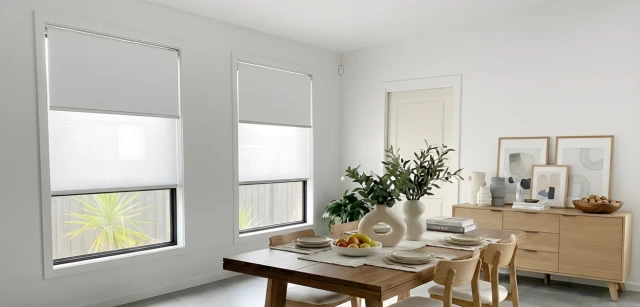
How to create a living room that feels bright by day, private by night and polished at every hour
Your living room is where the day stretches out.
Morning coffee near the window.
Afternoon light across the sofa.
A quiet hour with a book.
Movie night when the room finally settles.
Because this space works so hard, your window furnishings need to work hard too. They need to soften glare, protect privacy, suit your furniture, and shift with the way the room is used from morning to evening.
That is exactly where double roller blinds make sense.
They give you two layers on one streamlined bracket. A sunscreen or light filtering layer keeps the living room bright and comfortable during the day. A blockout layer gives you privacy, darkness and a more relaxed evening mood.
The look is clean. The control is simple. The result is a living room that feels open when you want light and private when you need comfort.
With the right fabric combination, a few samples, and our easy measuring and installation guides, you can create a custom-made living room look with confidence.
This guide shows you how to style double roller blinds in living rooms with the right fabrics, colours, fit and controls. We will also include iSeekBlinds fabric ideas so you can picture how the combinations work in real Australian homes.
Why Living Rooms Need Flexible Blinds
Living rooms are rarely used in one way.
They are places to relax, entertain, watch TV, work from the couch and gather with family at the end of the day.
The light changes too.
A room that feels soft and bright in the morning may become full of glare in the afternoon. A window that feels open and fresh during the day may feel exposed once the lights come on at night.
This is why flexibility matters.
A single window covering may solve one problem, but living rooms often need more than that.
You may want natural light during the day.
You may need reduced glare in the afternoon.
You may want stronger privacy in the evening.
Double roller blinds are designed for this kind of everyday living. They let you adjust the room without changing the whole look of the space.
Enter text here
Two Layers, Total Control
iSeekBlinds describes double roller blinds as Two Layers, Total Control.
That is the easiest way to understand them.
The back layer is usually your daytime fabric. You can choose sunscreen if you want to help reduce glare, protect against UV and maintain your view during the day. Or you can choose light filtering if you want to gently diffuse sunlight and create a softer, more private feel.
The front layer is usually blockout. This gives you 100% light control through the fabric and night-time privacy when the room needs to feel more settled.
Each layer works independently.
During the day, use the sunscreen or light filtering blind.
At night, lower the blockout blind.
You get the best of both worlds without heavy layering or visual clutter.
The Best Fabric Combination for Living Rooms
The fabric combination is the most important styling decision.
It affects how your living room looks, feels and functions throughout the day.
Most living rooms suit one of these two pairings.
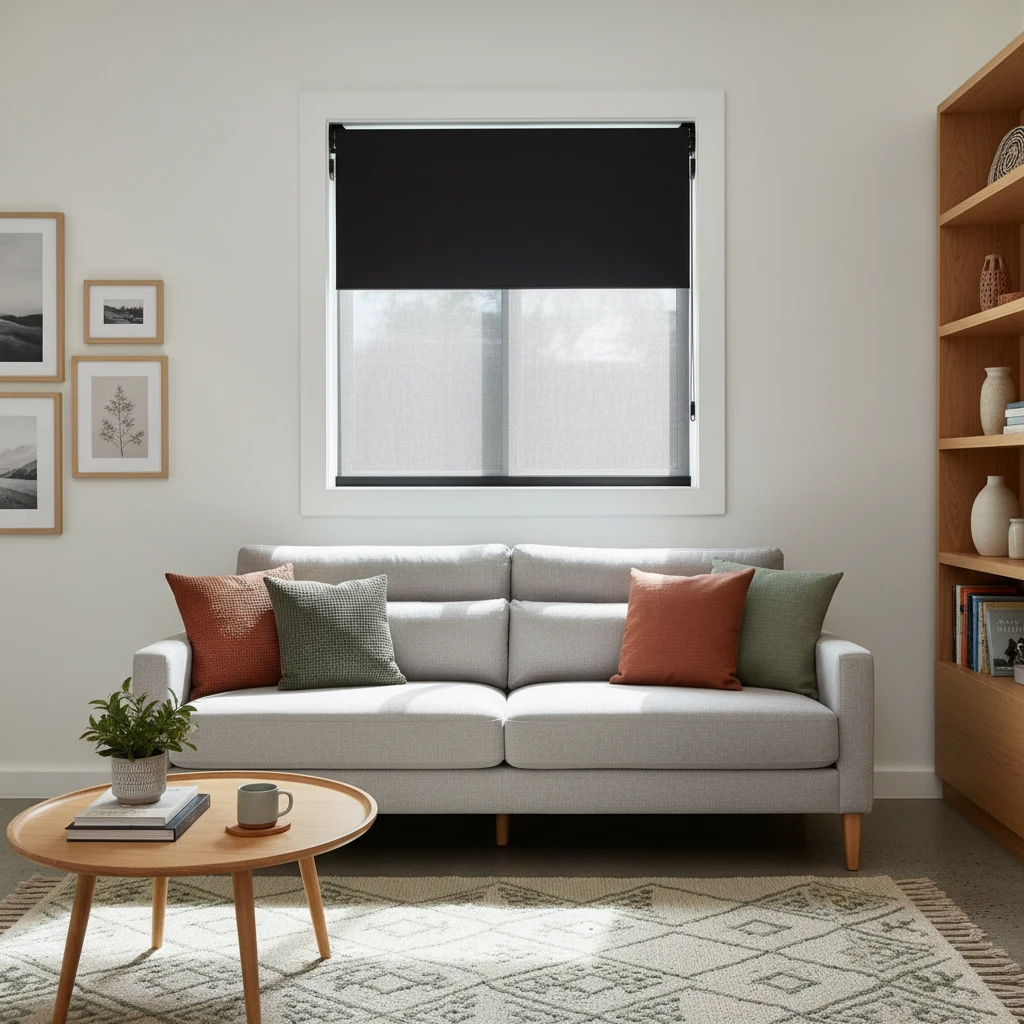
Option 1: Sunscreen + Blockout
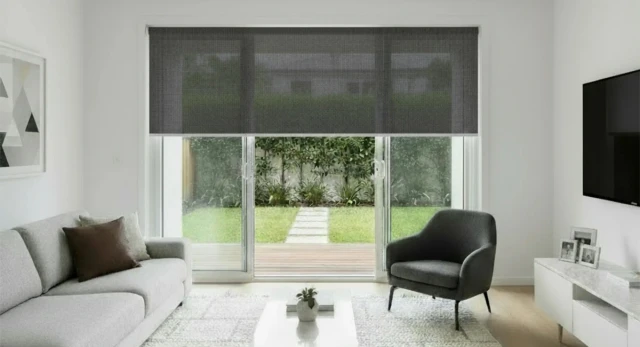
This is the strongest choice if your living room has a view, large windows, sliding doors or strong glare.
The sunscreen layer keeps the room connected to the outdoors. It softens harsh sunlight, helps reduce glare and allows you to maintain your view during the day.
The blockout layer gives privacy and darkness at night.
This pairing works beautifully in:
- •
open-plan living rooms
- •
garden-facing rooms
- •
homes with sliding doors
- •
rooms with afternoon sun
- •
living rooms with TVs or screens
- •
homes with black or aluminium window frames
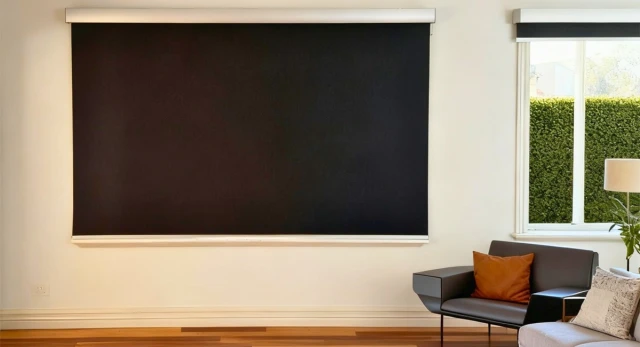
For a crisp modern look, try Charlotte Black Blockout + Aventus White Sunscreen.
For something softer, Charlotte Warm White Blockout + Aventus White Linen Sunscreenfeels calm, light and easy to style.
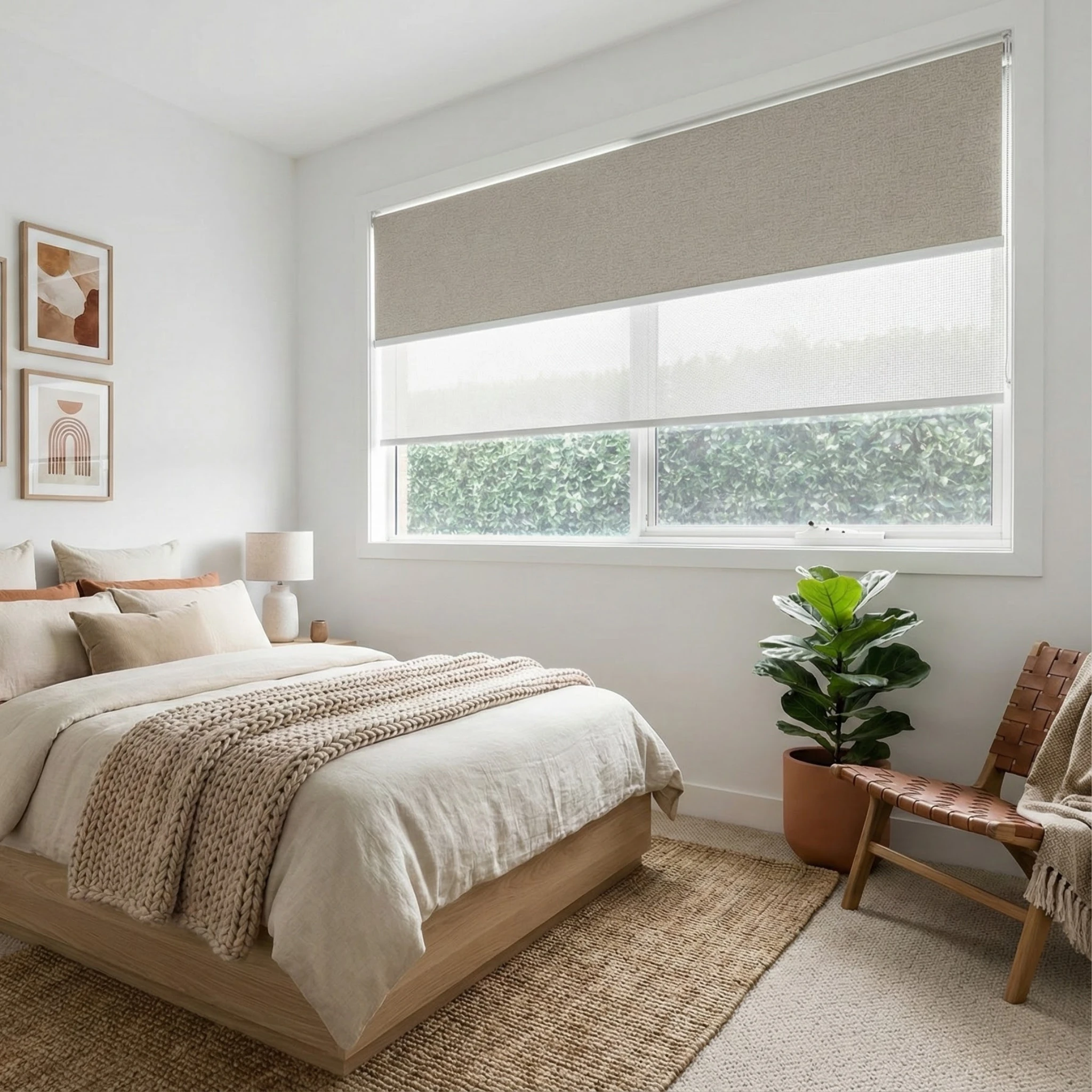
For a relaxed Australian living room with timber floors, warm whites or natural textures, Linesque Almond Blockout + Whitsundays Morning Sunscreen creates a soft, easy-going feel that still looks beautifully finished.
Option 2: Light Filtering + Blockout
Choose light filtering and blockout if your living room needs softness and daytime privacy more than an open view.
The light filtering layer creates a warm, diffused glow. It helps the room feel private without making it dark.
The blockout layer gives stronger coverage for evenings, movie nights and street-facing windows.
This pairing works well in:
- •
street-facing living rooms
- •
apartments
- •
townhouses
- •
rooms close to neighbours
- •
soft contemporary interiors
- •
living rooms where the view is not the main feature
A good iSeekBlinds pairing is Bali Ash Blockout + Palm Beach Melody Light Filter. It gives a soft modern look with a calm grey base.
For a textured neutral finish, try Linesque Dove Blockout + Linesque Stonewash Light Filter.
If your home has warm whites, beige tones or oak flooring, Linesque Almond Blockout + Linesque Lily Light Filter can keep the room soft, warm and connected.
For more ideas, explore our guide to the best colour combinations for double roller blinds.
Choose Colours That Work With the Whole Room
Because living room blinds cover a large visual area, colour matters.
The blinds should not feel like an afterthought. They should connect with the rest of the room.
Start by looking at the fixed finishes.
These include your flooring, window frames, cabinetry, wall colour and benchtops if the living room connects to a kitchen.
Then look at the softer layers.
Your sofa, rug, cushions, lamps and artwork can help guide the blind colours.
For a Fresh Modern Look
Use crisp whites, pale greys and clean contrast.
Pair Aventus Ice or Aventus White with Charlotte Cool White , Charlotte Light Grey or Bali Ash .
This works well with white walls, black frames, grey sofas and modern furniture.
For a Warm Neutral Look
Use linen tones, almond, dove and soft stone colours.
Pair Aventus White Linen , Whitsundays Morning or SB Woolamai Sand with Linesque Almond , Linesque Dove , Bali Driftwood or Bali Pearl .
This suits timber floors, warm whites, rattan, boucle, linen cushions and natural textures.
For Bold Contrast
Use a pale front layer with a deeper blockout.
Pair Aventus White or Euro St Lucia Bianca with Charlotte Black or Bali Black .
This works well in homes with black window frames, dark tapware, charcoal accents or a stronger design style.
The colours do not need to match exactly.
They just need to feel like they belong together.
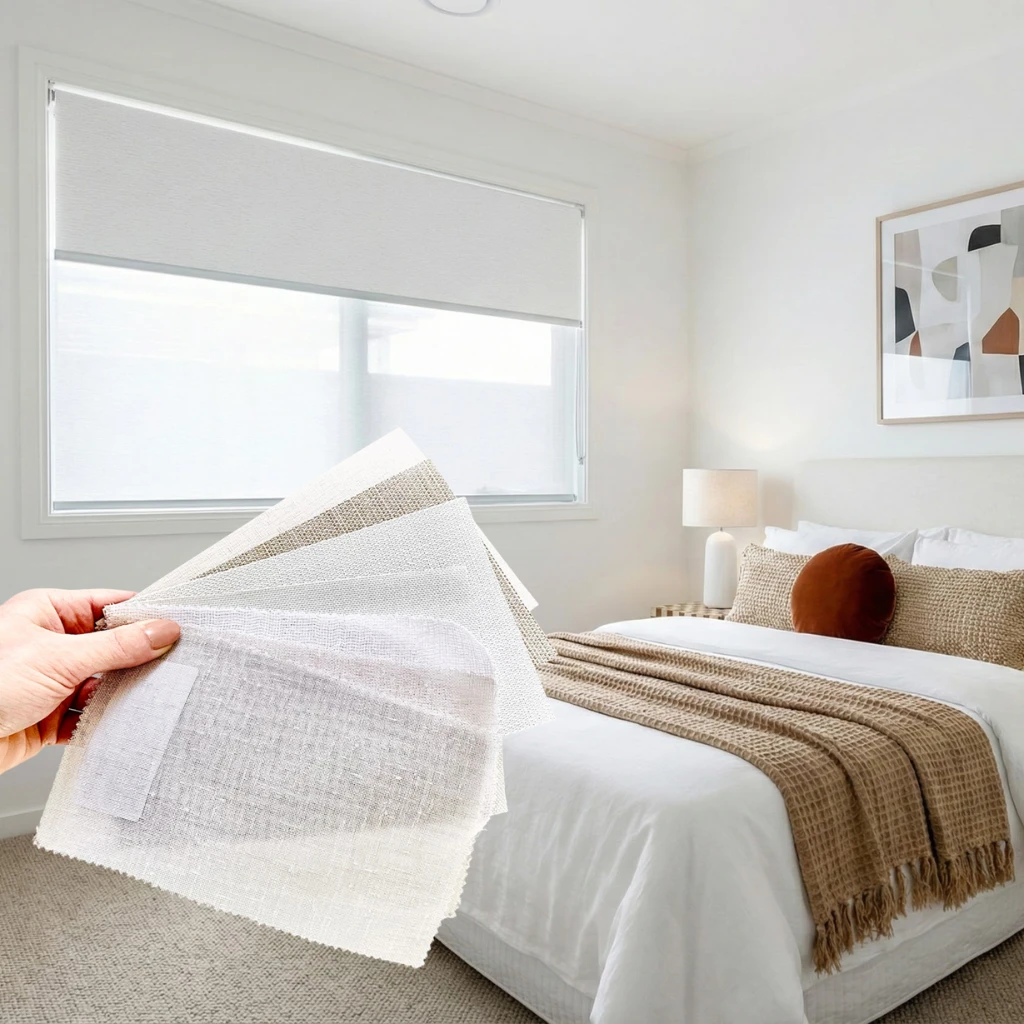
Order Samples before You Decide
Fabric changes in real light.
A sunscreen that looks bright online may feel softer besides your flooring. A blockout colour that looks neutral on screen may feel cooler or warmer once it is against your wall.
Order roller blind samples before choosing.
Tape them near the living room window and check them across the day.
Look at them in morning light.
Check them again during the strongest afternoon sun.
Then look at the blockout colour at night with your lamps on.
This is the easiest way to avoid a colour that feels too stark, too dark or too yellow in your actual room.
It is a simple step, but it can make a big difference to the final result.
Recess Fit or Face Fit in a Living Room?
Fit changes both the look and the performance of your blinds.
There are two main options.
Inside Mount / Recess Fit
An inside mount fit sits inside the window frame.
It gives a clean, built-in look and works well in modern or minimal living rooms. It can make the blinds feel neat and contained.
This style is a good option when your window frame has enough depth and you want a streamlined finish.
Outside Mount / Face Fit
A face fit sits over the window frame or architrave.
It gives more coverage and can help reduce light gaps. This can be useful in living rooms where privacy, glare control or TV viewing are important.
It can also create a more generous look across large windows and sliding doors.
If you are unsure, think about what matters most.
For the cleanest look, recess fit may be best.
For stronger coverage, face fit may be the better choice.
Use the measure roller blinds guide before ordering so your blinds are made to suit your window properly.
Think About Sliding Doors and Large Windows
Many living rooms have sliding doors or wide glass panels.
They bring in beautiful light, but they can also bring glare, heat and evening exposure.
Double roller blinds are a smart option because they let you treat the glass differently throughout the day.
Use sunscreen when you want to enjoy the outdoor view.
Use blockout when you want privacy after dark.
For sliding doors, make sure you think about access. Consider where the blind controls will sit, where furniture is placed and whether the blinds will be easy to use every day.
If your doors are very wide or you have several blinds in a row, motorisation may be worth considering.
Motorisation for Living Rooms
Living rooms are one of the best places to consider motorised double roller blinds.
These are the blinds you will adjust often.
Morning glare, afternoon heat, movie night, privacy after dark — with motorised double roller blinds, you can shift the mood of the room without leaving the couch.
If your windows are wide, high, hard to reach or partly blocked by furniture, motorisation can make daily use much easier.
iSeekBlinds motorised roller blinds are designed for a clean, cordless look and easier control. Motorisation is available with smart, remote or wand-operated options, depending on the blind and your preferred setup.
This can be especially useful if:
- •
your living room has several blinds
- •
your windows are wide or high
- •
the sofa sits close to the window
- •
you want a cleaner chain-free finish
- •
you like app, voice or remote control
- •
you want to lower blinds quickly when the sun hits
Easy operation matters.
If the blinds are simple to adjust, you are more likely to use them properly through the day.
That means better comfort, better privacy and a living room that works with your routine.
Styling Ideas for Everyday Living
Every living room has its own rhythm.
The best blinds support the way you actually use the space.
Enjoy Natural Light without Glare
Natural light makes a living room feel welcoming.
Too much direct sun can make it uncomfortable.
Use the sunscreen or light filtering layer during the day to soften harsh sunlight while keeping the room bright.
This is especially helpful for living rooms that open onto gardens, courtyards, balconies or bright outdoor areas.
You still get the benefit of daylight.
The room just feels easier to sit in.
Create a Softer TV and Movie Setting
Living rooms often need to shift from daytime brightness to evening comfort.
When it is time to watch TV or relax at night, lower the blockout blind.
This helps reduce light, add privacy and create a more settled mood.
Pair the blockout layer with warm lamps, soft cushions and a textured throw to create a comfortable movie-night setting.
It is a simple change, but it can completely change the feel of the room.
Keep Entertaining Comfortable
When guests are over, you want the living room to feel bright but not harsh.
The sunscreen or light filtering layer can help diffuse strong afternoon sun while keeping the space open and inviting.
This is especially useful for living rooms with large windows or sliding doors.
Choose fabric colours that work with your furniture and flooring so the blinds feel like part of the room.
Soft neutrals, warm whites, stone tones and textured finishes often work beautifully in Australian homes.
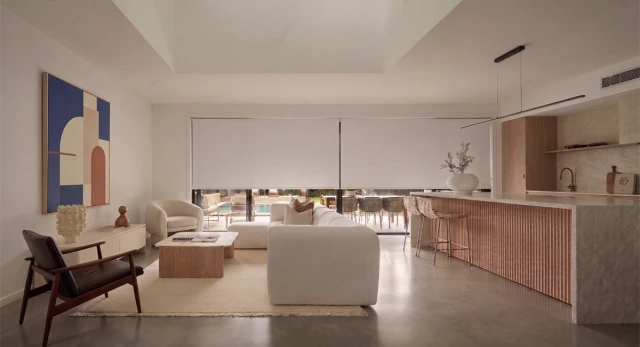
Create Flow in Open-Plan Living
Many living rooms connect to the kitchen and dining area.
In open-plan spaces, consistency matters.
Using similar blind colours or tonal fabrics across adjoining windows can help the whole area feel connected.
This does not mean every fabric must be identical.
You can still create variation.
The key is to keep the overall palette calm and considered.
For example, you might use Aventus White Linen across the living and dining windows, then choose blockout colours that suit each zone.
Or you might keep Bali Ash as the blockout layer across the open-plan area and vary the daytime fabric depending on privacy and glare.
The goal is flow.
Your blinds should help connect the room, not visually break it up.
Add Privacy for Street-Facing Living Rooms
Street-facing living rooms need careful planning.
You may want daylight during the day, but you do not want the room to feel exposed.
A light filtering layer is often a good choice here because it creates a softer privacy effect than sunscreen.
If you still want a daytime outlook, sunscreen can work well, but it is important to understand how it performs.
Sunscreen is designed for daytime use. It helps with glare, UV and daytime views, but it does not provide privacy at night when your lights are on. That is why pairing it with a blockout blind is so important.
At night, when your interior lights are on, the blockout layer becomes your privacy layer.
Lowering the blockout blind helps create stronger privacy and gives the room a more finished evening look.
This is one of the biggest benefits of double roller blinds in living rooms.
You can enjoy openness during the day and privacy when you need it.
Support Year-Round Comfort
Living rooms often have some of the largest windows in the home.
That means they can gain heat in summer and lose warmth in winter.
Double roller blinds can help make the room feel more comfortable across the seasons.
Use the sunscreen layer during hot or bright days to help reduce glare and harsh sunlight.
Use the blockout layer in the evening or cooler months to add another layer at the window.
This can help the room feel more settled without needing heavy window furnishings.
For more advice, read Energy Efficiency with Double Roller Blinds.
Common Mistakes to Avoid
Even beautiful blinds can feel frustrating if the practical details are missed.
Choosing Sunscreen for Night Privacy
Sunscreen is a daytime fabric.
It is excellent for views, glare and UV protection, but it should always be paired with blockout if you need privacy after dark.
Choosing Blockout Only for a Living Room
A blockout blind alone can make a living room feel too closed during the day.
For most living rooms, a sunscreen or light filtering layer paired with blockout gives a better balance.
Ignoring Fit and Clearance
Inside mount and outside mount create different results.
Check window depth, handles, sliding door access, nearby furniture and the path of the blind before ordering.
Forgetting Where the Controls Will Sit
A chain or wand behind a sofa can be annoying to use.
Choose the control side based on your furniture layout and how you move through the room.
Mixing Too Many Colours in One Open-Plan Space
Too many colours can make the room feel busy.
Keep the palette connected, especially when the living room flows into a kitchen or dining area.
Skipping Samples
A fabric sample in your own living room is much more useful than a colour on a screen.
Always test samples before choosing.
Quick Living Room Blinds Checklist
Before choosing double roller blinds for your living room, ask yourself:
- •
Does the room get harsh afternoon sun?
- •
Do I need daytime glare control?
- •
Do I want to keep the outdoor view?
- •
Do I need privacy at night?
- •
Does the room face the street, balcony or neighbours?
- •
Would sunscreen or light filtering suit the daytime layer?
- •
What blockout colour suits the room in the evening?
- •
Is recess fit or face fit better for this window?
- •
Will the blinds sit near furniture or doorways?
- •
Would motorisation make daily use easier?
- •
Have I ordered fabric samples?
- •
Have I measured in millimetres?
- •
Have I checked the installation guide?
These questions help you choose blinds that suit your living room, not just your window size.
Made Easier with iSeekBlinds
Choosing living room blinds can feel overwhelming at first.
There are fabrics, colours, fit options, controls and measurements to consider.
But you do not have to work it all out alone.
iSeekBlinds makes the process simpler with custom-made double roller blinds designed for easy DIY installation.
You can order free roller blind samples to see how colours and textures look in your own light. You can customise your blinds online to suit your window size, mount type, controls and preferred finish. You can also use step-by-step measuring and installation guides before you start.
The blinds are made to your exact measurements and delivered Australia-wide, ready to install.
That means you can create a made-to-measure living room look without relying on the traditional showroom process.
Use the install roller blinds guide when your blinds arrive so you can achieve a clean, confident finish.
You’ve got this — and our team is here to support you along the way.
Final Thoughts
When styled well, double roller blinds do more than cover a living room window.
They help shape the whole room.
They soften harsh light during the day. They add privacy at night. They support comfort, style and everyday flexibility in one clean system.
The key is to choose with intention.
Think about how your living room is used.
Think about the light, the view, the furniture layout and the privacy you need after dark.
Then choose fabrics, colours and controls that work with your home, not against it.
With iSeekBlinds, you can build a living room window solution that feels calm, practical and beautifully finished from morning to night.
Ready to transform your living room? Explore iSeekBlinds double roller blinds , order your free roller blind samples, and use our simple measure roller blinds and install roller blinds guides to create a custom-made look with confidence.
FAQs about Double Roller Blinds
They are especially useful in spaces that need to shift between natural light, glare control, privacy and evening comfort.
Light filtering and blockout is better if the room is street-facing, close to neighbours or needs more softness during the day.
Light colours can make a living room feel brighter and more open. Dark colours can add contrast and work well with black frames, darker furniture or modern interiors.
The best choice is the one that works with your flooring, walls, window frames, furniture and natural light.
Using similar colours or tonal fabrics can help the whole area feel connected.
It also makes it easier to adjust your blinds throughout the day, especially when light, heat and privacy needs change often.
'%3e%3cline%20id='Line_28'%20data-name='Line%2028'%20y2='200'%20transform='translate(1580.5%205493.46)'%20fill='none'%20stroke='%23f7941d'%20stroke-width='5'/%3e%3cg%20id='Ellipse_50'%20data-name='Ellipse%2050'%20transform='translate(1559%205665.46)'%20fill='%23171717'%20stroke='%23f7941d'%20stroke-width='5'%3e%3ccircle%20cx='21.5'%20cy='21.5'%20r='21.5'%20stroke='none'/%3e%3ccircle%20cx='21.5'%20cy='21.5'%20r='19'%20fill='none'/%3e%3c/g%3e%3c/g%3e%3c/svg%3e)