'%3e%3ccircle%20id='Ellipse_59'%20data-name='Ellipse%2059'%20cx='3'%20cy='3'%20r='3'%20transform='translate(11%208.786)'%20fill='none'%20stroke='%23f7941d'%20stroke-linecap='round'%20stroke-linejoin='round'%20stroke-width='2'/%3e%3cpath%20id='Path_82'%20data-name='Path%2082'%20d='M14,2A10,10,0,0,0,4,12a8.048,8.048,0,0,0,1.875,5.625L14,27l8.125-9.375A8.048,8.048,0,0,0,24,12,10,10,0,0,0,14,2'%20transform='translate(0%200)'%20fill='none'%20stroke='%23f7941d'%20stroke-linecap='round'%20stroke-linejoin='round'%20stroke-width='2'/%3e%3c/g%3e%3c/svg%3e)


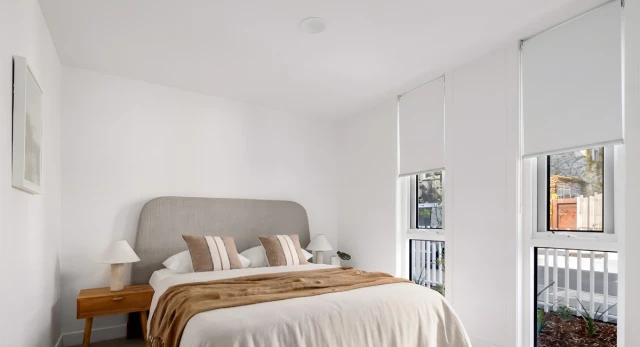
How to choose a colour that feels current, calm and right for your room
Fresh roller blind colour trends are leaning warmer, softer and more natural. The goal is not to chase a short-lived look—it is to choose a colour that suits your light, your finishes and the way you use the room.
Because a roller blind covers a large flat area, its colour becomes part of the room’s palette. A well-chosen shade can make the window feel finished and connected; the wrong undertone can make an otherwise calm room feel slightly off.
The good news? Current Australian palettes are easy to live with: warm whites, linen neutrals, stone, soft grey, earthy browns, muted greens, blue-greys and considered dark accents.
Roller blind colour trends for Australian homes
1. Warm whites
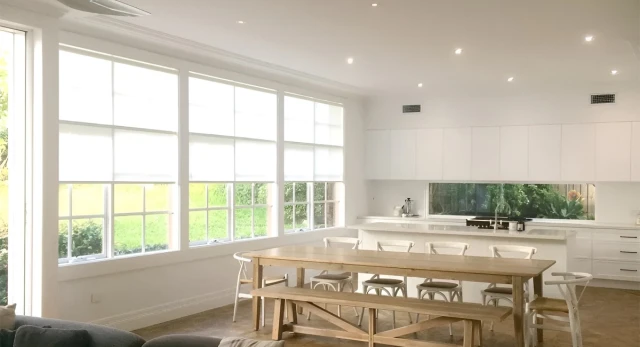
White is still a favourite, but softer whites are replacing stark, blue-based tones. Warm white works beautifully with oak, cream, beige, limestone and relaxed coastal styling. It keeps the window light without making the room feel clinical.
If your walls are white, do not assume every white will match. Compare the blind’s undertone with the paint, window frame and flooring. When ordering custom Roller Blinds , check samples in the actual room before you decide.
2. Linen, stone and natural neutrals
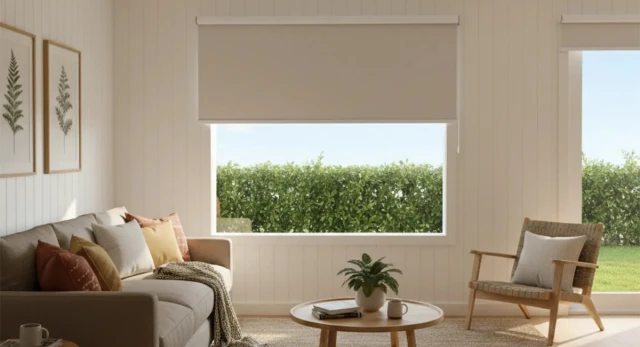
Linen, oatmeal, sand, mushroom and soft taupe bring warmth without demanding attention. They suit open-plan homes, renovated spaces and rooms with timber, stone, rattan or textured fabrics.
These tones are especially useful when a mostly white or grey room needs a little softness. In shared living areas, Light Filter Roller Blinds can diffuse daylight and create a gentle glow while the neutral colour keeps the window relaxed.
3. Soft, warm greys
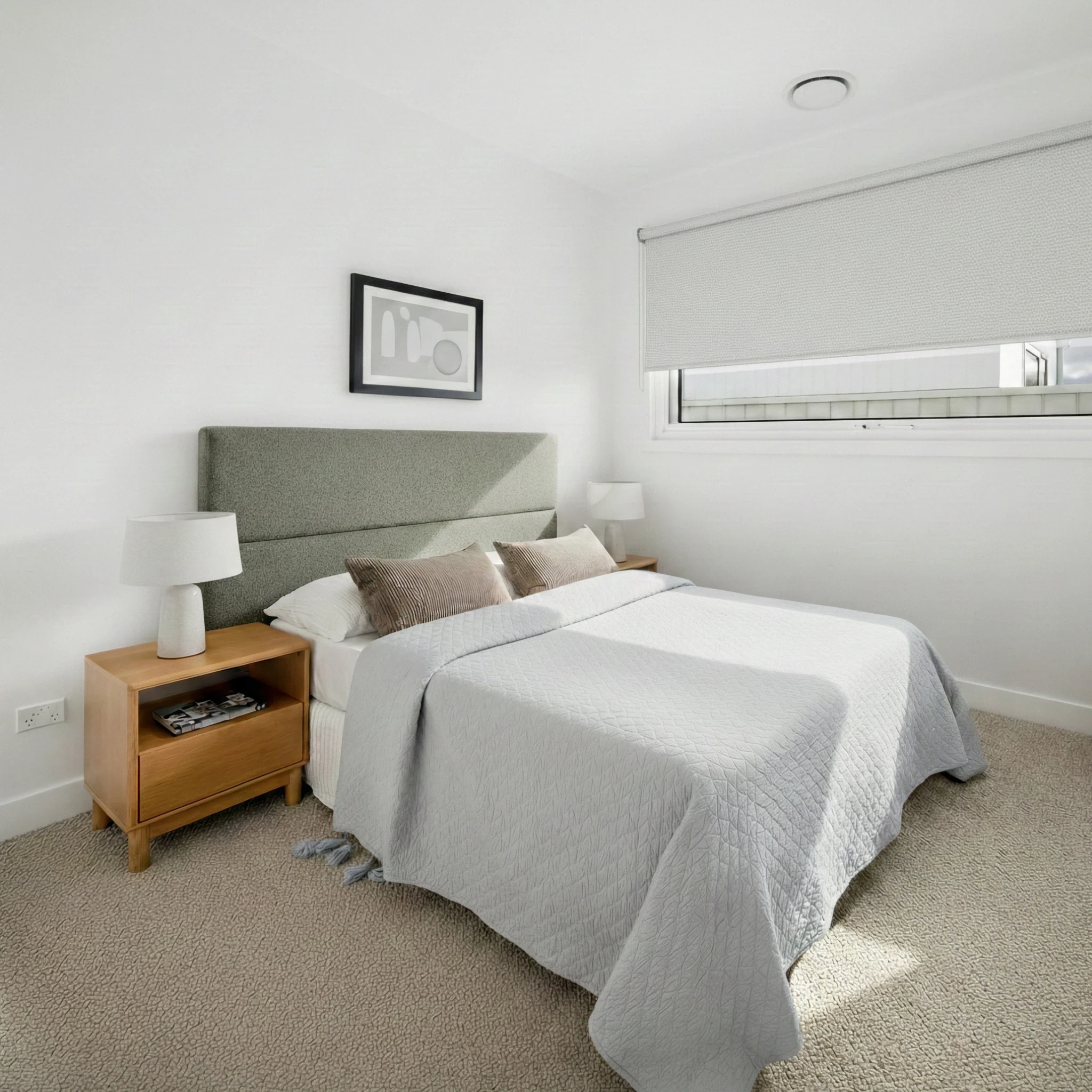
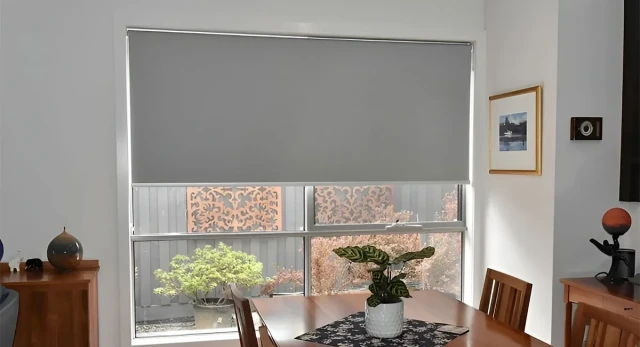
Grey has not disappeared; it has simply become warmer and more nuanced. Look for soft greys with stone or greige undertones rather than cold blue-grey. They pair neatly with concrete, black accents, pale timber and contemporary cabinetry.
If the room already contains several grey finishes, bring in timber, linen or warm lighting so the space still feels welcoming.
4. Earthy browns
Clay, caramel, warm stone and muted brown can ground a room and add depth. They work well with oak or walnut furniture, cream upholstery, terracotta accents and indoor plants.
For a sun-filled living area, an earthy tone in Sunscreen Roller Blinds can reduce glare and UV while helping you retain the daytime view. For more room ideas, see 5 Ways Roller Blinds Can Transform Your Living Room.
5. Muted greens
Sage, eucalyptus, olive-grey and dusty green connect naturally with Australian gardens and landscapes. Used softly, green feels calm rather than themed and sits comfortably with warm whites, timber, stone and linen.
This palette can be especially effective in bedrooms, home offices and garden-facing living spaces. Choose a greyed or muted version for a finish that is easier to style over time.
6. Blue-grey and softened blues
Mist blue, pale denim and blue-grey suit coastal homes and restful rooms without relying on obvious nautical styling. They can visually cool a bright, warm space and work well with white, light stone and natural timber.
In bedrooms, begin with function. Blockout Roller Blinds stop light passing through the fabric and provide strong privacy when lowered, although small gaps around the blind can still let light into the room. See Best Roller Blinds for Bedrooms in Australia for more guidance.
7. Charcoal and dark neutrals
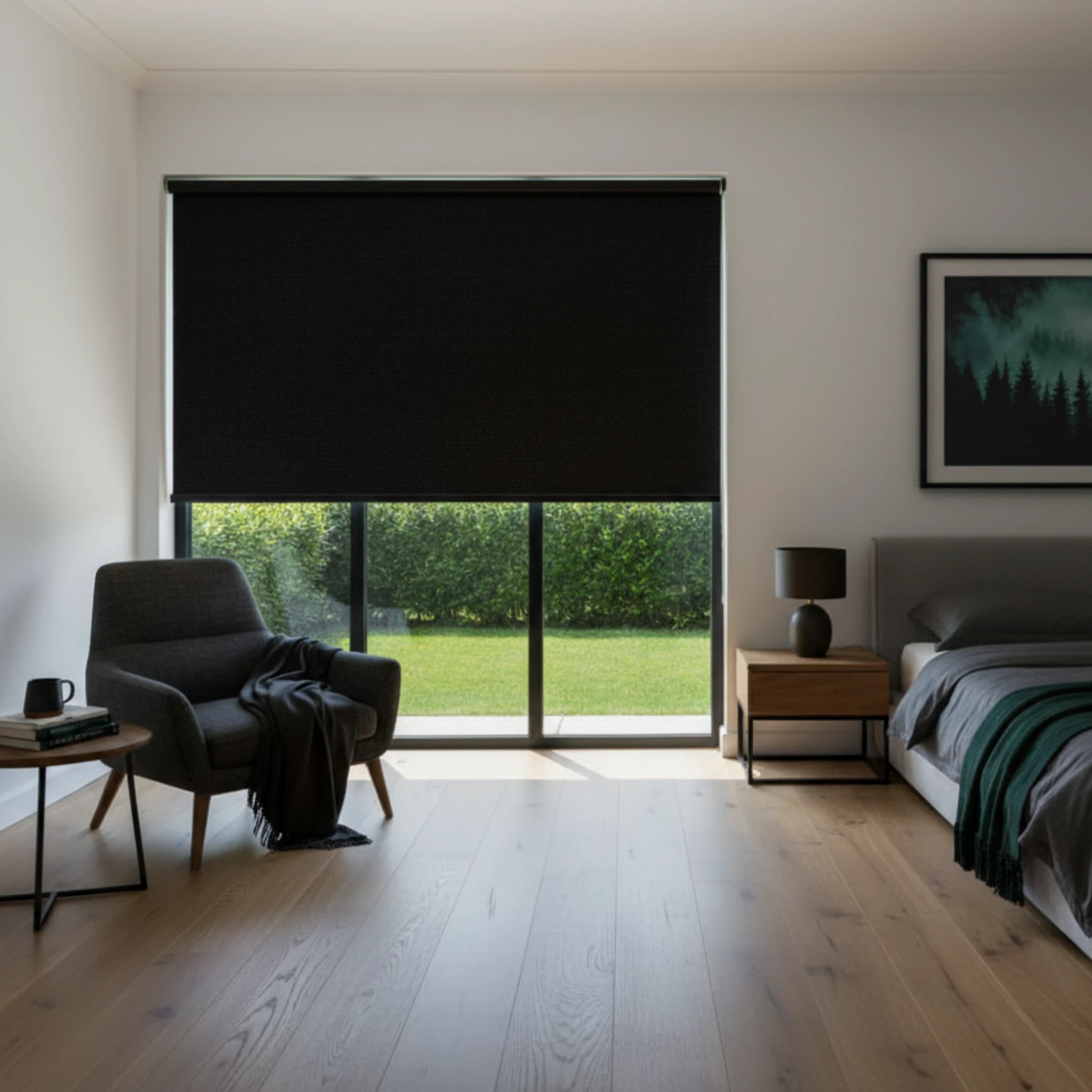
Charcoal, deep grey and dark neutral fabrics can frame a view or connect with black window frames and hardware. They work best when the contrast is intentional—often in media rooms, offices or strong contemporary schemes.
On a large window, a dark fabric will have plenty of visual weight. Test a generous sample and view it from across the room before committing.
Choose the function before the colour
A great colour cannot compensate for the wrong fabric. Start with what the room needs, then choose the shade within that fabric range.
- •
Sunscreen fabric reduces glare and UV and retains daytime outlook. It does not provide reliable privacy after dark.
- •
Light filter fabric softens daylight and gives excellent daytime privacy, but privacy may reduce at night when lights are on inside.
- •
Blockout fabric stops light through the material and gives strong night-time privacy. Edge gaps mean it should be described as room darkening rather than total blackout.
If you need different performance during the day and at night, Double Roller Blinds combine two blinds on one bracket. A sunscreen or light filter layer can handle daytime light, while a blockout layer provides night-time coverage.
For a full comparison of fabrics, rooms and configurations, read the Complete Guide to Roller Blinds in Australian Homes.
Let privacy guide the palette
Colour affects the mood of a room, but fabric construction and lighting determine privacy. A pale sunscreen can feel open and bright during the day, yet it will not screen the interior reliably once the lights are on at night.
For bedrooms, street-facing rooms and homes close to neighbours, decide what you need after dark before selecting a colour. The guide Are Roller Blinds Good for Privacy?explains the differences.
Colour for large windows and open-plan spaces
A colour that looks subtle on a small sample can feel much stronger across a sliding door or wall of glass. Soft neutrals are a dependable choice because they create a calm backdrop and connect adjacent zones.
For wide openings, Linked Roller Blinds allow separate blinds to sit neatly side by side, so you can shade one area while keeping another open. Motorised Roller Blinds can make large, high or frequently used blinds easier to operate and remove hanging chains from the finish.
How to choose with confidence
- •
Collect the room’s fixed colours: walls, floors, tiles, cabinetry and window frames.
- •
Choose the fabric function that suits the room.
- •
Decide whether the blind should blend in or provide contrast.
- •
View samples in morning, afternoon and evening light.
- •
Step back and imagine the colour across the full window, not just the sample.
- •
Check the reverse side of the fabric if it may be visible from outside.
Once the fabric and colour are settled, follow the Measure Roller Blinds guide for the right fit, then review Install Roller Blinds before installation. The article Top Mistakes to Avoid When Buying Roller Blinds is a handy final check before you order.
The short version
The freshest roller blind colours for Australian homes are warm, natural and easy to live with. Warm white, linen, stone, soft grey, earthy brown, muted green and blue-grey all have staying power when they suit the room’s existing undertones.
Start with function, test real samples and choose a colour that feels good in your light. Then create a calm, practical finish with custom roller blinds.
FAQs
'%3e%3cline%20id='Line_28'%20data-name='Line%2028'%20y2='200'%20transform='translate(1580.5%205493.46)'%20fill='none'%20stroke='%23f7941d'%20stroke-width='5'/%3e%3cg%20id='Ellipse_50'%20data-name='Ellipse%2050'%20transform='translate(1559%205665.46)'%20fill='%23171717'%20stroke='%23f7941d'%20stroke-width='5'%3e%3ccircle%20cx='21.5'%20cy='21.5'%20r='21.5'%20stroke='none'/%3e%3ccircle%20cx='21.5'%20cy='21.5'%20r='19'%20fill='none'/%3e%3c/g%3e%3c/g%3e%3c/svg%3e)