Plantation shutter blade size affects the view, the amount of daylight between open louvres and the number of horizontal lines across a window. With iSeekBlinds, the choice is straightforward because the current PVC plantation shutter range uses a fixed 89 mm blade. The shutter is then customised through its panel layout, frame, mounting position, mid rail, split tilt and overall dimensions. This guide explains why the 89 mm profile suits a wide range of Australian windows and which design decisions matter most.
What Is a Plantation Shutter Blade
The horizontal moving sections of a plantation shutter are often called:
- •
Blades
- •
Louvres
- •
Slats
These terms all describe the adjustable horizontal sections within each shutter panel.
The blades sit inside the shutter panel and tilt together to control:
- •
Natural light
- •
Privacy
- •
Airflow
- •
Glare
- •
Direct views into the room
Unlike a roller blind, which moves up and down as one piece of fabric, plantation shutters give you directional control.
You can leave the shutters covering the window while changing the blade angle throughout the day.
This is one of the biggest practical benefits of Plantation Shutters .
What Blade Size Does iSeekBlinds Use
The current iSeekBlinds plantation shutter range uses an 89 mm blade .
The blades are PVC and reinforced with an aluminium core for additional strength and stability.
That means you do not need to choose between:
- •
63 mm
- •
89 mm
- •
114 mm
- •
Other common blade sizes you may see when researching plantation shutters elsewhere
Because the blade width is fixed, customers can focus on the layout and mounting details that determine how the shutter will fit and operate.
The 89 mm profile provides a clean balance between:
- •
Visibility
- •
Light control
- •
Privacy
- •
Shutter proportions
- •
Modern styling
- •
Practical everyday use
The rest of the shutter is then custom designed around your actual window.
Why 89 mm Works Well in Australian Homes
An 89 mm blade is large enough to create a clean plantation shutter appearance without making most standard residential windows feel overcrowded.
When open, fewer horizontal blades are needed compared with a smaller blade system.
That can help the shutter feel less visually busy.
When closed, the blades overlap to provide strong privacy and light control.
The proportions also work well across a wide range of Australian interiors.
They suit:
- •
Modern homes
- •
Coastal interiors
- •
Hamptons-style homes
- •
Contemporary renovations
- •
Apartments
- •
Townhouses
- •
Classic family homes
For more styling guidance, see Shutter Styles That Suit Aussie Homes .
Blade Size Is Only One Part of the Design
Blade size is only one part of a successful plantation shutter design.
For the finished iSeekBlinds shutter, several other decisions will usually have a greater impact.
These include:
- •
Number of shutter panels
- •
Panel width
- •
Frame type
- •
Inside or outside mount
- •
Mid rail position
- •
T-post position
- •
Split tilt configuration
- •
Window handles and locks
- •
Window mullions
- •
Overall window dimensions
The same 89 mm blade can therefore work across small and large windows when the panel layout and structure are planned correctly.
The panel layout changes around the window. The blade size remains the same.
Small Windows
A small window does not require a smaller blade.
A smaller blade would introduce more horizontal lines and could make a compact opening appear busier.
The current iSeekBlinds 89 mm blade keeps the number of horizontal lines relatively controlled.
This can work particularly well in:
- •
Small bathroom windows
- •
Ensuite windows
- •
Kitchen windows
- •
Narrow bedroom windows
- •
Laundry windows
- •
Small street-facing windows
For smaller openings, panel layout, mounting position and frame choice have more influence than blade width.
iSeekBlinds also offers Direct Mount for certain narrow openings where using a larger surrounding frame could reduce too much visible glass area.
Medium-Sized Windows
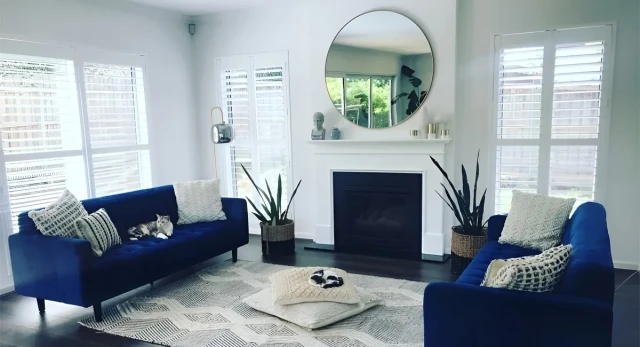
Medium residential windows are where the 89 mm blade feels particularly natural.
The proportions are large enough to create the classic plantation shutter appearance without making the shutter feel heavy.
These windows may include:
- •
Standard bedroom windows
- •
Living room windows
- •
Dining room windows
- •
Home-office windows
- •
Street-facing front windows
On these windows, the biggest visual decision is often panel layout.
Should the window have two panels?
Four panels?
A T-post?
A mid rail?
The best layout should follow the structure of the existing window.
Large Windows
Large windows also use the fixed 89 mm blade. Instead, the shutter is divided into suitable panels.
The current iSeekBlinds range supports plantation shutter configurations up to approximately 5,700 mm wide depending on the selected panel layout, with maximum drops around 2,400 mm.
For larger openings, the important decisions become:
- •
Number of panels
- •
Panel widths
- •
T-post locations
- •
Mid rails
- •
How the panels will open
- •
How the layout follows window mullions
This is why iSeekBlinds recommends the principle:
Less is more.
Where practical, fewer panels create a cleaner appearance and reduce the number of vertical lines interrupting the view.
Follow the Window
One of the most useful iSeekBlinds shutter-design rules is to follow the structure of the existing window.
If the window already has vertical mullions, try to align shutter panel joins or T-posts with them.
This helps avoid unnecessary extra lines across the glass. The shutter should feel connected to the architecture. Not randomly divided.
These structural decisions matter more than selecting a different blade size for each window.
For a more detailed DIY overview, see DIY Plantation Shutters: Practical Guide for Australian Homes .
Panel Layout Changes How the Blades Look
The same 89 mm blades can look very different depending on the number of panels around them.
Too many narrow panels can make a window look busy. Wider, well-proportioned panels can create a much cleaner finish.
When planning the layout, consider:
- •
Existing window mullions
- •
Panel opening direction
- •
Furniture
- •
Handles
- •
Locks
- •
Flyscreens
- •
How often panels need to swing open
Do not divide a window simply because it is wide.
Use the iSeekBlinds panel layout guide to choose a configuration that suits the actual opening.
Mid Rails Affect the Visual Proportion Too
A mid rail is a horizontal structural rail across the shutter panel.
A mid rail is generally required once the configured shutter drop exceeds approximately 1,600 mm, although the order configuration should confirm the requirement for the individual shutter.
On shorter shutters, it can be optional depending on the design.
The mid rail can help with:
- •
Structural strength
- •
Light control
- •
Privacy
- •
Visual alignment with the window
For example, if your window already has a horizontal mullion, positioning the mid rail close to that line can make the shutter feel more integrated.
This is another example of why shutter design is not only about blade size.
Split Tilt Gives More Control
The blades are operated through the shutter's tilt system.
On taller panels, the louvres may be divided into separately controlled sections because each tilt rod controls a limited number of blades.
This lets you keep the lower louvres closed for privacy while opening the upper section for daylight.
This can work particularly well in:
- •
Street-facing bedrooms
- •
Bathrooms
- •
Front living rooms
- •
Ground-floor apartments
The order configuration may require split tilt on taller shutters to keep each louvre section within the supported number of blades.
89 mm Blades and Natural Light
One advantage of a wider plantation shutter blade is that fewer blades are needed across the same height.
When tilted open, this can create a relatively open view between the horizontal sections.
You can adjust the blades depending on the time of day. Open them more when you want daylight. Angle them to reduce direct glare. Tilt them to reduce views from outside. Close them further when privacy becomes more important.
This flexibility is one reason plantation shutters work well in living rooms and street-facing spaces.
For room-by-room ideas, see Best Rooms for Installing Plantation Shutters .
Privacy and Blade Angle
Blade width does not determine privacy on its own. The angle is just as important.
For a street-facing room, you may be able to tilt the blades so daylight still enters while direct sightlines are reduced.
In a bathroom, the lower blades may stay more closed while the top section allows additional natural light.
At night, the blades can be closed further.
This is different from a fabric blind where privacy usually involves covering the entire window.
For a wider comparison of the two systems, see Plantation Shutters vs Roller Blinds .
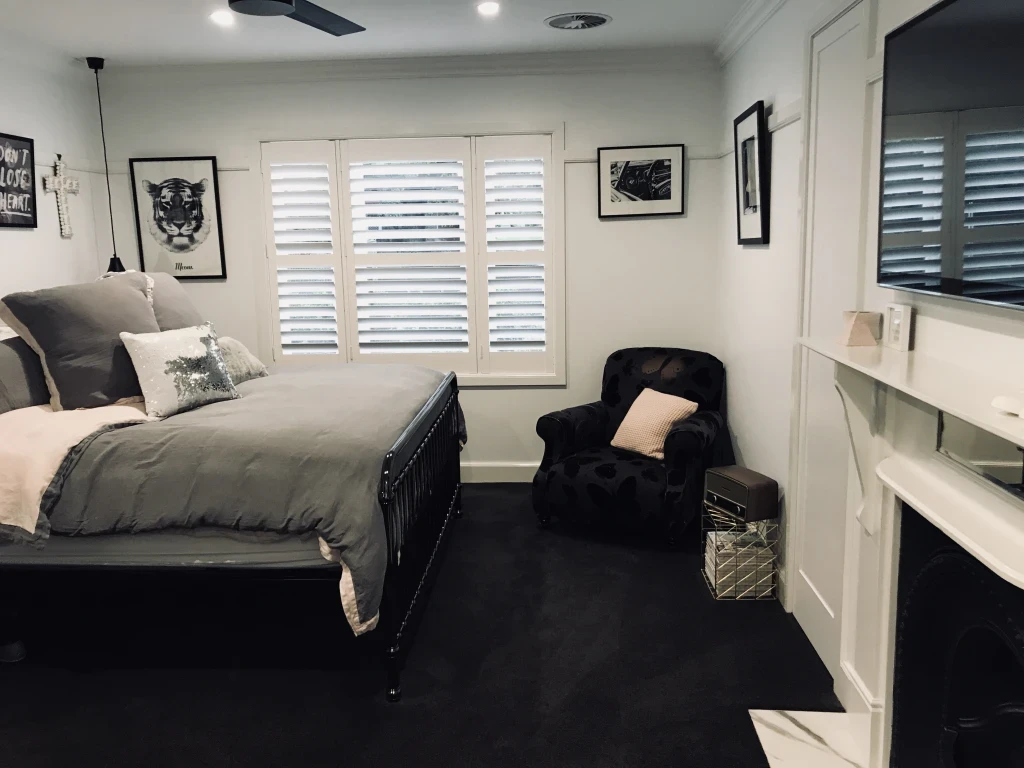
Are 89 mm Blades Good for Bedrooms
Yes.
The 89 mm blades provide adjustable control over:
- •
Morning light
- •
Privacy
- •
Airflow
- •
Direct views
The clean horizontal lines also suit both modern and classic bedroom interiors.
Plantation shutters provide strong, adjustable light control but are not a complete room blackout product.
Small amounts of light can still enter around:
- •
Blades
- •
Panels
- •
Frames
- •
Operational gaps
If a very dark sleeping environment is important, another blockout layer may be required.
For softer bedroom styling, shutters can also be combined with curtains.
See Mixing Shutters with Curtains.
Are 89 mm Blades Good for Bathrooms
Yes.
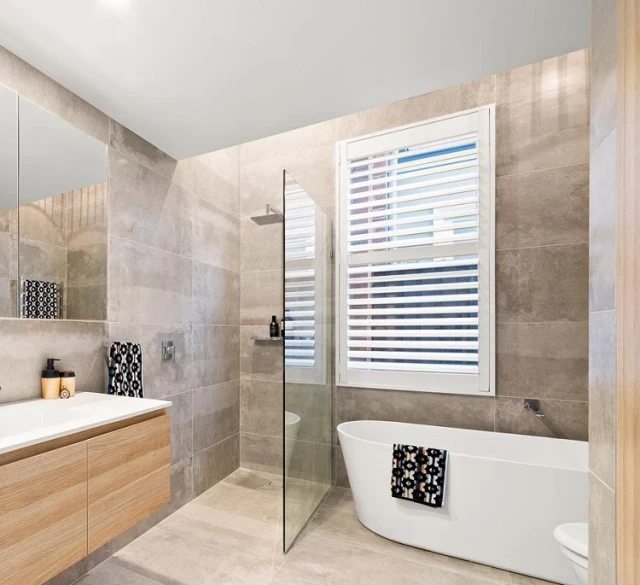
The 89 mm louvres can be angled to reduce direct sightlines while allowing daylight into the bathroom.
The current shutters use moisture-resistant PVC with an aluminium core, making them well suited to bathrooms, kitchens and laundries.
You can keep lower blades more closed and adjust the upper section for light where the selected shutter configuration allows it.
For bathrooms, practical design matters more than choosing a smaller blade.
Are 89 mm Blades Good for Modern Interiors
The 89 mm blade works particularly well with modern and minimalist interiors.
Larger horizontal lines create a cleaner visual rhythm than a shutter filled with many narrow blades.
Combined with a simple white finish and appropriate panel layout, the result can feel architectural rather than decorative.
For more inspiration, see Shutters in Modern Minimalist Interiors .
Hamptons and Coastal Homes
The same 89 mm blade also works well in more traditional Hamptons and coastal interiors.
The difference comes from the surrounding room rather than changing the blade size.
Pair shutters with:
- •
Light walls
- •
Timber
- •
Linen
- •
Soft blue or grey accents
- •
Natural textures
- •
White cabinetry
- •
Stone finishes
Plantation shutters already create the strong architectural lines associated with these interiors.
This versatility is one reason Plantation Shutters Remain Timeless .
Choosing the Right White
Once the blade size is fixed, colour becomes another important visual decision.
The current iSeekBlinds plantation shutter range includes:
- •
Cool White
- •
Warm White
- •
Neutral White
Cool White works well with:
- •
Crisp whites
- •
Cooler greys
- •
Black accents
- •
Modern cabinetry
Warm White suits:
- •
Timber
- •
Cream
- •
Beige
- •
Warmer coastal interiors
Neutral White sits comfortably between warm and cool palettes.
Order Plantation Shutter Samples before making the final decision.
The colour will affect the finished shutter far more than trying to change an already well-proportioned 89 mm blade.
Inside Mount and Blade Clearance
Blade size also influences how much window recess depth you need.
For an inside-mounted iSeekBlinds shutter, the current measuring guidance recommends at least approximately 65 mm of clear recess depth.
You also need to check:
- •
Handles
- •
Locks
- •
Winders
- •
Flyscreens
- •
Security fittings
The blade needs enough room to tilt without hitting these obstructions.
This is a much more important measurement than wondering whether a smaller blade would solve the problem.
If there is not enough depth, another mounting or frame configuration may work better.
Outside Mount for Shallow Recesses
If the window does not have enough recess depth, an outside-mounted shutter may be more suitable.
The current iSeekBlinds outside mount uses an Outside Mount L Frame.
This allows the shutter to sit over the window opening rather than being contained inside a shallow recess.
Outside mount can also suit:
- •
Uneven openings
- •
Double-hung windows
- •
Windows with difficult internal obstructions
- •
Situations where inside mount is not practical
Again, the problem is solved through frame and mounting design rather than changing the 89 mm blade.
Frame Choice Matters
The current iSeekBlinds range includes frame approaches such as:
- •
L Frame
- •
Z Frame
- •
U Channel
- •
Direct Mount
- •
Outside Mount L Frame
Each suits different installation conditions. An inside L Frame is the common recess-fit solution.
A Z Frame overlaps the edge of the recess, helping create a neat finish around the opening.
Direct Mount can suit narrow openings where a full frame would reduce too much usable space.
U Channel suits specific fixed-panel applications.
For the full product and installation overview, see the Complete Guide to PVC Plantation Shutters .
Measure Before Thinking About Style
Before ordering, use the Plantation Shutter Measuring Guide .
Measure in millimetres. Check width in multiple places. Check drop in multiple places. Use the required smallest measurement where instructed.
Then check:
- •
Recess depth
- •
Handles
- •
Locks
- •
Window mullions
- •
Flyscreens
- •
Panel layout
- •
Mid rail position
- •
T-post location
Every shutter is custom made to the measurements and options entered at the time of ordering.
Good proportions start with accurate measurements.
DIY Installation
iSeekBlinds plantation shutters are designed for DIY installation.
The shutter panels arrive pre-assembled, while relevant frame components are assembled and fitted during installation.
Use the Plantation Shutter Installation Guide before starting.
Take your time. Make sure the frame is square. Check panel alignment. Then test the blades through their full range of movement.
An 89 mm blade will only operate properly if the shutter itself has been measured and installed correctly.
Common Blade-Size Mistakes
Looking for a Smaller iSeekBlinds Blade for Small Windows
The current iSeekBlinds range uses 89 mm blades.
For smaller windows, adjust frame and panel layout rather than trying to select another blade size.
Assuming Large Windows Need Larger Blades
Large windows usually need a different panel arrangement, not a different blade.
Ignoring Recess Depth
The blade needs enough room to tilt.
Check the full 65 mm minimum recess depth guidance and all obstructions before choosing inside mount.
Adding Too Many Panels
Too many vertical divisions can make a window look more crowded than the horizontal blades themselves.
Follow the window and use fewer panels where practical.
Ignoring Mid Rails
Tall shutters may require a mid rail according to the configured drop and layout.
Plan it around the existing window structure where possible.
Choosing Colour from a Screen
Blade size is fixed. Colour is not.
Use physical samples before selecting Cool White, Warm White or Neutral White.
Quick Plantation Shutter Design Checklist
Before ordering, ask:
- •
Am I comfortable with the current 89 mm blade?
- •
What is my window width and drop?
- •
Is the recess at least 65 mm deep for inside mount?
- •
Are there handles, locks or winders?
- •
How many shutter panels should the window have?
- •
Does the panel layout follow the window mullions?
- •
Do I need T-posts?
- •
Is a mid rail required?
- •
Would split tilt improve privacy?
- •
Which frame suits the window?
- •
Should I use inside or outside mount?
- •
Which white works best with the room?
- •
Have I ordered samples?
- •
Have I followed the measuring guide?
These decisions have a much greater impact on the finished result than trying to choose between several blade sizes.
Final Thoughts
Choosing a plantation shutter louvre size may appear complicated when comparing different suppliers.
With iSeekBlinds, it is not.
The current PVC plantation shutter range uses a fixed 89 mm blade.
That size has been chosen to provide a clean balance between:
- •
Light
- •
Privacy
- •
View
- •
Proportion
- •
Modern styling
- •
Everyday practicality
Small windows can use the same 89 mm louvre when the frame and panel layout suit the opening.
Large windows use additional panels, T-posts and other structural options rather than a larger blade.
Instead, customise the shutter around the window. Choose the right number of panels. Follow existing mullions. Use T-posts where required. Add a mid rail when needed. Choose the appropriate frame. Check the recess depth. Plan the tilt sections. Then select the right white for the room.
That is what makes a plantation shutter look properly designed.
For the broader product overview, read the Complete Guide to PVC Plantation Shutters .
For style advice, use Shutter Styles That Suit Aussie Homes .
For room selection, see Best Rooms for Installing Plantation Shutters .
And when you are ready to order, use the iSeekBlinds measuring and installation guides to make sure the 89 mm shutter is designed correctly around your actual window.
The blade size is fixed at 89 mm. The finished shutter is still completely custom to your home.
FAQs