'%3e%3ccircle%20id='Ellipse_59'%20data-name='Ellipse%2059'%20cx='3'%20cy='3'%20r='3'%20transform='translate(11%208.786)'%20fill='none'%20stroke='%23f7941d'%20stroke-linecap='round'%20stroke-linejoin='round'%20stroke-width='2'/%3e%3cpath%20id='Path_82'%20data-name='Path%2082'%20d='M14,2A10,10,0,0,0,4,12a8.048,8.048,0,0,0,1.875,5.625L14,27l8.125-9.375A8.048,8.048,0,0,0,24,12,10,10,0,0,0,14,2'%20transform='translate(0%200)'%20fill='none'%20stroke='%23f7941d'%20stroke-linecap='round'%20stroke-linejoin='round'%20stroke-width='2'/%3e%3c/g%3e%3c/svg%3e)


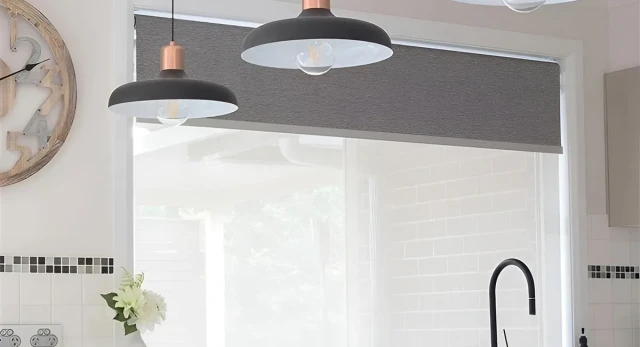
A practical Australian guide to choosing double roller blinds for light, privacy, comfort and everyday control
Some rooms need a window furnishing that can manage soft morning light, afternoon glare, night-time privacy and bedroom darkness without adding visual bulk. That is why double roller blinds are such a practical choice for Australian homes. Instead of asking one blind to do everything, double roller blinds give you two fabric layers in one streamlined system. One layer can help during the day. The other can give stronger coverage when privacy or darkness matters. That makes them useful in bedrooms, living rooms, home offices, apartments, sliding door areas and open-plan spaces where light and privacy needs change throughout the day. The finished system is streamlined, flexible and easy to live with. The key is choosing the right fabric combination, mounting style and control option for the room.
A well-planned double roller blind gives the room genuinely useful day-to-night control.
1. What Are Double Roller Blinds?
Double roller blinds combine two separate roller blinds on one bracket. The back blind sits closest to the glass. This layer is usually a sunscreen or light filtering fabric. It helps soften daylight, reduce glare and keep the room feeling bright during the day. The front blind is usually a blockout fabric. This layer provides stronger privacy, room darkening and light control when needed. Custom Double Roller Blinds are designed for rooms where one fabric is not enough. During the day, you may want light without glare. At night, you may want privacy. In a bedroom, you may want darkness for sleep. In a living room, you may want daytime comfort and evening coverage. Double roller blinds make that easier because each layer has a different purpose.
Each layer has a clear role, contained within one clean window setup.
2. Why Double Roller Blinds Are Called Day and Night Blinds
Double roller blinds are often called day and night blinds because they adapt to different times of day. During the day, the sunscreen or light-filtering layer can soften sunlight and help the room feel more comfortable. At night, the blockout layer can be lowered for privacy and stronger coverage. This is especially useful in Australian homes where sunlight, heat, privacy and room use can change quickly. A living room may be bright and open during the morning. Glary by mid-afternoon. Private and cosy by evening. A bedroom may need soft light during the day but darkness at night. A home office may need glare control during work hours. Double roller blinds suit this rhythm because they give you more control than a single roller blind. You are not stuck with one level of coverage.
You can adjust the room as the day changes.
3. The Day Layer: Sunscreen or Light Filtering Fabric
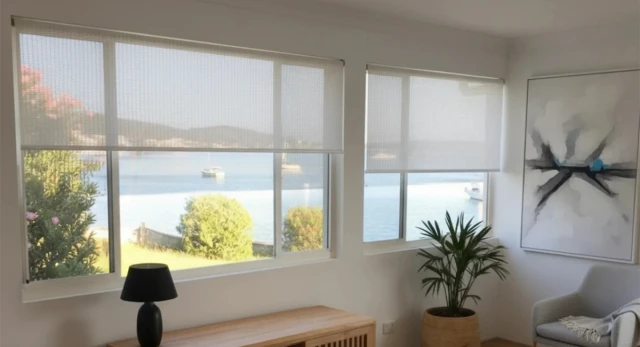
The daytime layer is usually sunscreen or light filtering fabric. Both options help keep the room bright, but they work differently. Sunscreen Roller Blinds are useful where you want to reduce heat, glare and UV exposure while keeping some daytime view to outside. They suit living rooms, home offices, open-plan spaces, kitchens and sliding doors. Light Filter Roller Blinds are useful where you want soft daylight and gentle privacy without needing a view through the fabric. They suit living rooms, dining areas, bedrooms and shared family spaces. The right day layer depends on the room. Choose sunscreen fabric if the room needs glare control and outlook. Choose light filtering fabric if the room needs softness and a gentler feel.
Neither daytime fabric should be treated as the complete privacy solution after dark; its main role is to manage daylight, glare and daytime comfort.
4. The Night Layer: Blockout Fabric
The night layer is usually blockout fabric. Blockout Roller Blinds are designed for stronger privacy, room darkening and light control when lowered. This is the layer that matters most at night. It is also useful in bedrooms, nurseries, guest rooms, media rooms and street-facing rooms where privacy or darkness is important. Blockout fabric can help:
- •
Create stronger night-time privacy
- •
Reduce morning light
- •
Support sleep
- •
Make media rooms darker
- •
Give living rooms evening coverage
- •
Add an extra fabric barrier at the window
In a double roller blind setup, the blockout layer does not need to be down all day. That is the benefit. Use the daytime layer when the room needs light. Use the blockout layer when the room needs privacy, darkness or stronger coverage.
5. Why Double Roller Blinds Are Better Than One Blind in Many Rooms
A single roller blind can work well when the room has one clear need. But many rooms need more flexibility. A sunscreen blind can help with glare and views during the day, but it is not a full night-time privacy solution. A blockout blind can give privacy and darkness, but it may make the room feel too dark if it stays down all day. A light filtering blind can soften daylight, but it may not provide the strongest coverage after dark. Double roller blinds solve this by combining two functions. You can balance daylight control with night-time privacy, and choose between outlook, softness and stronger room darkening as conditions change. This makes them especially useful for:
- •
Bedrooms
- •
Living rooms
- •
Home offices
- •
Apartments
- •
Townhouses
- •
Street-facing rooms
- •
Sliding doors
- •
Large windows
- •
Open-plan spaces
For a broader comparison of value, read Are Double Roller Blinds Worth It? Pros, Cons and Buying Guide.
6. Double Roller Blinds for Bedrooms
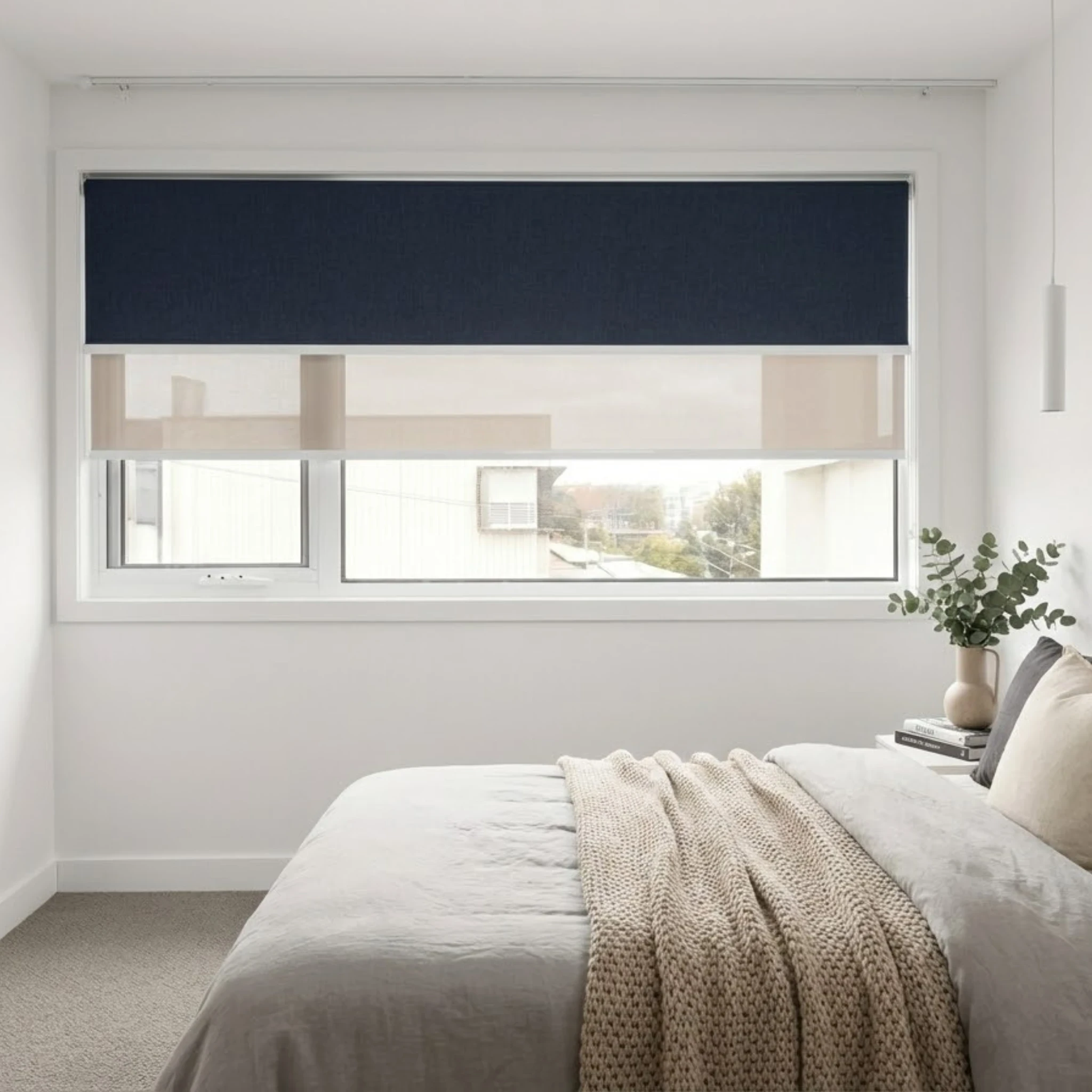
Bedrooms are one of the best places to use double roller blinds. A bedroom needs privacy at night, but it does not always need to feel dark during the day. The daytime layer can soften light and make the room feel more comfortable. The blockout layer can support sleep, privacy and stronger light control. This works well in:
- •
Main bedrooms
- •
Kids' bedrooms
- •
Nurseries
- •
Guest bedrooms
- •
Street-facing bedrooms
- •
Bedrooms with large windows
- •
Bedrooms that receive early morning sun
A double roller blind can also make the room easier to use across the day. Use the lighter layer in the morning. Use the blockout layer at night. Keep the room practical without adding heavy fabric. For bedroom-specific advice, read Best Roller Blinds for Bedrooms in Australia. A bedroom blind should not only look clean. It should help the room feel restful.
7. Double Roller Blinds for Living Rooms
Living rooms often need the most flexibility. They are used in the morning, afternoon and evening. They may need natural light during the day, glare control for TV, privacy at night and a clean finish that suits the rest of the home. Double roller blinds work well because they let the living room change with the day. The sunscreen or light-filtering layer can reduce or soften glare without making the room unnecessarily dark. The blockout layer can provide stronger coverage when privacy or TV glare matters. This is useful for:
- •
Open-plan living areas
- •
Street-facing living rooms
- •
Rooms with large windows
- •
Sliding doors
- •
Homes with afternoon sun
- •
Family rooms
- •
Media-style living spaces
For room styling ideas, read Styling Double Roller Blinds in Living Rooms. A living room should feel bright when you want it. Private when you need it. Comfortable all day.
8. Double Roller Blinds for Apartments and Small Spaces
Apartments and smaller homes often need smart window furnishings. Large glass can make a compact home feel bright and open, but it can also create privacy and glare issues. Double roller blinds suit apartments because they give flexibility without adding bulk. They sit neatly at the window and do not take up floor space. When raised, they keep the room open. When lowered, they give practical control over light and privacy. This can be useful for:
- •
Apartment living rooms
- •
Balcony doors
- •
Small bedrooms
- •
Townhouses
- •
Compact home offices
- •
Street-facing windows
- •
Windows facing nearby buildings
The daytime layer can help keep the room bright. The blockout layer can give privacy after dark. For more apartment guidance, read Double Roller Blinds for Apartments and Small Spaces. Small spaces need window furnishings that work hard without looking heavy. Double roller blinds do that well.
9. Double Roller Blinds for Home Offices
A home office needs good light control. Too much sunlight can cause glare across screens. Too little light can make the room feel dull. Double roller blinds are useful because they allow the room to stay bright without becoming uncomfortable. A sunscreen layer can reduce glare while keeping some outdoor view. A light filtering layer can soften daylight if view is less important. The blockout layer can be used when stronger coverage is needed, such as for video calls, late work or privacy. This makes double roller blinds useful in:
- •
Dedicated home offices
- •
Study nooks
- •
Apartment workspaces
- •
Open-plan work zones
- •
Rooms with afternoon sun
- •
Rooms with street-facing windows
The goal is not to block the light all day. The goal is to control it. Double roller blinds give you that control.
10. Double Roller Blinds for Sliding Doors
Sliding doors are common in Australian homes. They connect living rooms, bedrooms and dining spaces to patios, balconies, decks and outdoor areas. But they can also bring in glare, heat and privacy issues. Double roller blinds can work well on sliding doors because they provide two layers without taking up floor space like curtains. During the day, the sunscreen or light filtering layer can soften the glass and reduce glare. At night, the blockout layer can provide privacy and stronger coverage. For wide doors, you may also need to think about how the blinds are split or controlled. The blind should not make the door harder to use. It should make the room more comfortable.
For larger openings, Linked Roller Blinds may be worth considering where multiple blinds need to sit neatly across a wide span.
11. Double Roller Blinds and Energy Efficiency
Double roller blinds can support a more comfortable home because they let you use the right layer at the right time. The daytime layer can help manage harsh sun, glare and heat. The blockout layer can add strong privacy, room darkening and another fabric barrier at the glass when needed. This is not a substitute for efficient glazing, insulation, heating or cooling, but thoughtful use of each layer can support a more comfortable room. In summer, the daytime layer can reduce harsh sunlight before the room heats up. In winter, the blockout layer can help the window feel more covered at night. In home offices, the daytime layer can reduce glare without forcing the room into darkness. For a more detailed guide, read Energy Efficiency with Double Roller Blinds.
The energy benefit comes from using each layer properly. Not just installing the blind.
12. Choosing the Best Fabric Combination
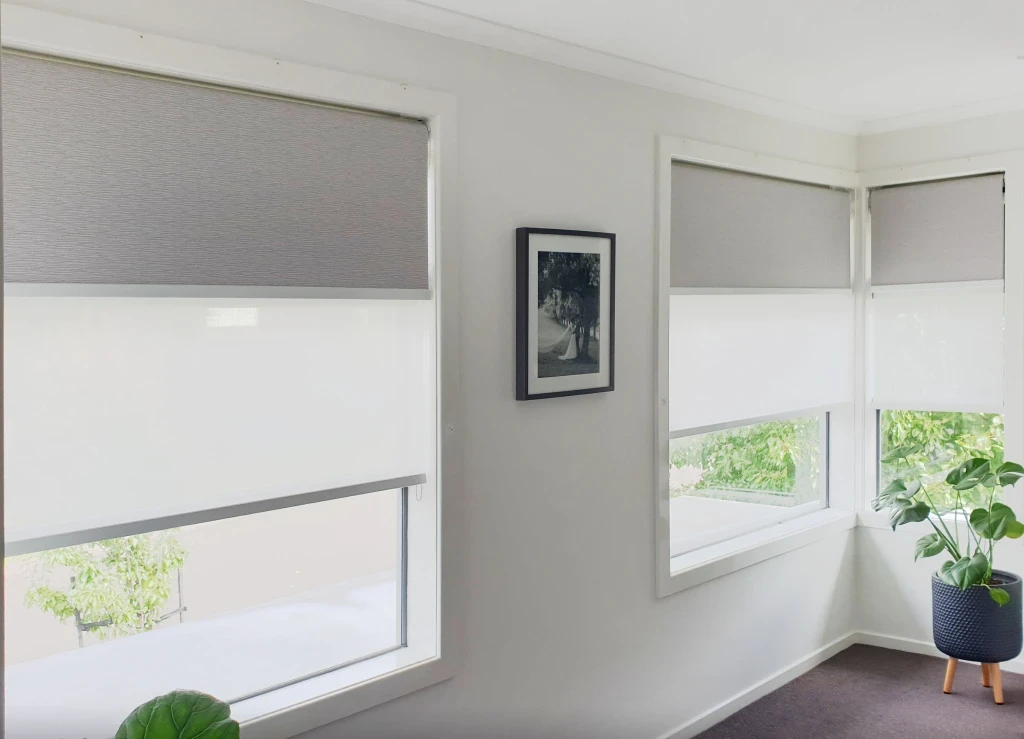
The fabric combination is the most important choice because it determines what each layer can do. A common setup is:
- •
Sunscreen or light filtering fabric at the back
- •
Blockout fabric at the front
Choose sunscreen plus blockout if you want:
- •
Daytime outlook
- •
Glare reduction
- •
UV control
- •
Night privacy
- •
Stronger room darkening
Choose light filtering plus blockout if you want:
- •
Soft daylight
- •
Gentle daytime privacy
- •
A warmer room feel
- •
Night privacy
- •
Stronger coverage after dark
The best choice depends on the room. A living room with a view may suit sunscreen plus blockout. A bedroom without an important view may suit light filtering plus blockout. A home office may suit sunscreen plus blockout if glare is the main issue. The two fabrics should work together, with one selected for daytime conditions and the other for night-time privacy and stronger light control.
13. Choosing Colours for Day and Night
Colour matters because double roller blinds use two fabrics. The layers do not need to match exactly, but they should feel connected. Soft neutral combinations are usually the safest choice for Australian homes. Think:
- •
White with white
- •
Warm white with linen
- •
Beige with stone
- •
Soft grey with charcoal
- •
Light neutral with deeper neutral
- •
Warm sunscreen with warm blockout
- •
Cool sunscreen with cool blockout
A lighter day layer can keep the room bright. A slightly deeper blockout layer can add warmth, privacy or contrast. For a seamless look, choose colours that sit close together. For a stronger modern look, choose a subtle contrast. For more ideas, read Best Colour Combinations for Double Roller Blinds. Before choosing, order Roller Blind Fabric Samples and check both fabrics together in your own room.
14. Inside Mount or Face Fit?
Mounting style changes how double roller blinds look and perform. An inside mount sits within the window recess. It gives a clean, built-in look and can suit modern windows where there is enough depth. A face fit is installed over the window frame. It can provide more coverage and may help reduce light gaps around the sides. Double roller blinds need more recess space than a single blind because two rolls share the bracket. Check the current measuring guide for the required clear depth and any window obstructions before choosing an inside mount. Before ordering, follow the Measure Double Roller Blinds guide carefully. Check:
- •
Window width
- •
Window drop
- •
Recess depth
- •
Handles
- •
Tiles
- •
Skirting
- •
Architraves
- •
Obstructions
- •
Mounting surface
- •
Control side
The best mount depends on the window and the result you want. Measure every window carefully before ordering rather than relying on an estimate.
15. Motorised Double Roller Blinds
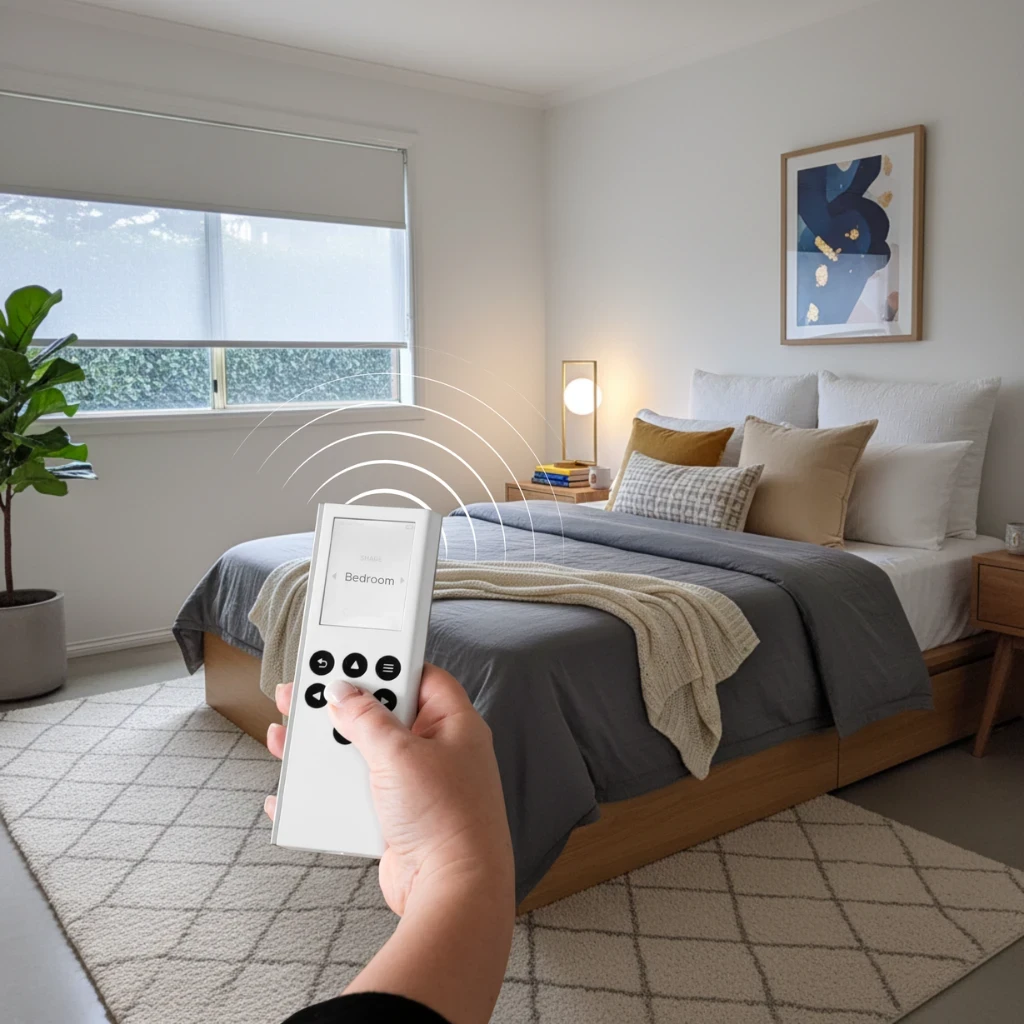
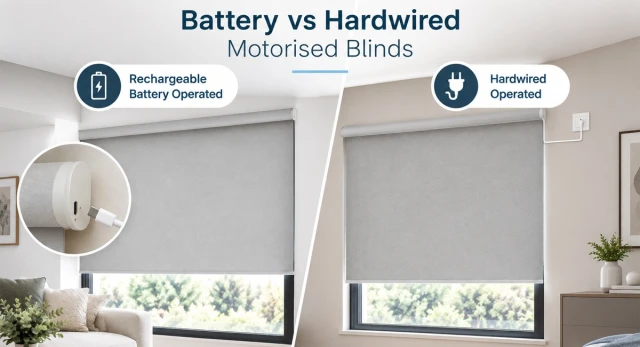
Double roller blinds can also be motorised. Motorised Roller Blinds can make double roller blinds easier to use, especially in rooms with large windows, sliding doors, hard-to-reach windows or multiple blinds. Motorisation can suit:
- •
Bedrooms
- •
Living rooms
- •
Open-plan spaces
- •
Large sliding doors
- •
Home offices
- •
Media rooms
- •
Family homes
- •
Smart homes
You may choose to motorise both layers, or in some cases only motorise the layer you use most often. For example, if the blockout layer is lowered every night, that may be the layer where motorisation matters most. Motorisation can also create a cleaner chain-free finish, which is useful in homes with children or pets. It is not essential for every room. But where double roller blinds are used daily, motorisation can make them easier to live with.
16. Manual Chain Control Still Works Well
Motorisation is useful, but manual chain control can still be a practical choice. It may suit:
- •
Smaller rooms
- •
Easy-to-reach windows
- •
Guest rooms
- •
Budget-conscious projects
- •
Windows that are not adjusted often
- •
Simple bedroom or living room setups
Manual double roller blinds still provide the same day and night fabric flexibility. The main difference is operation. You adjust each layer by chain rather than by remote or compatible smart-home control. If choosing chain-operated blinds, child safety matters. Use the supplied safety devices correctly and follow the installation instructions. For many homes, manual control is enough. The best choice is the one that suits the room and daily use.
17. Measuring and Installation Matter
Double roller blinds depend on accurate measuring and careful installation. Because two blinds sit together, small mistakes can affect the final result. Before ordering, measure each window separately. Check that the recess has enough depth if you want an inside mount. Think about whether face fit would give better coverage. Plan the control side. Check for handles and obstructions. Before installation, review the Install Double Roller Blinds guide. Follow the supplied installation order for the selected configuration and confirm that both blinds roll freely without touching. Make sure the brackets are level and the blinds operate smoothly. A good install makes the difference between blinds that simply fit and blinds that feel finished.
18. Common Day and Night Blind Setups
Here are practical combinations by room. For bedrooms:
- •
Light filtering plus blockout
- •
Sunscreen plus blockout if daytime view matters
- •
Motorised blockout layer if used every night
- •
Face fit where stronger coverage is needed
For living rooms:
- •
Sunscreen plus blockout
- •
Light filtering plus blockout for softer interiors
- •
Motorisation for large windows
- •
Linked blinds for wide openings
For home offices:
- •
Sunscreen plus blockout
- •
Sunscreen for glare control
- •
Blockout for strong coverage when needed
For apartments:
- •
Sunscreen or light filtering plus blockout
- •
Inside mount where recess depth allows
- •
Face fit where privacy or light gaps matter
- •
Motorisation where furniture blocks access
For sliding doors:
- •
Sunscreen plus blockout
- •
Linked blinds for wide spans
- •
Motorisation for easier daily use
- •
Careful install planning around door access
These setups help match the blind to the room. The setup should suit daily use as well as the window size.
19. Are Double Roller Blinds Worth It?
Double roller blinds usually cost more than a single roller blind because they include two blinds and a double bracket system. But for many rooms, the extra flexibility is worth it. They can reduce the need to compromise. You do not have to choose between light and privacy. You do not have to keep a blockout blind down all day. You do not have to rely on sunscreen fabric for privacy after dark. You have two layers. That makes them useful where the room works differently across the day. For rooms with simple needs, a single blind may still be enough. For rooms with changing needs, double roller blinds can be a smarter long-term choice. They are especially useful where you want daytime light control and night-time privacy in one neat system.
Common Mistakes to Avoid
Choosing the Same Fabric Type for Both Layers
Double roller blinds work best when each layer has a different purpose. A daytime layer and a blockout layer usually give the best flexibility.
Forgetting About Night Privacy
Sunscreen fabrics are useful during the day, but they are not full night-time privacy fabrics. Use a blockout front layer where after-dark privacy matters.
Ignoring Recess Depth
Double roller blinds need more depth than a single roller blind for inside mount. Measure carefully before ordering.
Choosing Colour Before Function
Start with the room's light and privacy needs. Then choose colour.
Not Ordering Samples
Two fabrics need to work together in your room. Order samples and check them beside walls, flooring and furniture.
Over-Motorising the Setup
Motorisation is useful, but you may not need it on every layer or every window. Choose it where daily use makes sense.
Measuring Too Quickly
Accurate measuring is essential for a clean result. Follow the measure guide before ordering.
Quick Double Roller Blind Checklist
Before choosing double roller blinds, ask yourself:
- •
What room am I buying for?
- •
Do I need daytime glare control?
- •
Do I want to keep an outdoor view?
- •
Do I need daytime privacy?
- •
Do I need night-time privacy?
- •
Do I need room darkening?
- •
Should the back blind be sunscreen or light filtering?
- •
What blockout fabric suits the front blind?
- •
Do the two colours work together?
- •
Is inside mount possible?
- •
Is face fit better for coverage?
- •
Is the recess deep enough?
- •
Would motorisation make daily use easier?
- •
Do I need linked blinds for a wide opening?
- •
Have I ordered fabric samples?
- •
Have I measured carefully?
- •
Have I checked the install guide?
These questions help you choose double roller blinds that suit the way the room is used from morning to night.
Final Thoughts
Double roller blinds are one of the most practical day and night window solutions for Australian homes. They give you two fabric layers in one clean setup. A sunscreen or light filtering layer can support daylight, softness, glare control and daytime comfort. A blockout layer can support privacy, darkness, insulation and night-time coverage. This makes double roller blinds useful in bedrooms, living rooms, apartments, home offices, sliding doors and open-plan spaces. They are especially helpful where one blind cannot do everything. The best result comes from choosing the right fabric combination. The right colour pairing. The right mount. The right control option. The right measurements. And the right installation. For many homes, double roller blinds are worth it because they give the room more flexibility without adding bulk.
The room can stay bright and comfortable by day, then private at night, without changing the window furnishing. Create a smarter day and night window solution with custom double roller blinds.
FAQs
'%3e%3cline%20id='Line_28'%20data-name='Line%2028'%20y2='200'%20transform='translate(1580.5%205493.46)'%20fill='none'%20stroke='%23f7941d'%20stroke-width='5'/%3e%3cg%20id='Ellipse_50'%20data-name='Ellipse%2050'%20transform='translate(1559%205665.46)'%20fill='%23171717'%20stroke='%23f7941d'%20stroke-width='5'%3e%3ccircle%20cx='21.5'%20cy='21.5'%20r='21.5'%20stroke='none'/%3e%3ccircle%20cx='21.5'%20cy='21.5'%20r='19'%20fill='none'/%3e%3c/g%3e%3c/g%3e%3c/svg%3e)