How to choose practical iSeekBlinds roller blinds and plantation shutters for light, glare, privacy and everyday kitchen living
The kitchen is one of the hardest-working rooms in an Australian home. Its window furnishings may need to manage strong natural light, heat, steam and occasional splashes while fitting neatly around sinks, benchtops, large windows or sliding doors. In an open-plan home, they also need to connect visually with the dining and living areas.
A suitable kitchen blind must solve the needs of its particular window. A west-facing opening may need glare and heat control, a street-facing kitchen may require privacy, and a window above a sink needs a finish that is practical to clean. Motorisation can also make a blind behind a deep benchtop much easier to operate.
For iSeekBlinds customers, the main kitchen options are roller blinds and PVC plantation shutters.
The most suitable choice is determined by the window, the amount of light, how close it is to wet or cooking areas, and how much privacy you need.
This guide explains the practical options.
1. What Makes a Good Kitchen Blind?
A good kitchen blind needs to suit the way the kitchen actually works.
Start with function.
Ask:
- •
Does the room get strong sun?
- •
Is glare a problem?
- •
Do you need daytime privacy?
- •
Do you need privacy at night?
- •
Is the window above the sink?
- •
Is it close to cooking or food preparation areas?
- •
Is the blind easy to reach?
- •
Does the kitchen connect to a living or dining room?
- •
Do you want to maintain an outdoor view?
- •
Is moisture resistance particularly important?
These questions matter more than simply choosing a colour. Kitchens are practical, high-use spaces.
The window furnishing should be selected for daily use, not appearance alone.
2. Roller Blinds Are a Strong Kitchen Choice
Custom Roller Blinds work well in kitchens because they have a simple, streamlined design.
When raised, the fabric rolls neatly away.
When lowered, it gives you the light or privacy control provided by the fabric you selected.
iSeekBlinds offers roller blinds in:
- •
Blockout
- •
Light filtering
- •
Sunscreen
You can also choose:
- •
Single roller blinds
- •
Double roller blinds
- •
Linked roller blinds for wider openings
- •
Manual chain control
- •
Motorised control
This makes roller blinds flexible enough to suit small kitchen windows, larger open-plan spaces and windows near dining areas.
The key is choosing the right fabric.
3. Sunscreen Roller Blinds for Bright Kitchens
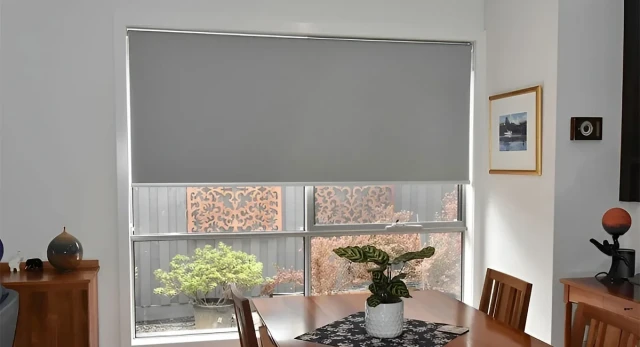
Sunscreen Roller Blinds are one of the strongest choices for bright kitchens.
They are designed to reduce:
- •
Harsh glare
- •
Heat
- •
UV exposure
while still allowing natural light and an outward view during the day.
That makes them especially useful for:
- •
West-facing kitchens
- •
North-facing windows
- •
Open-plan kitchens
- •
Kitchen windows overlooking a garden
- •
Large windows
- •
Sliding doors
- •
Dining areas connected to the kitchen
A kitchen usually benefits from natural daylight.
You generally do not want to darken the room unless there is a reason.
Sunscreen fabric gives you more control without completely closing the kitchen off from outside.
4. Sunscreen Blinds and Daytime Privacy
Sunscreen blinds can also provide useful daytime privacy.
During the day, they make it harder to see into the room while still allowing you to see outside.
This can work well when a kitchen window faces:
- •
A street
- •
A footpath
- •
A neighbouring property
- •
A shared driveway
- •
A nearby outdoor area
But sunscreen fabric is a daytime solution.
Once it becomes darker outside and the lights are on inside, privacy changes.
If full night-time privacy is important, you may need blockout fabric or a double roller blind setup.
Understanding this difference before ordering helps avoid disappointment later.
5. Light Filtering Roller Blinds for Softer Kitchens
Light Filter Roller Blinds are another practical kitchen option.
They diffuse harsh daylight and create a softer glow without making the room dark.
They are particularly useful when you want:
- •
Natural light
- •
Reduced glare
- •
A softer atmosphere
- •
Daytime privacy
- •
Less visual contrast at the window
iSeekBlinds specifically lists kitchens among the rooms suited to light filtering roller blinds.
This option can work beautifully in kitchens with:
- •
Neutral cabinetry
- •
Timber
- •
Stone
- •
White walls
- •
Open-plan dining areas
- •
Softer interior styling
Light filtering fabric creates a different effect from sunscreen.
You do not maintain the same clear daytime view through the fabric.
Instead, the window feels softer and more screened.
6. Sunscreen or Light Filtering: Which Is Better?
Both can work well.
Choose sunscreen if:
- •
Maintaining the outside view matters.
- •
Strong glare is a problem.
- •
The kitchen gets harsh sun.
- •
UV control matters.
- •
You want daytime privacy without losing outlook.
Choose light filtering if:
- •
You want soft diffused daylight.
- •
The outside view is less important.
- •
You want the window to feel more screened.
- •
You prefer a warmer, softer room atmosphere.
Neither option is automatically better. The choice is determined by the room.
Consider what you want to see when the blind is lowered.
That usually makes the decision easier.
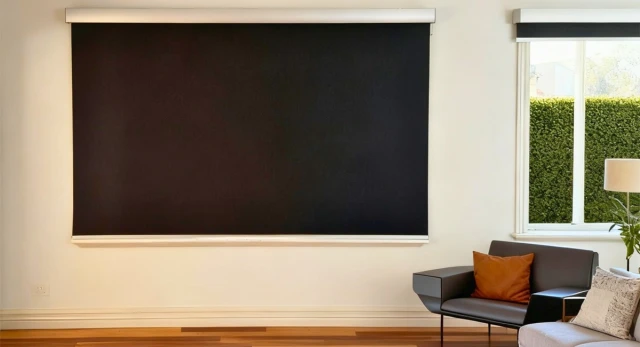
7. When Blockout Roller Blinds Suit a Kitchen
Blockout Roller Blinds are not usually the first option people think about for kitchens.
But they can make sense in some situations.
Choose blockout where:
- •
Strong night privacy matters.
- •
The kitchen faces neighbours.
- •
Direct sun creates significant heat.
- •
The kitchen is part of an open-plan room where evening privacy matters.
- •
The blind needs to provide stronger coverage than sunscreen or light filtering fabric.
A blockout blind stops light passing through the fabric. When lowered, it creates strong privacy.
The trade-off is that it also blocks the natural light and outside view.
For kitchens used heavily during the day, sunscreen or light filtering fabric may feel more flexible.
8. Double Roller Blinds for Day and Night Control
Some kitchen windows need two different solutions. Daytime glare control. Night-time privacy.
That is where Double Roller Blinds can work particularly well.
A common combination is:
- •
Sunscreen plus blockout
or
- •
Light filtering plus blockout
Use the lighter layer during the day. Use the blockout layer at night.
This is useful in:
- •
Open-plan kitchens
- •
Kitchen-dining rooms
- •
Street-facing homes
- •
Apartments
- •
Kitchens facing neighbouring properties
- •
Rooms used throughout the evening
The advantage is flexibility. You do not need one fabric to solve every problem.
For a full explanation, see Double Roller Blinds: The Ultimate Day and Night Solution .
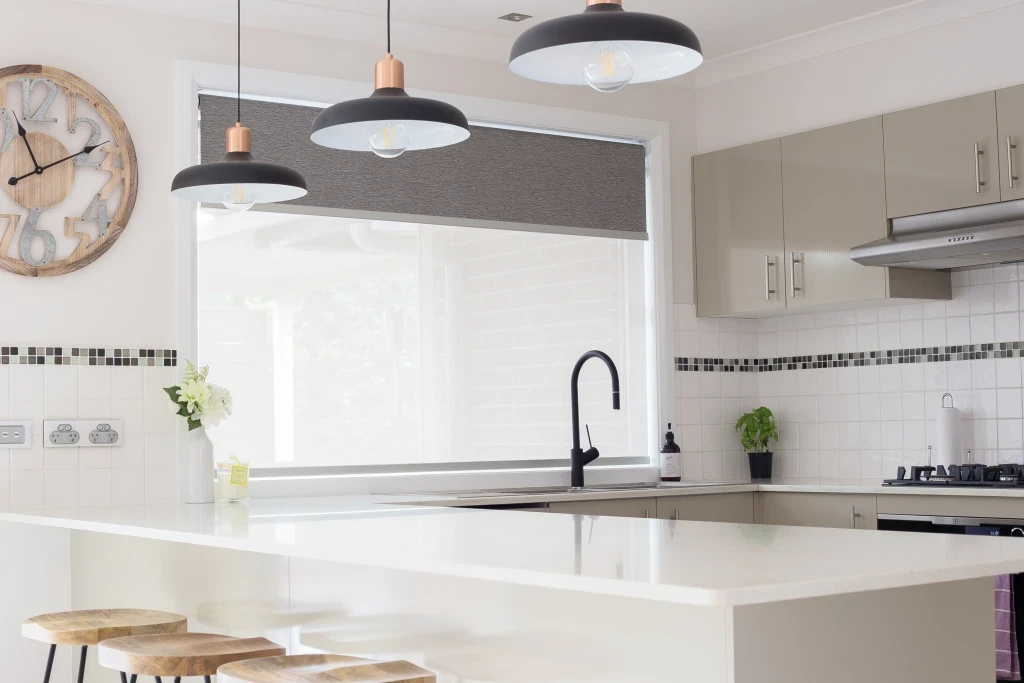
9. Kitchen Blinds Above the Sink
Windows above kitchen sinks need special consideration. The blind may be harder to reach. The area may be exposed to occasional splashes.
And the window is often used frequently because it provides natural light directly over the work surface.
A simple roller blind can work well because it sits neatly at the window and does not require bulky fabric around the sink area.
Think carefully about:
- •
How close the blind will sit to water
- •
Whether the chain will be easy to reach
- •
Whether a motorised option would be more practical
- •
How easy the fabric will be to maintain
- •
Whether glare is more important than privacy
If moisture exposure is frequent or significant, PVC plantation shutters may be the more practical choice.
10. Motorised Kitchen Blinds
Motorisation can be particularly useful in kitchens.
A blind may sit behind:
- •
A sink
- •
A deep benchtop
- •
Appliances
- •
Furniture
- •
A breakfast bar
Reaching the chain can become awkward.
iSeekBlinds Motorised Roller Blinds remove the need to operate the blind manually by chain. Current options include RollerIQ for compatible smart-home control and Automate Zero Li-ion for remote control.
Depending on the motor chosen, control options can include:
- •
Remote control
- •
Smart-home control
- •
App control
- •
Voice control
- •
Schedules
That can make a kitchen blind easier to use every day.
This is particularly helpful when the blind sits behind a sink or benchtop, or when your hands are busy.
11. Motorisation Can Keep the Window Cleaner Visually
A motorised blind also removes the hanging chain.
That may create a cleaner appearance around:
- •
Splashbacks
- •
Benchtops
- •
Sinks
- •
Modern cabinetry
- •
Minimalist kitchens
This is particularly useful in contemporary kitchens where the design is determined by clean lines.
A chain-free blind can feel more integrated into the room. Motorisation should still be chosen for practical reasons. But the cleaner finish is a useful benefit.
For the full motorisation overview, read the Complete Guide to Motorised Blinds .
12. Plantation Shutters for Moisture-Prone Kitchen Windows
Roller blinds are not the only iSeekBlinds option for kitchens.
Plantation Shutters are particularly well suited to areas where moisture resistance and easy cleaning matter.
iSeekBlinds plantation shutters are made from moisture-resistant PVC and reinforced with an aluminium core.
They are designed to handle rooms such as:
- •
Kitchens
- •
Bathrooms
- •
Laundries
That can make them a strong choice for a window directly above a sink or in another area exposed to regular moisture.
They can be wiped down easily and do not rely on fabric.
13. Why Plantation Shutters Work Well in Kitchens
PVC plantation shutters provide a different type of control from roller blinds.
Roller blinds move up and down. Plantation shutters use adjustable louvres.
You can tilt the louvres to control:
- •
Daylight
- •
Privacy
- •
Glare
- •
Airflow
without needing to fully uncover the window.
This can be useful in a kitchen where you want light throughout the day but still want to control direct views.
The shutter also creates a more architectural window finish.
It becomes part of the window rather than simply covering it.
For more room-specific advice, see Best Rooms for Installing Plantation Shutters .
14. Roller Blinds vs Plantation Shutters for Kitchens
Both options can work well when they are matched to the window and the way the kitchen is used.
Choose roller blinds when you want:
- •
A slim fabric finish
- •
More fabric and colour options
- •
Sunscreen glare control
- •
Light filtering
- •
Blockout privacy
- •
Double roller flexibility
- •
Motorisation
- •
A more budget-conscious solution
Choose PVC plantation shutters when you want:
- •
Moisture resistance
- •
Easy wipe-down cleaning
- •
Adjustable louvres
- •
Airflow control
- •
An architectural finish
- •
A non-fabric solution around moisture-prone areas
For a complete comparison, read Plantation Shutters vs Roller Blinds .
The most suitable option is determined by the window, its exposure to moisture and the type of light and privacy control required.
15. Think About Steam and Splashes
Kitchen windows can sit close to:
- •
Sinks
- •
Dishwashers
- •
Cooking areas
- •
Kettles
- •
Food preparation zones
That means moisture and cleaning matter more than they would in a bedroom.
Do not choose kitchen blinds based on appearance alone. Check where the blind will sit.
A fabric blind further away from moisture-prone areas may be perfectly practical.
A window receiving frequent splashes may suit PVC plantation shutters better.
Ventilation also matters. The kitchen environment should be considered as a whole. The window furnishing needs to suit real everyday use.
16. Glare Can Be a Bigger Problem Than Privacy
Many kitchen windows need glare control more than complete privacy.
Morning or afternoon sun can reflect off:
- •
Stone benchtops
- •
Gloss cabinetry
- •
Stainless steel appliances
- •
Tiles
- •
Glass splashbacks
That can make the kitchen uncomfortable even when the room itself is not especially hot.
Sunscreen blinds are particularly useful here. They reduce uncomfortable glare without shutting out the view.
Light filtering blinds can also soften glare where outward visibility is less important.
Choose according to how the sun reaches the room.
17. West-Facing Kitchen Windows
West-facing kitchens can become uncomfortable in the afternoon.
The low afternoon sun is bright and may create:
- •
Glare
- •
HeatSecond list item - add your content
- •
UV exposure
- •
Reflections
Sunscreen roller blinds are a strong option because they allow you to reduce harsh light while maintaining a daytime outlook.
If the heat becomes particularly strong, a blockout layer may also be useful.
A double roller setup can offer both. Sunscreen during most of the day. Blockout when stronger coverage is needed. That gives the kitchen more flexibility.
18. Kitchen Privacy at Night
Kitchens are often used after dark. That changes privacy.
During the day, sunscreen fabric can offer privacy while allowing outward visibility.
At night, the lights inside make the room easier to see from outside.
If your kitchen faces:
- •
A neighbour
- •
A street
- •
An apartment building
- •
A shared driveway
then consider what happens after dark.
If strong night privacy matters, choose:
- •
Blockout roller blinds
- •
Double roller blinds with a blockout layer
- •
Plantation shutters
Consider privacy across the full day.
Plan for privacy during the evening as well as the conditions you see when measuring during the day.
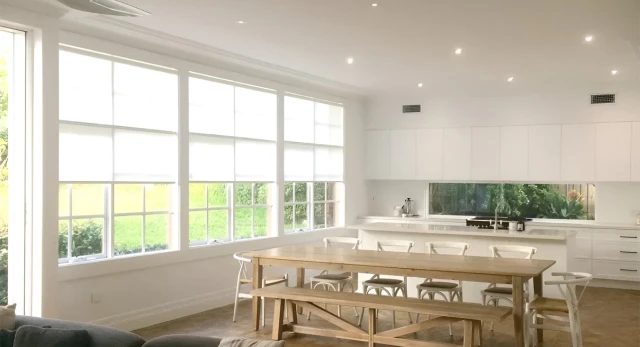
19. Open-Plan Kitchen and Living Areas
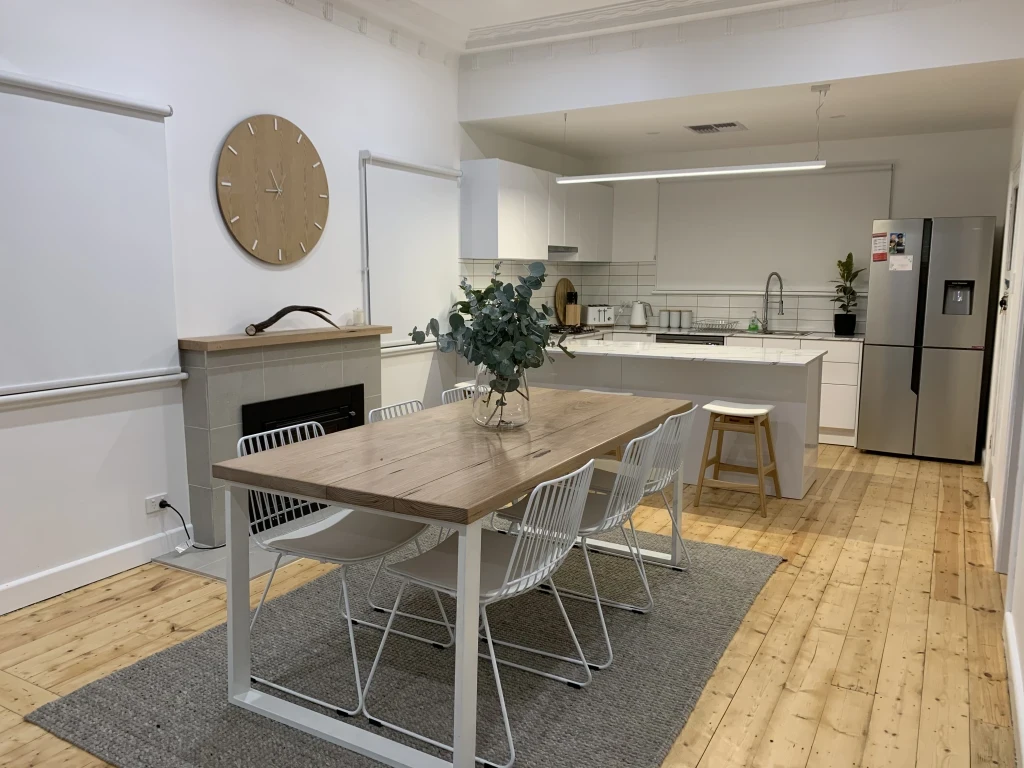
Many Australian kitchens form part of a larger open-plan room. That means the kitchen blind cannot be considered in isolation.
It may need to coordinate with:
- •
Living room blinds
- •
Dining room blinds
- •
Sliding doors
- •
Curtains
- •
Plantation shutters
- •
Large feature windows
Try to create consistency.
You might use the same sunscreen fabric throughout the open-plan area.
Or use a related neutral palette across several window types. The products do not need to be identical. They need to feel connected. This helps the entire room feel more considered.
20. Kitchen Blinds for Sliding Doors
Some kitchens open directly to:
- •
Patios
- •
Decks
- •
Balconies
- •
Alfresco areas
through large sliding doors.
These openings can require a different solution from a small kitchen window.
For wide glass, consider Linked Roller Blinds .
Linked blinds can cover wider openings using separate roller blinds positioned beside each other.
This allows sections to operate independently.
That can be useful when:
- •
Only one part receives harsh sun.
- •
One door needs to remain accessible.
- •
The opening is too wide for a single blind.
- •
You want more flexible control.
Choose sunscreen, light filtering or blockout fabric according to how the room is used.
21. Choosing Kitchen Blind Colours
Kitchen blinds should work with the finishes already in the room.
Look at:
- •
Cabinetry
- •
Benchtops
- •
Splashbacks
- •
Flooring
- •
Wall colour
- •
Window frames
- •
Hardware
- •
Dining furniture
Light neutral blinds may create a simple, seamless finish.
Warm neutrals can work beautifully with:
- •
Timber
- •
Beige stone
- •
Warm whites
- •
Cream cabinetry
Cool whites and greys can work with:
- •
Crisp white kitchens
- •
Concrete-look finishes
- •
Black accents
- •
Cooler stone
Darker blinds may create contrast where the same dark tone already appears in the room.
Do not choose colour separately from the kitchen. Make it part of the palette.
22. Order Samples Before Choosing
Kitchen materials can make fabric colours look very different.
A fabric beside white cabinetry may read differently than it does beside timber.
Stone undertones can also change the way a neutral blind looks.
Use Roller Blind Fabric Samples before ordering.
Compare samples with:
- •
Cabinet doors
- •
Benchtops
- •
Splashback tiles
- •
Flooring
- •
Wall paint
- •
Window frames
Check them in morning light. Afternoon light. And under the kitchen lights at night.
If considering shutters, order Plantation Shutter Samples to compare Cool White, Warm White and Neutral White.
Samples are one of the easiest ways to avoid the wrong colour.
23. Inside or Outside Mount?
Roller blinds can generally be installed:
- •
Inside the window recess
- •
Outside the window opening
Inside mount creates a clean built-in appearance. Outside mount provides more window coverage.
The right choice is determined by:
- •
Recess depth
- •
Handles
- •
Winders
- •
Tiles
- •
Splashbacks
- •
Window frame
- •
Light-control needs
- •
Privacy needs
Kitchen windows can have more obstructions than other rooms. Tiles may continue into the reveal. Handles may project into the recess. Check all of these before choosing.
Follow the Measure Roller Blinds guide carefully.
24. Check Tiles and Splashbacks Before Measuring
Kitchen renovations often use tile or stone around the window. This can affect how the blind brackets are installed.
Before ordering, look carefully at:
- •
Tile position
- •
Splashback thickness
- •
Window reveals
- •
Architraves
- •
Cabinetry
- •
Handles
- •
Power points
- •
Nearby shelves
Do not assume the mounting surface is the same on both sides.
The window may sit between cabinetry or different finishes. Plan the installation before entering your measurements. This avoids surprises when the blind arrives.
25. Measuring Kitchen Roller Blinds
iSeekBlinds roller blinds are custom made to the measurements you enter.
Measure in millimetres. Measure every window individually.
Check:
- •
Width
- •
Drop
- •
Recess depth
- •
Obstructions
- •
Mounting surface
- •
Chain or motor side
- •
Charging access if motorised
Do not make your own fabric deductions. Follow the iSeekBlinds measuring process exactly.
The system handles the appropriate product deductions according to the configuration.
Accurate measuring gives you the best chance of a neat, professional result.
26. DIY Installation
iSeekBlinds roller blinds and plantation shutters are designed for DIY installation.
This is part of the iSeekBlinds approach.
Your custom product arrives ready for you to install using the available written and video guides.
For roller blinds, use the Roller Blind Installation Guide .
For shutters, use the Plantation Shutter Installation Guide .
Before drilling into kitchen walls, confirm what is behind the fixing surface.
This is particularly important around:
- •
Plumbing
- •
Electrical cables
- •
Tiled areas
- •
Splashbacks
If you are unsure about hidden services, seek appropriate professional advice before drilling.
27. Cleaning Kitchen Roller Blinds
Kitchen blinds can collect more airborne residue than blinds in a bedroom.
That makes regular light cleaning useful. Care is determined by the specific fabric.
In general:
- •
Remove dust regularly.
- •
Follow the fabric-specific care instructions.
- •
Use gentle methods.
- •
Avoid harsh chemicals.
- •
Address small marks before they build up.
- •
Do not aggressively scrub coated fabric.
Always check the care information for the fabric you choose.
Kitchen suitability is determined by both product placement and sensible maintenance.
28. Plantation Shutters Are Easy to Wipe Down
One of the advantages of PVC plantation shutters in kitchens is cleaning.
The smooth PVC surface can be wiped down with a soft damp cloth.
This makes them particularly useful where the window is likely to experience:
- •
Splashes
- •
Dust
- •
Frequent handling
- •
Everyday kitchen residue
Avoid harsh or abrasive cleaning products.
Regular light cleaning will keep the shutter looking better than allowing residue to build up.
For busy kitchens, easy maintenance can be just as important as appearance.
29. Single or Double Roller Blinds?
A single roller blind is usually enough when the window has one main problem.
For instance:
Sunscreen for glare. Light filtering for softness. Blockout for privacy.
Choose double roller blinds when the kitchen needs two different functions.
For instance:
Daytime glare control plus night privacy. Outdoor view plus evening coverage. Soft daylight plus stronger blockout. Do not automatically choose double blinds. Choose them when the room genuinely benefits from two layers.
30. Common Kitchen Blind Mistakes to Avoid
Choosing Only by Colour
Start with light, privacy, moisture and operation. Then choose colour.
Using Sunscreen for Night Privacy
Sunscreen fabric is primarily a daytime privacy solution. Use blockout or shutters where night privacy matters.
Putting Fabric Too Close to Frequent Splashes
Consider how the kitchen is actually used. PVC shutters may suit a heavily exposed sink window better.
Ignoring Glare
Kitchen surfaces may create strong reflections.
Sunscreen and light filtering blinds can make the room much more comfortable.
Forgetting About Reach
A blind behind a deep bench or sink may be awkward to operate manually.
Consider motorisation.
Ignoring Tiles and Handles
Check the full window area before measuring.
Skipping Samples
Cabinetry and stone can change how fabric colours look. Check samples in the actual kitchen.
Choosing the Same Blind for Every Kitchen Window
Different windows can have different needs. Choose according to the location.
Quick Kitchen Blind Checklist
Before ordering, ask:
- •
Does the window get direct sun?
- •
Is glare a problem?
- •
Do I want to maintain the view?
- •
Do I need daytime privacy?
- •
Do I need privacy at night?
- •
Is the window near the sink?
- •
Is moisture exposure significant?
- •
Would PVC shutters suit better?
- •
Should I choose sunscreen?
- •
Would light filtering fabric create a better feel?
- •
Do I need blockout coverage?
- •
Would double roller blinds give better flexibility?
- •
Is the blind difficult to reach?
- •
Would motorisation help?
- •
Is the window unusually wide?
- •
Would linked blinds suit?
- •
Have I checked the tiles and handles?
- •
Have I ordered samples?
- •
Have I measured correctly?
- •
Have I reviewed the installation guide?
These questions will narrow down the right option quickly.
Final Thoughts
The best kitchen blinds are the ones that suit the way your kitchen works.
For many Australian kitchens, sunscreen roller blinds are an excellent starting point.
They reduce glare and harsh sunlight while keeping natural light and daytime outlook.
Light filtering roller blinds suit kitchens where softer daylight and gentle privacy matter more than the outside view.
Blockout blinds provide stronger privacy and coverage. Double roller blinds combine daytime and night-time control. Motorisation makes hard-to-reach kitchen blinds easier to operate.
And PVC plantation shutters are particularly practical around moisture-prone windows because they are moisture-resistant, easy to wipe down and provide adjustable light, privacy and airflow.
There is no single kitchen blind that suits every window. Start with the practical problem the window needs to solve. Sun. Glare. Privacy. Moisture. Reach. View.
Then select the iSeekBlinds product, fabric and operating method that address it.
Order samples. Measure carefully. Follow the installation guides.
And create a kitchen window that looks considered while still working properly every day.
FAQs